
Nervous System Regulation Exercises at Home
It’s 3 PM on a Tuesday. You’re sitting at your kitchen table, laptop open, and your boss just sent an email that made your heart jump into your throat. Your hands start sweating. Your breathing gets shallow. That familiar knot tightens in your stomach, and suddenly you can’t think straight.
Sound familiar?
Maybe for you, it’s not work emails. Maybe it’s the morning rush with kids screaming, traffic that never seems to end, or just lying in bed at night with your mind racing through tomorrow’s to-do list. Whatever triggers it, that feeling of being completely overwhelmed has become way too normal.
Here’s the good news: You’re not broken. Your body is actually doing exactly what it’s designed to do. And even better? You can learn simple exercises at home that help you feel calm again, usually in just a few minutes.
What Is Nervous System Regulation (In Simple Words)?
Think of your nervous system like the thermostat in your house. When it’s working well, it keeps things comfortable. Not too hot, not too cold. Just right.
Your body has two main settings:
The “Go” Mode (Sympathetic Nervous System): This is your body’s alarm system. When something stressful happens, it hits the gas pedal. Your heart beats faster, your breathing speeds up, and your muscles tense up. This is great when you need to react quickly, like slamming on the brakes to avoid an accident.
The “Rest” Mode (Parasympathetic Nervous System): This is your body’s brake pedal. It helps you calm down, digest food, sleep well, and feel relaxed. When this system is working, you feel peaceful and safe.
The problem? Many of us are stuck in “Go” mode all day long. Our body’s alarm system keeps blaring even when there’s no real danger. That’s called nervous system dysregulation, and it’s exhausting.
Nervous system regulation simply means helping your body shift from “Go” mode back to “Rest” mode. And the best part? You can do it at home, without any special equipment, in just a few minutes.
How Do You Know If Your Nervous System Needs Regulation?
Before we jump into the exercises, let’s figure out if this is actually your issue. Here are the most common signs:
Physical Signs:
- Racing heart even when you’re sitting still
- Tight shoulders and jaw
- Upset stomach or digestive problems
- Trouble sleeping or staying asleep
- Feeling tired but wired
- Headaches that won’t go away
- Shallow breathing
Emotional Signs:
- Feeling on edge or jumpy
- Getting frustrated or angry quickly
- Difficulty concentrating
- Racing thoughts
- Feeling overwhelmed by small tasks
- Mood swings
- Feeling disconnected from yourself or others
If you nodded along to three or more of these, your nervous system is probably stuck in overdrive. But don’t worry. The exercises below will help.
At-Home Nervous System Regulation Exercises That Actually Work
I’ve organized these exercises by how much time you have. Whether you’ve got 2 minutes or 20 minutes, there’s something here that will work for you.
When You Have 2-3 Minutes: Emergency Calm Techniques
These are your “panic button” exercises. Use them when stress hits hard and you need relief fast.
1. The Physiological Sigh (90 Seconds)
This is one of the fastest ways to calm down. Research from Stanford University shows it actually works better than other breathing methods.
How to do it:
- Sit or stand comfortably
- Take a big breath in through your nose (5 seconds)
- Before you exhale, take one more quick sip of air through your nose
- Now exhale slowly through your mouth for 6-8 seconds (make it longer than your inhale)
- Repeat this 3 times
Why it works: That second little breath re-inflates the tiny air sacs in your lungs, which helps your body release carbon dioxide more efficiently. The long exhale sends a signal to your brain that says, “We’re safe now. You can relax.”
When to use it: Before a difficult conversation, after getting bad news, during a panic attack, or when you feel your heart racing.
2. Cold Water Face Splash (60 Seconds)
Your face has special nerves that are directly connected to your calming system.
How to do it:
- Go to your bathroom sink
- Splash cold water on your face, especially your forehead and cheeks
- Pat your face dry
- Take three big breaths
If you can’t get to a sink, hold a cold, wet cloth on your face for 30 seconds.
Why it works: Cold water on your face triggers something called the “dive response.” It’s a reflex that slows your heart rate immediately, just like when a seal dives into cold water.
When to use it: When anxiety is really high, when you feel overheated from stress, or first thing in the morning if you wake up anxious.
3. The Butterfly Hug (2 Minutes)
This is a gentle self-soothing technique that therapists use with trauma survivors.
How to do it:
- Cross your arms over your chest so your hands rest on opposite shoulders (like you’re giving yourself a hug)
- Gently tap your shoulders, alternating left and right
- Tap at whatever speed feels soothing (usually about once per second)
- Close your eyes and keep tapping for 2 minutes
- Breathe naturally
Why it works: The alternating taps help both sides of your brain communicate better. This cross-body movement actually helps calm down the emotional part of your brain.
When to use it: When you feel emotional, before bed if you can’t sleep, or anytime you need comfort.
When You Have 5-10 Minutes: Deeper Reset Exercises

These exercises give you a stronger sense of calm. Perfect for a morning routine or mid-day reset.
4. Box Breathing (5 Minutes)
Military members and first responders use this technique to stay calm in high-pressure situations.
How to do it:
- Sit comfortably with your back straight
- Breathe in through your nose for 4 counts
- Hold your breath for 4 counts
- Breathe out through your mouth for 4 counts
- Hold empty for 4 counts
- Repeat for 5 minutes (about 10-12 cycles)
Picture yourself drawing a square as you breathe: up on the inhale, right on the hold, down on the exhale, left on the hold.
Why it works: The equal counts create a rhythm that regulates your heart rate and brings oxygen to your brain, helping you think clearly again.
When to use it: Before an important meeting, during a break at work, or when you notice your mind racing.
5. Progressive Muscle Relaxation (7-10 Minutes)
This technique helps release tension you didn’t even know you were holding.
How to do it:
- Lie down or sit comfortably
- Start with your feet. Curl your toes tight for 5 seconds, then release and notice the difference
- Move to your calves. Tense them hard for 5 seconds, then let go
- Continue up your body: thighs, buttocks, stomach, chest, hands (make fists), arms, shoulders (scrunch them up), neck, face (scrunch everything tight)
- With each release, imagine the tension melting away
- End by taking three big breaths
Why it works: You can’t relax muscles you’re not aware of. By tensing them first, you become aware of where you’re holding stress, and the release feels amazing.
When to use it: Before bed, after a stressful day, or when your body feels tight and uncomfortable.
6. The 5-4-3-2-1 Grounding Technique (5 Minutes)
This exercise pulls you out of your anxious thoughts and into the present moment.
How to do it:
- Look around and name 5 things you can see (the blue wall, your coffee cup, the tree outside)
- Notice 4 things you can touch (the chair under you, your shirt on your skin, the floor under your feet, your phone in your hand)
- Listen for 3 things you can hear (birds outside, the hum of the refrigerator, your own breathing)
- Identify 2 things you can smell (coffee, fresh air, your shampoo, even if faint)
- Notice 1 thing you can taste (even if it’s just the inside of your mouth)
Why it works: Anxiety lives in the future (worrying about what might happen). This exercise brings you back to right now, where you’re actually safe.
When to use it: During anxiety attacks, when your mind won’t stop racing, or when you feel disconnected from your surroundings.
When You Have 15-20 Minutes: Full Body and Mind Reset
These longer practices give you the strongest benefits. Try to do at least one of these daily.
7. Gentle Yoga Flow (15 Minutes)
You don’t need to be flexible. These simple movements calm your nervous system better than intense workouts.
Simple sequence to try:
- Start on your hands and knees
- Cat-Cow: Arch your back (look up), then round your back (look down). Repeat 10 times slowly
- Child’s Pose: Sit back on your heels, stretch your arms forward, rest your forehead on the floor. Stay for 2 minutes
- Legs Up the Wall: Lie on your back with your legs straight up against a wall. Stay for 5-10 minutes
Why it works: When your head goes below your heart (like in Child’s Pose), it stimulates a special nerve called the vagus nerve, which turns on your body’s relaxation response.
When to use it: First thing in the morning, before bed, or anytime you need a full body reset.
8. Body Scan Meditation (15-20 Minutes)
This meditation teaches you to listen to your body’s signals.
How to do it:
- Lie down in a quiet space
- Close your eyes and take three big breaths
- Bring your attention to your toes. Just notice how they feel. No judgment. Are they warm? Cold? Tense? Relaxed?
- Slowly move your attention up through your body: feet, ankles, calves, knees, thighs, hips, stomach, chest, fingers, hands, arms, shoulders, neck, face, head
- Spend about 1-2 minutes on each body part
- If you notice tension, imagine breathing into that spot and releasing it on the exhale
- End by taking three big breaths and slowly opening your eyes
Why it works: Most of us are completely disconnected from our bodies. This practice rebuilds that connection and helps you catch stress before it gets overwhelming.
When to use it: Before sleep, during the middle of the day, or whenever you feel disconnected from yourself.
9. Humming or Singing (10-15 Minutes)
This might sound silly, but it’s incredibly powerful.
How to do it:
- Sit comfortably
- Take a big breath in
- As you exhale, hum a low “mmmmm” sound for as long as you can
- Feel the vibration in your chest and throat
- Repeat for 10-15 minutes
- Or just sing along to your favorite songs for 15 minutes
Why it works: The vibrations from humming or singing stimulate your vagus nerve, which is like a superhighway from your brain to your heart and gut. Activating it tells your body, “Everything is okay.” Cleveland Clinic explains how this nerve plays a key role in your body’s relaxation response.
When to use it: In the shower, in the car, or anytime you’re alone and need a mood lift.
Setting Up Your Home Nervous System Regulation Space
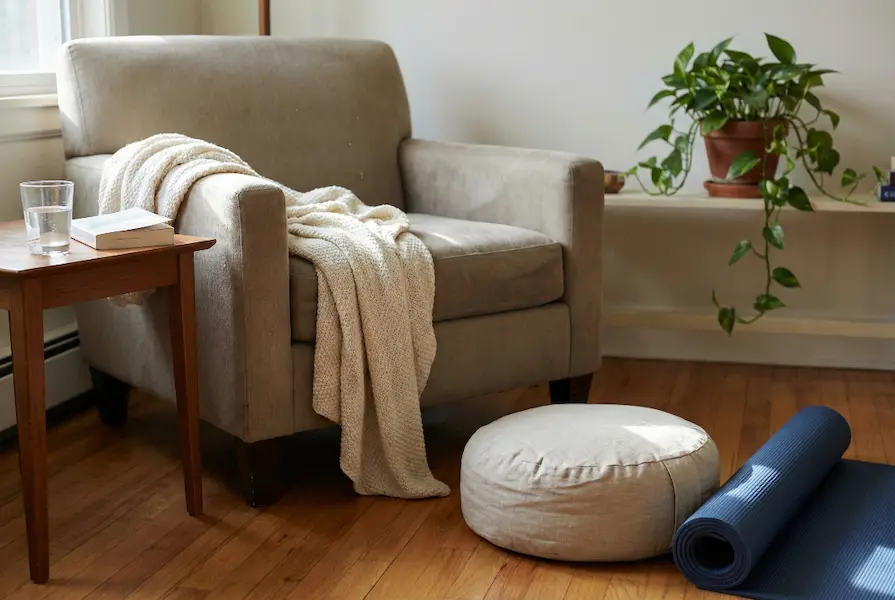
You don’t need a fancy meditation room, but having a consistent spot makes these exercises easier to stick to.
What You Need (All Optional):
- A quiet corner or spot in your home
- A comfortable place to sit or lie down (chair, couch, yoga mat, or bed)
- Maybe a cushion or pillow for comfort
- A blanket (being warm helps relaxation)
- Your phone (for timers or guided meditations, but turn off notifications!)
What You DON’T Need:
- Expensive equipment
- A perfectly quiet space
- A lot of time
- To be good at meditation
- Scented candles or special music (nice but not necessary)
Pro tip: Tell your family or roommates about your practice. A simple “I need 10 minutes of quiet time” can make all the difference.
Building Your Daily Nervous System Regulation Routine
The best exercise is the one you’ll actually do. Here are three simple routines based on different lifestyles:
The Busy Parent Routine (10 Minutes Total)
- Morning (3 minutes): Physiological Sigh (3 cycles) while making coffee
- Midday (2 minutes): Butterfly Hug in the bathroom or car
- Evening (5 minutes): Box Breathing before bed
The Office Worker Routine (15 Minutes Total)
- Morning (5 minutes): Box Breathing after waking up
- Lunch Break (5 minutes): 5-4-3-2-1 Grounding outside or at your desk
- After Work (5 minutes): Gentle yoga stretches
The Deeper Healing Routine (30 Minutes Total)
- Morning (15 minutes): Gentle yoga flow or body scan
- Evening (15 minutes): Progressive Muscle Relaxation and humming
Remember: Start small. Even 2 minutes a day is better than zero minutes. You can always build up from there.
Troubleshooting: What If These Exercises Don’t Work?
“I tried breathing exercises and it made me more anxious.” This happens to some people, especially if you have trauma. Try shorter breaths (just 2-3 seconds in and out) or skip breathing exercises and use physical techniques like the Butterfly Hug or cold water instead.
“I can’t focus. My mind keeps wandering.” That’s completely normal. You’re not doing it wrong. When you notice your mind wandering, just gently bring your attention back. This is actually building your focus muscle. It gets easier with practice.
“I don’t have time.” Start with just the 90-second Physiological Sigh. That’s it. Once that becomes a habit, add more. Even tiny amounts of practice add up over time.
“I feel silly doing these.” I get it. But millions of people, including military members, professional athletes, and CEOs, use these exact techniques. They work. And feeling a little silly is way better than feeling constantly stressed.
“How long until I see results?” Some techniques (like the Physiological Sigh and cold water) work immediately. Others take a few weeks of daily practice. Most people notice a difference within 7-10 days of consistent practice.
“I have trauma. Is this safe for me?” These exercises are generally safe, but if you have significant trauma, it’s best to work with a therapist first. Some techniques (especially body scans and breathwork) can bring up difficult emotions for trauma survivors.
Quick Reference: Which Exercise for What Situation
| Situation | Best Exercise | Time Needed |
|---|---|---|
| Panic attack or sudden anxiety | Physiological Sigh or Cold Water | 1-2 minutes |
| Can’t fall asleep | Progressive Muscle Relaxation | 7-10 minutes |
| Mind won’t stop racing | 5-4-3-2-1 Grounding | 5 minutes |
| Feeling overwhelmed at work | Box Breathing | 5 minutes |
| Need comfort or feeling emotional | Butterfly Hug | 2 minutes |
| Morning anxiety | Cold Water + Physiological Sigh | 2 minutes |
| General stress relief | Any of the 15-minute exercises | 15-20 minutes |
| Physical tension and tightness | Gentle Yoga Flow | 15 minutes |
| Feeling disconnected from your body | Body Scan Meditation | 15-20 minutes |
Frequently Asked Questions
How often should I practice nervous system regulation exercises?
Daily practice gives you the best results. Even 2-5 minutes a day is better than doing 30 minutes once a week. Think of it like brushing your teeth. It’s best when it becomes a daily habit.
Can I do these exercises if I have anxiety or depression?
Yes. These exercises are specifically helpful for anxiety. For depression, some people find the energizing practices (like singing or humming) more helpful than the deeply relaxing ones. But always talk to your doctor or therapist about what’s best for you.
Do I need to do these exercises in a quiet room?
Quiet is nice but not required. Many people practice box breathing in their car, do the Butterfly Hug in a bathroom stall at work, or use the Physiological Sigh while walking. Do what works for your life.
What’s the fastest technique for immediate relief?
The Physiological Sigh (90 seconds) and cold water face splash (60 seconds) give the fastest relief. Keep these in your back pocket for emergencies.
Can kids do these exercises too?
Absolutely. Kids as young as 4 or 5 can learn simple breathing exercises and the Butterfly Hug. It’s a gift to teach them these skills early.
Is it normal to feel emotional during these exercises?
Yes. When your nervous system starts to relax, emotions you’ve been holding down can come up. This is actually a good sign. Your body is releasing stored stress. If it feels like too much, stop the exercise and try a gentler one.
How do I know if my nervous system is healing?
You’ll notice: better sleep, feeling less jumpy or on edge, thinking more clearly, less muscle tension, digesting food better, and feeling more like yourself. These changes usually happen gradually over a few weeks.
Can I do these exercises if I’m pregnant?
Most of these exercises are safe during pregnancy, but avoid lying flat on your back for long periods after your first trimester. Always check with your doctor first.
Your Next Steps: Starting Today
You’ve just learned some of the most powerful tools for calming your nervous system. But reading about them isn’t enough. You have to actually practice them.
Here’s your simple action plan:
Today: Try the Physiological Sigh right now. Seriously. Put down your phone or step away from your computer and do it. Three cycles. It takes 90 seconds.
This Week: Pick one exercise from the 5-10 minute section and do it once a day for seven days. Put it in your calendar or set a phone reminder.
This Month: Once you’ve got one exercise down, add a second one. Build your routine slowly so it sticks.
Remember: Your nervous system didn’t get dysregulated overnight, and it won’t heal overnight either. But every single time you practice one of these exercises, you’re teaching your body that it’s safe to relax. And that adds up faster than you think.
You deserve to feel calm. You deserve to feel like yourself again. And these simple exercises, practiced at home, can help you get there.
Start small. Start today. Your calmer, more regulated nervous system is waiting for you.
Disclaimer: This article is for educational purposes only and not a replacement for medical advice. If you’re experiencing severe anxiety, depression, or trauma symptoms, please reach out to a mental health professional. These exercises are tools to support your wellbeing, not cure-alls.