AI Damage Detection for Car Detailing: How High-Res Scanners Find Every Scratch and Dent
What if a machine could find every scratch, swirl mark, and dent on your car in under five minutes, even the ones you have never noticed?
That is exactly what AI damage detection scanners do in car detailing today. These systems use high-resolution cameras and artificial intelligence to scan your car’s entire exterior, map out every paint defect, and hand you a clear visual report. No guesswork. No missed spots. Just a full, honest picture of your vehicle’s condition.
Whether you own a car and want to know what shape your paint is in, or you run a detailing shop and want to give your customers better results, this guide covers everything: how these scanners work, what they cost, which brands lead the market, and why Google, insurance companies, and the auto industry are all paying attention.
What Is AI Damage Detection in Car Detailing?
AI damage detection is a system that combines artificial intelligence, computer vision, and high-resolution cameras to inspect a vehicle’s paint surface for defects. It identifies scratches, dents, chips, swirl marks, oxidation, and signs of previous bodywork or repaints.
Think of it this way: a trained detailer uses their eyes and a light to check paint. AI does the same thing, but it uses dozens of cameras, captures thousands of images, and compares every pixel against a database of millions of known paint defects. It spots things the human eye simply cannot see.
Companies like UVeye, ProovStation, Ravin AI, Tchek AI, Inspektlabs, and Spyne AI already manufacture and sell these systems to dealerships, rental fleets, and detailing shops worldwide.
How Does an AI Damage Detection Scanner Work?
An AI damage detection scanner works in four steps: image capture, AI analysis, defect classification, and report generation. The entire process takes between 2 and 5 minutes for a full vehicle exterior scan.
Here is how each step works:
Step 1: The Car Is Positioned for Scanning
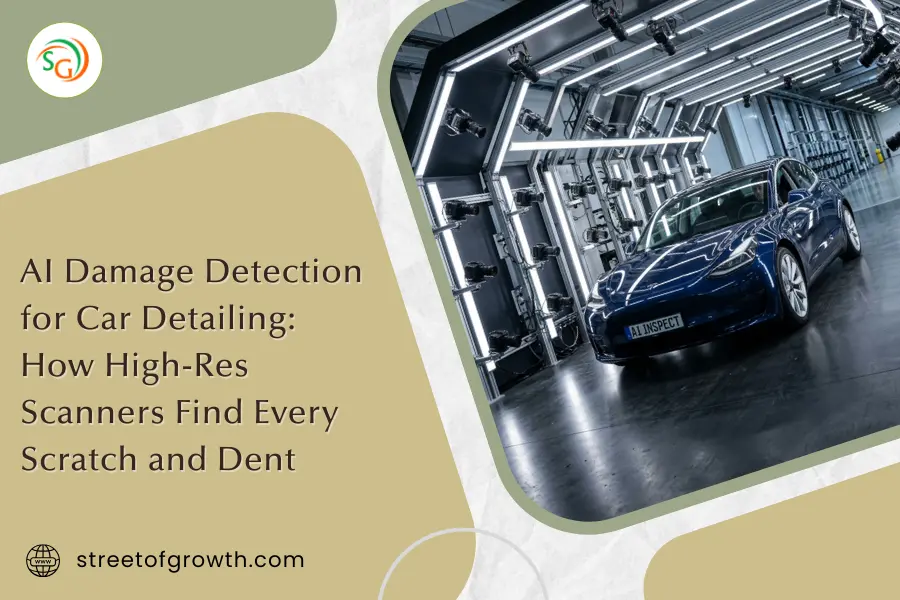
The vehicle is either driven through a scanning tunnel (similar to a car wash bay, but lined with cameras instead of brushes) or parked in a fixed station surrounded by imaging equipment. Professional setups use controlled lighting so shadows and reflections do not interfere with accuracy.
Step 2: High-Resolution Cameras Capture Thousands of Images
Multiple cameras photograph every square inch of the car’s exterior. We are talking about thousands of high-resolution images taken in seconds. Some systems also use 3D imaging and infrared sensors to detect problems beneath the paint surface, like filler from old body repairs or early rust formation.
Step 3: Artificial Intelligence Analyzes Every Image
This is the core of the system. The AI software, powered by convolutional neural networks (CNNs) and computer vision, examines each image and compares it to a training database of millions of paint conditions. It identifies each defect, classifies its type (scratch, dent, chip, swirl, oxidation), measures its size, and pinpoints its exact location on the vehicle.
According to Nissan’s own testing of their AUTIS Surface Verification System, AI-based inspections identify over 98% of flaws, compared to 85-95% for human inspectors. The AI also completes the job in less than half the time.
Step 4: A Full Visual Report Is Generated
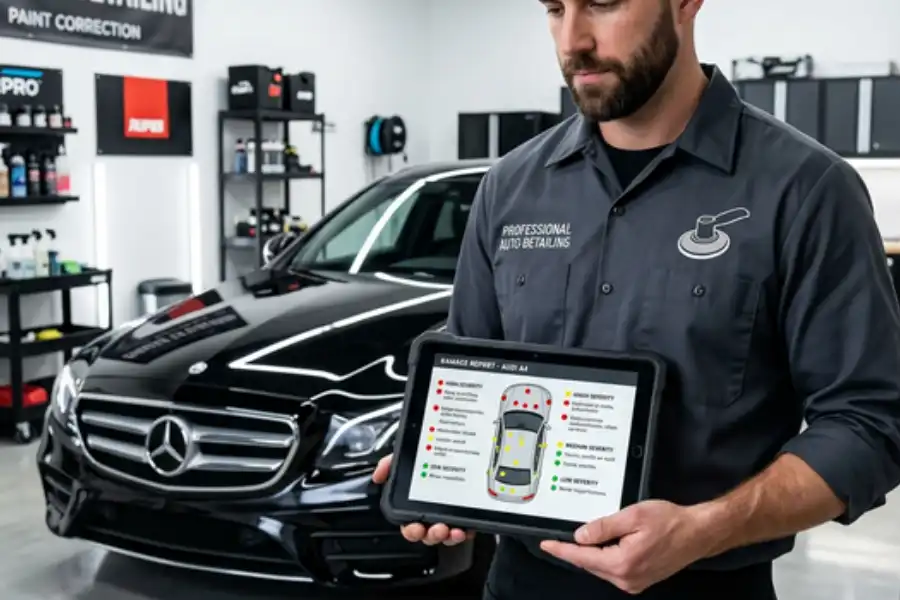
Within minutes, the system creates a digital damage map of the vehicle. Every defect is marked on a visual diagram of the car, often color-coded by severity: red for serious, yellow for moderate, green for minor. The report includes defect types, locations, measurements, and severity ratings.
This is the report the detailer uses to plan the correction work, and the report the customer sees to understand exactly what they are paying for.
What Types of Damage Can AI Scanners Detect on a Car?
AI damage scanners can detect a wide range of paint and body defects, including many that are invisible to the naked eye. Here is what they find:
- Surface scratches: from light swirl marks to key marks that cut through the clear coat
- Dents and dings: including shallow hail damage and parking lot door impacts
- Paint chips: caused by road debris, gravel, and small rocks
- Clear coat failure: peeling, cracking, or thinning of the protective top layer
- Oxidation: early-stage paint fading before it becomes visible to the eye
- Previous repaints and body repairs: areas where the car has been repainted after collision damage
- Holograms and buffer trails: marks left behind by incorrect machine polishing
- Water spot etching: mineral deposits that have permanently damaged the paint surface
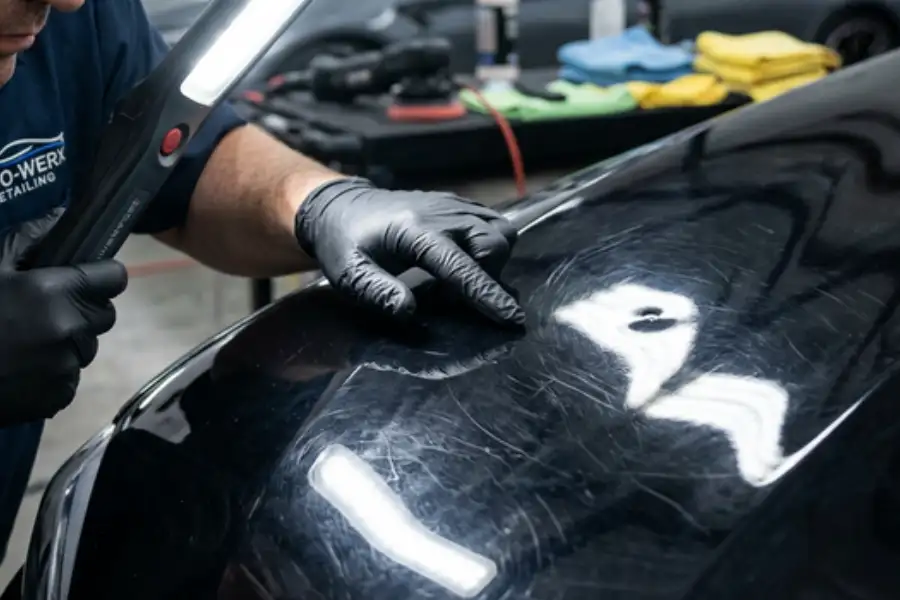
Higher-end systems that use 3D scanning and photometric stereo imaging can also create a three-dimensional surface map. This allows them to measure the precise depth of shallow dents that even a trained technician would miss during a hand inspection.
How Accurate Is AI Damage Detection Compared to a Human Inspector?
AI damage detection is significantly more accurate than human visual inspection. Here is a direct comparison based on industry-reported data:
Detection rate: AI systems detect over 98% of surface defects. Human inspectors typically catch 85% to 95%, depending on lighting, experience, and fatigue.
Speed: A manual paint inspection takes 20 to 40 minutes per vehicle. AI scanning finishes in 2 to 5 minutes.
Consistency: Human results vary from inspector to inspector and even shift to shift. AI delivers identical precision every time, on every car.
Documentation: Manual inspections rely on handwritten notes, memory, or basic checklists. AI creates instant, shareable digital reports with photos, diagrams, and severity ratings.
Transparency: Telling a customer “there are a few scratches” is very different from showing them a color-coded damage map on a screen with exact measurements.
Nissan’s AUTIS system, BMW’s robotic paint repair integration, and UVeye’s Atlas inspection platform have all published data confirming these accuracy advantages.
Why Does AI Damage Detection Matter for Car Owners?
AI scanning matters to car owners because it gives them something they have never had before: full, objective transparency about their vehicle’s paint condition. Here is why that is important:
You See Every Defect Before Paying for Any Work
The scan shows you a complete picture of your car’s paint before any detailing begins. You know exactly what needs fixing and what does not. This stops you from paying for expensive paint correction when you only have a few light swirls.
You Get Before-and-After Proof
Many professional shops now run a second scan after the detailing is finished. You get a side-by-side comparison proving the work made a real, measurable difference. That level of proof builds trust between you and the shop.
It Catches Problems Your Eyes Cannot
Micro-scratches, early oxidation, hairline clear coat cracks: these defects are invisible to the naked eye but cause serious damage if left untreated. AI catches them early, which can save you hundreds or even thousands of dollars in future paint repair costs.
It Protects You When Buying or Selling a Used Vehicle
Buying a used car? An AI scan can reveal hidden repaints, undisclosed body repairs, or damage the seller did not mention. Selling? A clean scan report increases your asking price because it gives the buyer documented proof the car was well maintained.
Why Are Detailing Shops Adopting AI Scanners?
Detailing shops are adopting AI scanners because they increase accuracy, reduce inspection time, build customer trust, and create a clear pricing foundation. Here is how:
Precision-Guided Paint Correction
Instead of relying on visual inspection under a light, the detailer gets a full digital defect map. The scanner tells them exactly where to focus the polisher, what type of defect they are correcting, and how aggressive the approach should be. This leads to better results and less risk of burning through the clear coat.
Faster Vehicle Turnaround
Cutting inspection time from 30+ minutes down to under 5 minutes means more cars processed per day, with no loss in quality. For a busy shop, that directly translates to higher revenue.
Stronger Customer Relationships
When you show customers a visual damage map before and after your work, you are proving your value with data. That builds loyalty, drives repeat visits, and generates word-of-mouth referrals. Shops that use this technology report higher average ticket prices because customers see exactly what they are getting.
Fair, Objective Pricing
No more guessing at quotes. The scan provides an objective baseline for pricing, so there are no disputes about what work was needed or what was done. Both the shop and the customer walk away satisfied.
How Much Does an AI Damage Detection System Cost?
The cost of an AI damage detection system varies based on the level of technology and the scale of the installation:
Entry-level systems ($3,000 to $10,000): Basic camera setups with AI analysis software. These work well for small to mid-size shops that want to add a scanning service to their existing workflow.
Mid-range systems ($10,000 to $30,000): 360-degree scanning with full reporting dashboards. This is the sweet spot for professional detailing shops that want to offer AI scanning as a premium service.
Enterprise-level portals ($6,000 to $7,000 per month lease, or $50,000+ to purchase): Full drive-through scanning tunnels used by large dealerships, rental car companies like Hertz, and fleet management operations.
According to a 2024 industry report, small detailing businesses using AI tools reported average annual savings of $7,500, with some saving over $20,000 from reduced errors, faster workflows, and fewer customer disputes. Many shop owners say entry-level systems pay for themselves within the first year.
Which Companies Make AI Damage Detection Scanners?
Several companies are leading the AI vehicle inspection market. Each offers a different approach to the technology:
- UVeye (Israel): Manufactures the Atlas exterior inspection system, used on automotive assembly lines and by dealerships. Uses under-vehicle and side-scanning cameras with AI to detect body damage, tire wear, and underbody issues.
- ProovStation / CarStation (France): Builds drive-through scanning portals that generate full vehicle condition reports in under 10 seconds. Used by fleet operators and large dealer groups.
- Ravin AI (Israel): Offers AI inspection through both mobile apps and fixed camera installations. Allows damage assessment from smartphone photos, making it accessible for smaller operations.
- Tchek AI / ALTO AI (France): Specializes in AI-based damage assessment for rental car fleets, leasing companies, and dealership trade-ins.
- Inspektlabs (India): Provides AI-driven visual inspection APIs that businesses can integrate into their own platforms for vehicle condition reporting.
- Spyne AI (India): Uses machine learning to detect and classify vehicle damage from uploaded photos, primarily serving the used car marketplace.
The global market for AI-powered automotive paint defect detection is projected to reach $2.88 billion by 2026, according to 360iResearch, signaling rapid adoption across the entire automotive industry.
What Technology Powers AI Damage Detection?
AI damage detection scanners run on a combination of these core technologies:
- Computer Vision: The AI equivalent of human sight. Software processes camera images the same way your brain processes what your eyes see, but much faster and at a higher resolution.
- Convolutional Neural Networks (CNNs): A type of artificial intelligence specifically designed for image analysis. CNNs break each photo into tiny sections and study patterns at a pixel level to identify defects.
- Machine Learning: The system has been trained on millions of images of vehicle paint, both perfect and damaged. It continuously improves its accuracy as technicians confirm or correct its findings over time.
- 3D Surface Reconstruction: Some systems build a three-dimensional model of the vehicle surface using photometric stereo, allowing them to measure the exact depth and shape of dents and scratches.
- Infrared Imaging: Detects heat differences beneath the surface, revealing hidden issues like rust, body filler, or structural repairs not visible to normal cameras.
Can You Get an AI Damage Scan Done on Your Personal Car?
Yes. An increasing number of detailing shops, dealerships, and independent vehicle inspection services now offer AI damage scanning to individual car owners. Some offer it as a standalone service, while others include it in their premium detailing packages.
If no shops near you have a full scanning system yet, companies like Ravin AI and Spyne AI offer mobile-app-based assessments where you upload photos of your vehicle and the AI analyzes them remotely. The results are less precise than a full scanner setup, but still far more thorough than a visual hand inspection.
Where Is AI Damage Detection Technology Heading?
This technology is still in its early stages, and the pace of development is rapid. Here is what industry experts and current R&D trends point to:
- Smartphone-based full scans: AI models are getting small enough to run on mobile devices. Within the next few years, detailers and car owners may be able to run a full paint scan using just a phone camera and an app.
- Self-healing paint coatings with AI monitoring: Graphene-based and nano-ceramic coatings that repair minor surface scratches on their own, paired with AI systems that track the coating’s condition and notify owners when reapplication is needed.
- Robotic detailing bays: Facilities where AI scans the vehicle, creates a correction plan, and robotic arms carry out the polishing and coating work, all guided by the scan data.
- Direct insurance integration: AI scan reports sent straight to insurance providers for faster claims processing and fraud reduction. This is already being piloted by several major insurers.
- Predictive paint care: AI tracking your car’s paint condition over time and alerting you when a protective treatment is needed, before damage becomes expensive to repair.
Frequently Asked Questions
How long does an AI damage scan take on a car?
A full AI exterior scan takes 2 to 5 minutes. This includes image capture, AI analysis, and report generation. Compare that to 20 to 40 minutes for a manual hand inspection.
Does AI damage detection work on all car makes and models?
Yes. AI damage scanners work on any vehicle regardless of make, model, color, or price range. The technology analyzes paint surface conditions, not specific vehicle brands, so it works the same way on a Honda Civic as it does on a Porsche 911.
Will AI replace human car detailers?
No. AI is an inspection and diagnostic tool. It tells the detailer exactly what is wrong and where. The hands-on correction work, polishing, coating application, and quality finishing, still requires skilled human technicians. AI makes their work more precise, not unnecessary.
Can AI scanners see damage under the paint?
Higher-end systems equipped with infrared sensors and 3D photometric scanning can detect sub-surface issues like body filler, hidden rust, and structural repairs beneath the paint. Standard camera-based systems focus on visible surface defects.
Does the weather or lighting affect AI scan accuracy?
Professional scanning systems operate in controlled lighting environments inside an enclosed bay or tunnel. Natural weather and ambient light conditions do not affect accuracy when proper equipment is used.
Is AI damage detection worth the investment for a small detailing shop?
For most shops, yes. Entry-level systems start at $3,000 and many owners report the scanner paying for itself within the first year through faster inspections, higher ticket averages, fewer disputes, and stronger customer retention. Annual savings of $7,500 or more have been reported by small businesses using AI tools.
How does AI damage detection help when buying a used car?
An AI scan reveals repaints, undisclosed body repairs, inconsistent paint thickness, and hidden defects that a visual walkaround would miss. This gives buyers an objective, data-backed view of the vehicle’s true condition before committing to a purchase.
Wrapping It Up
AI damage detection is changing the way car detailing professionals and vehicle owners understand paint condition. High-resolution scanners that map every scratch, dent, and surface defect are delivering a level of clarity and accuracy that was not possible even a few years ago.
The technology is proven. It is already in use by major automakers like Nissan and BMW, rental companies like Hertz, and a growing number of independent detailing shops. With costs dropping and smartphone-based scanning on the horizon, this is quickly becoming the new standard for vehicle paint inspection.
Whether you are a car owner looking for honest answers about your paint, a detailer who wants to back up their work with real data, or someone shopping for a used vehicle and wanting full transparency, AI damage detection gives you exactly that.
Your car’s paint tells a story. Now there is a scanner that can read every single page of it.