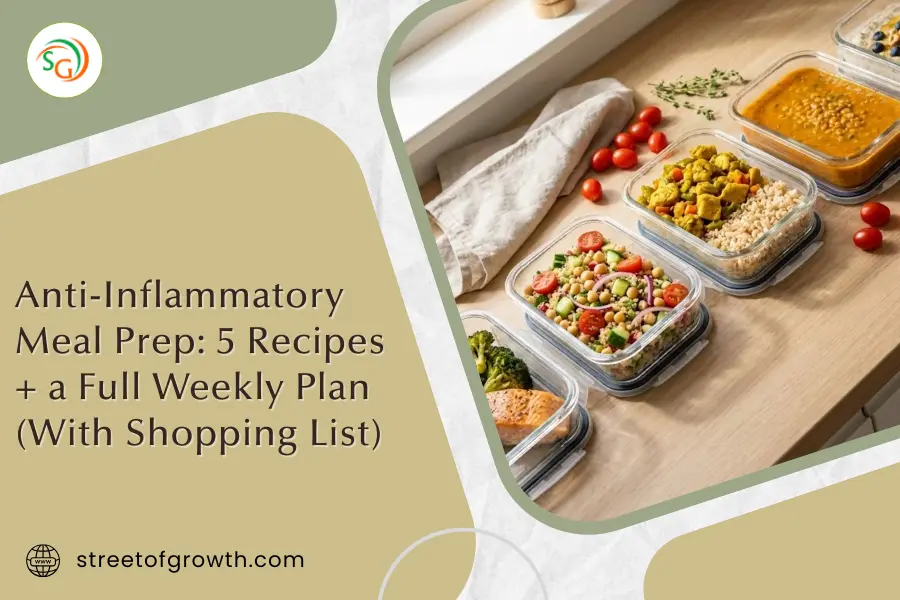
Anti-Inflammatory Meal Prep: 5 Recipes + a Full Weekly Plan (With Shopping List)
You wake up tired. Your joints ache before you even get out of bed. By 3 PM, brain fog sets in and you reach for another coffee just to get through the day. Sound familiar?
Chronic inflammation might be the hidden culprit. And while you have probably heard that changing your diet can help, the thought of cooking special meals every single day feels impossible when you are already exhausted. That is exactly why meal prep changes everything.
This article gives you a full seven-day anti-inflammatory meal plan, five simple recipes you can batch cook in one afternoon, and a step-by-step prep day plan. No more guessing what to eat. No more expensive takeout because you are too tired to cook. Just ready-to-eat meals waiting in your fridge.
What Makes Food Anti-Inflammatory?
Before we get to the recipes, here is a quick rundown of why certain foods help reduce inflammation. Understanding this will help you make smart swaps when needed.
Omega-3 fatty acids found in salmon, sardines, walnuts, and flaxseeds directly combat inflammation at the cellular level. According to research published in the Journal of the American College of Cardiology, these fatty acids help produce compounds called resolvins that calm your body’s inflammatory response.
Antioxidants in colorful fruits and vegetables neutralize free radicals that trigger inflammation. Think berries, leafy greens, tomatoes, and bell peppers.
Fiber from whole grains, beans, and vegetables feeds good gut bacteria, which plays a major role in controlling inflammation throughout your body.
Polyphenols in olive oil, green tea, turmeric, and dark chocolate have strong anti-inflammatory effects that researchers are still learning about.
The foods to avoid? Processed snacks, sugary drinks, refined carbs like white bread, and excessive red meat. As Harvard Health explains, these trigger inflammation instead of fighting it.
Your 7-Day Anti-Inflammatory Meal Plan
This meal plan is designed for real life. Breakfasts are quick. Lunches and dinners repeat on purpose so you cook less but eat well all week. Each day delivers anti-inflammatory foods without requiring you to be a chef.
Day 1: Monday
Breakfast: Overnight oats with blueberries and walnuts
Lunch: Mediterranean quinoa bowl with chickpeas and vegetables
Dinner: Baked salmon with roasted sweet potatoes and broccoli
Snack: Apple slices with almond butter
Day 2: Tuesday
Breakfast: Overnight oats with blueberries and walnuts
Lunch: Mediterranean quinoa bowl with chickpeas and vegetables
Dinner: Turmeric chicken stir-fry with brown rice
Snack: Handful of mixed nuts and dried cherries
Day 3: Wednesday
Breakfast: Green smoothie with spinach, banana, and flaxseed
Lunch: Leftover salmon with mixed greens salad
Dinner: Lentil vegetable soup with whole grain bread
Snack: Carrot sticks with hummus
Day 4: Thursday
Breakfast: Overnight oats with blueberries and walnuts
Lunch: Lentil vegetable soup
Dinner: Turmeric chicken stir-fry with brown rice
Snack: Greek yogurt with a drizzle of honey and walnuts
Day 5: Friday
Breakfast: Green smoothie with spinach, banana, and flaxseed
Lunch: Mediterranean quinoa bowl with chickpeas and vegetables
Dinner: Baked salmon with roasted sweet potatoes and broccoli
Snack: Dark chocolate square with almonds
Day 6: Saturday
Breakfast: Avocado toast on whole grain bread with cherry tomatoes
Lunch: Lentil vegetable soup
Dinner: Grilled chicken over mixed greens with olive oil dressing
Snack: Fresh berries
Day 7: Sunday
Breakfast: Veggie scrambled eggs with spinach and tomatoes
Lunch: Leftover quinoa bowl
Dinner: Leftover turmeric chicken with steamed vegetables
Snack: Celery with almond butter
5 Batch-Cook Recipes That Last All Week
These five recipes form the foundation of your meal prep. Make them all on Sunday afternoon, and you will have most of your meals ready to grab and heat.
Recipe 1: Overnight Oats with Blueberries and Walnuts
Prep time: 5 minutes | Servings: 4
This no-cook breakfast takes minutes to prepare and waits for you in the fridge. Blueberries are packed with anthocyanins that fight inflammation, while walnuts provide omega-3s and fiber.
Ingredients
- 2 cups rolled oats
- 2 cups unsweetened almond milk
- 1 cup plain Greek yogurt
- 2 tablespoons honey or maple syrup
- 1 teaspoon vanilla extract
- 1 cup fresh or frozen blueberries
- 1/2 cup chopped walnuts
- Pinch of cinnamon
Instructions
- In a large bowl, mix oats, almond milk, yogurt, honey, vanilla, and cinnamon until combined.
- Divide mixture evenly among four mason jars or containers.
- Top each jar with blueberries and walnuts.
- Seal and refrigerate overnight or at least 4 hours.
- Eat cold or microwave for 1-2 minutes if you prefer it warm.
Recipe 2: Mediterranean Quinoa Bowl
Prep time: 15 minutes | Cook time: 20 minutes | Servings: 4
This colorful bowl brings together chickpeas for plant protein, olive oil for healthy fats, and a rainbow of vegetables loaded with antioxidants. It tastes even better after a day in the fridge as the flavors blend together.
Ingredients
- 1 cup dry quinoa
- 2 cups water or vegetable broth
- 1 can (15 oz) chickpeas, drained and rinsed
- 1 cucumber, diced
- 1 cup cherry tomatoes, halved
- 1/2 red onion, finely diced
- 1/2 cup kalamata olives, halved
- 1/4 cup crumbled feta cheese (optional)
- 3 tablespoons extra virgin olive oil
- 2 tablespoons fresh lemon juice
- 1 teaspoon dried oregano
- Salt and pepper to taste
Instructions
- Rinse quinoa under cold water. Add to a pot with water or broth and bring to a boil.
- Reduce heat to low, cover, and simmer for 15 minutes until liquid is absorbed.
- Fluff with a fork and let cool for 10 minutes.
- In a large bowl, combine cooled quinoa, chickpeas, cucumber, tomatoes, onion, and olives.
- Whisk together olive oil, lemon juice, oregano, salt, and pepper.
- Pour dressing over the bowl and toss gently.
- Top with feta if using.
- Divide into four containers for the week.
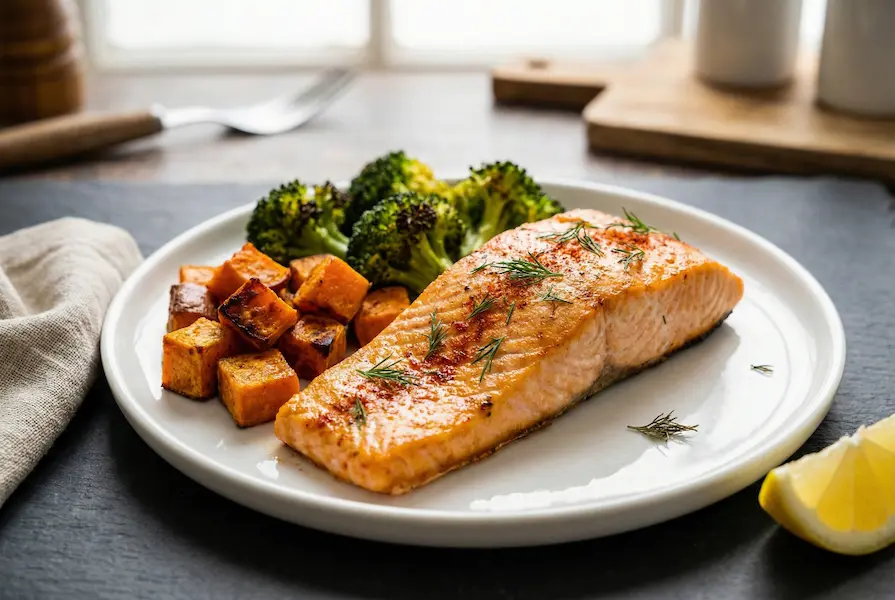
Recipe 3: Baked Salmon with Sweet Potatoes and Broccoli
Prep time: 10 minutes | Cook time: 25 minutes | Servings: 4
Salmon is one of the best sources of omega-3 fatty acids, which directly reduce inflammatory markers in your body. Sweet potatoes add fiber and beta-carotene, while broccoli provides sulforaphane, another strong anti-inflammatory compound.
Ingredients
- 4 salmon fillets (about 6 oz each)
- 2 large sweet potatoes, cubed
- 4 cups broccoli florets
- 3 tablespoons extra virgin olive oil, divided
- 2 cloves garlic, minced
- 1 teaspoon paprika
- 1/2 teaspoon turmeric
- Juice of 1 lemon
- Fresh dill or parsley for garnish
- Salt and pepper to taste
Instructions
- Preheat oven to 400°F (200°C). Line two baking sheets with parchment paper.
- Toss sweet potato cubes with 1 tablespoon olive oil, salt, and pepper. Spread on one baking sheet.
- Roast sweet potatoes for 15 minutes.
- Meanwhile, toss broccoli with 1 tablespoon olive oil and garlic.
- Place salmon fillets on the second baking sheet. Drizzle with remaining olive oil and lemon juice. Season with paprika, turmeric, salt, and pepper.
- After sweet potatoes have roasted 15 minutes, add broccoli to that pan and stir. Place salmon pan in oven too.
- Bake everything for 12-15 more minutes until salmon flakes easily and vegetables are tender.
- Garnish with fresh herbs. Divide into four containers.
Recipe 4: Turmeric Chicken Stir-Fry
Prep time: 15 minutes | Cook time: 15 minutes | Servings: 4
Turmeric contains curcumin, one of the most studied anti-inflammatory compounds in food science. According to Johns Hopkins Medicine, pairing turmeric with black pepper increases absorption by up to 2000%. This stir-fry is quick to make and reheats perfectly.
Ingredients
- 1.5 lbs boneless skinless chicken breast, sliced thin
- 2 cups broccoli florets
- 1 red bell pepper, sliced
- 1 cup snap peas
- 3 cloves garlic, minced
- 1 tablespoon fresh ginger, minced
- 2 tablespoons avocado or olive oil
- 1 teaspoon turmeric powder
- 1/4 teaspoon black pepper
- 3 tablespoons low-sodium soy sauce or coconut aminos
- 1 tablespoon honey
- 2 cups cooked brown rice for serving
Instructions
- Season chicken slices with turmeric, black pepper, and a pinch of salt.
- Heat 1 tablespoon oil in a large skillet or wok over high heat.
- Cook chicken for 5-6 minutes until golden and cooked through. Remove and set aside.
- Add remaining oil to pan. Stir-fry broccoli, bell pepper, and snap peas for 3-4 minutes.
- Add garlic and ginger. Cook 1 minute until fragrant.
- Return chicken to pan. Add soy sauce and honey. Toss everything together.
- Cook 1-2 more minutes until sauce coats everything.
- Serve over brown rice. Divide into four containers.
Recipe 5: Lentil Vegetable Soup
Prep time: 15 minutes | Cook time: 35 minutes | Servings: 6
Lentils are fiber powerhouses that support gut health and provide plant-based protein. This soup is loaded with vegetables and warming spices that all work together to calm inflammation. It freezes beautifully, so make a double batch.
Ingredients
- 1.5 cups dry green or brown lentils, rinsed
- 6 cups low-sodium vegetable broth
- 1 can (14 oz) diced tomatoes
- 3 carrots, diced
- 3 celery stalks, diced
- 1 onion, diced
- 4 cloves garlic, minced
- 2 cups fresh spinach or kale
- 2 tablespoons extra virgin olive oil
- 1 teaspoon cumin
- 1 teaspoon turmeric
- 1/2 teaspoon smoked paprika
- Juice of 1 lemon
- Salt and pepper to taste
Instructions
- Heat olive oil in a large pot over medium heat.
- Add onion, carrots, and celery. Cook 5 minutes until softened.
- Add garlic, cumin, turmeric, and paprika. Stir for 1 minute.
- Add lentils, broth, and diced tomatoes. Bring to a boil.
- Reduce heat and simmer for 25-30 minutes until lentils are tender.
- Stir in spinach or kale and cook 2 more minutes until wilted.
- Add lemon juice, salt, and pepper to taste.
- Divide into containers. Refrigerate or freeze.
Your Sunday Prep Day Plan
Set aside about 2.5 to 3 hours on Sunday afternoon. Put on some music or a podcast, and follow this order to prep your entire week efficiently.
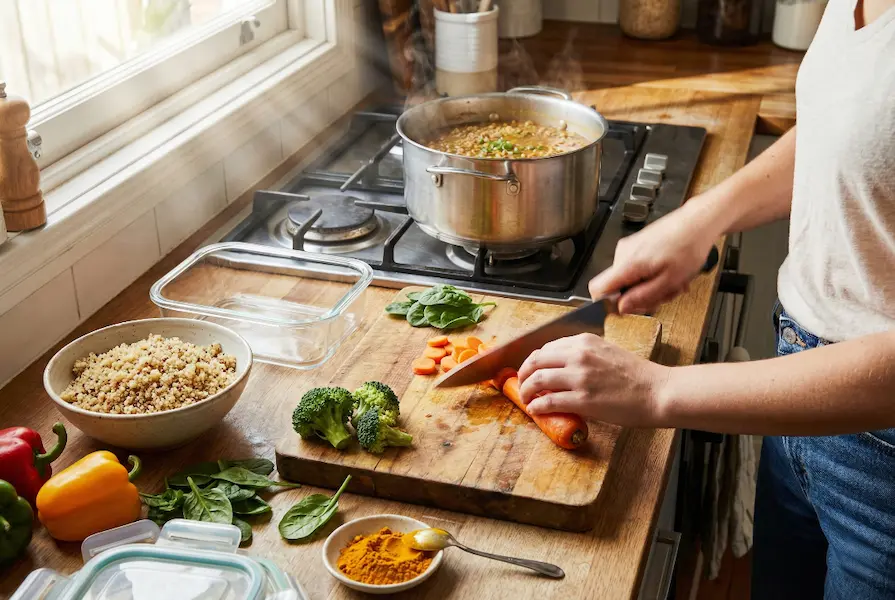
Step 1: Start the Lentil Soup (5 minutes active, 35 minutes simmering)
Get the soup going first since it simmers on its own. Chop the vegetables, start the pot, and let it cook while you work on everything else.
Step 2: Cook Quinoa and Brown Rice (5 minutes active, 20 minutes cooking)
Start both grains at the same time. Quinoa takes about 15 minutes and brown rice takes about 40-45 minutes. You can use a rice cooker or Instant Pot to make this hands-off.
Step 3: Prep Overnight Oats (10 minutes)
While grains cook, assemble your four jars of overnight oats. This takes no cooking at all.
Step 4: Prep and Roast Salmon and Vegetables (10 minutes active, 25 minutes cooking)
Preheat the oven. Cube the sweet potatoes and get them roasting. Prep the salmon and broccoli. This cooks while you make the stir-fry.
Step 5: Make Turmeric Chicken Stir-Fry (20 minutes)
While the salmon roasts, cook the stir-fry on the stovetop. It comes together fast.
Step 6: Assemble Mediterranean Quinoa Bowls (15 minutes)
Once the quinoa is cool, chop the vegetables and assemble your bowls. The dressing comes together in seconds.
Step 7: Portion and Store Everything (15 minutes)
Divide all meals into containers. Label with the day you plan to eat them. Stack in your fridge and you are done.
Full Weekly Shopping List
This list is organized by store section to make your shopping trip faster. Check your pantry first since you may already have some of these staples.
Produce Section
- 2 large sweet potatoes
- 8 cups broccoli florets (about 2 large heads)
- 2 cucumbers
- 2 cups cherry tomatoes
- 1 red onion
- 1 yellow onion
- 2 red bell peppers
- 1 cup snap peas
- 3 carrots
- 3 celery stalks
- 2 cups fresh spinach
- 2 heads garlic
- Fresh ginger root
- 3 lemons
- 2 ripe avocados
- 3 bananas
- 2 apples
- 2 cups fresh blueberries
- Fresh dill or parsley
Meat and Seafood
- 4 salmon fillets (6 oz each)
- 1.5 lbs boneless skinless chicken breast
Dairy and Refrigerated
- 1 container plain Greek yogurt
- 1 carton unsweetened almond milk
- 1 dozen eggs
- Feta cheese (optional)
- Hummus
Pantry Items
- 2 cups rolled oats
- 1 cup dry quinoa
- 2 cups brown rice
- 1.5 cups dry lentils
- 1 can chickpeas (15 oz)
- 1 can diced tomatoes (14 oz)
- 6 cups vegetable broth
- Extra virgin olive oil
- Avocado oil
- Kalamata olives
- Walnuts
- Almonds
- Almond butter
- Ground flaxseed
- Honey or maple syrup
- Low-sodium soy sauce or coconut aminos
- Vanilla extract
- Dark chocolate (70% cacao or higher)
- Whole grain bread
Spices
- Turmeric
- Cumin
- Paprika
- Smoked paprika
- Dried oregano
- Cinnamon
- Black pepper
- Salt
Storage and Reheating Tips
Proper storage keeps your prepped meals fresh and safe to eat all week. Follow these guidelines for best results.
Refrigerator Storage Times
- Overnight oats: Up to 5 days
- Quinoa bowls: 4-5 days
- Cooked salmon: 3-4 days
- Chicken stir-fry: 4 days
- Lentil soup: 5-6 days
- Cooked brown rice: 5-6 days
Freezer-Friendly Options
The lentil soup freezes beautifully for up to 3 months. Let it cool down before transferring to freezer-safe containers, leaving about an inch of space at the top for expansion. Thaw overnight in the refrigerator before reheating.
You can also freeze cooked brown rice in individual portions. It reheats well in the microwave with a splash of water.
Reheating Instructions
Salmon: Reheat gently at 275°F in the oven for 10-12 minutes to prevent drying out. Or, eat it cold over salad.
Chicken stir-fry: Microwave for 2-3 minutes, stirring halfway through. Add a splash of water if needed.
Lentil soup: Reheat on the stovetop over medium heat, adding broth or water as needed since it thickens as it sits.
Quinoa bowls: Best served cold or at room temperature. If you prefer warm, microwave for 1-2 minutes.
Container Tips
Glass containers work best for meal prep since they do not stain, hold odors, or leach chemicals when heated. Look for containers with snap-lock lids that seal tightly. Mason jars are perfect for overnight oats and soups.
Common Questions About Anti-Inflammatory Meal Prep
How quickly will I notice results from eating anti-inflammatory foods?
Most people notice better energy and less bloating within the first week or two. Bigger changes in joint pain, skin issues, or other inflammation-related symptoms typically take 3-6 weeks of consistent eating. Everyone responds differently, so be patient and track how you feel.
Can I swap ingredients if I have allergies or preferences?
Absolutely. The key is keeping the anti-inflammatory principles in mind. If you cannot eat salmon, try mackerel, sardines, or trout since they all provide omega-3s. If you avoid dairy, skip the feta and yogurt or use plant-based versions. If you dislike quinoa, use farro, bulgur, or brown rice instead.
Is this meal plan suitable for vegetarians?
The recipes can be adapted. Replace salmon with extra chickpeas or baked tofu. Substitute the chicken in the stir-fry with tempeh or edamame. The lentil soup and quinoa bowls are already vegetarian. Just make sure you are getting enough protein and omega-3s from plant sources like walnuts, chia seeds, and flaxseed.
How much does this meal plan cost per week?
Depending on where you shop, expect to spend roughly $80-120 for one person for the week. Buying store-brand items, shopping sales, and using frozen vegetables when possible can reduce costs. The good news is that cooking at home is almost always cheaper than eating out or buying pre-made health foods.
Can I prep meals twice a week instead of all on Sunday?
Yes. Some people prefer doing a smaller prep on Sunday and another on Wednesday. This keeps everything fresher and gives you more flexibility. Just split the recipes so you are not cooking the same amount of food.
What if I get bored eating the same meals?
Rotate your recipes every few weeks. This article gives you a starting framework, but you can swap in different proteins, vegetables, and grains while keeping the anti-inflammatory principles. Try different cuisines like Asian-inspired, Mexican, or Indian flavors to keep things interesting.
Do I need to buy organic produce?
Organic is ideal when possible, especially for items on the Environmental Working Group’s Dirty Dozen list like strawberries, spinach, and apples. However, eating conventional produce is still far better than skipping fruits and vegetables altogether. Do not let perfect be the enemy of good.
Start This Weekend
You now have everything you need: a full meal plan, recipes designed for batch cooking, a step-by-step prep schedule, and a shopping list ready to print. The hardest part is simply starting.
Pick one day this weekend. Buy the groceries. Set aside a few hours. Follow the prep plan. By Sunday evening, you will have a refrigerator full of meals that actually help your body instead of hurting it.
Inflammation did not build up overnight, and it will not disappear overnight either. But every anti-inflammatory meal you eat is a step toward feeling better. And with meal prep, those steps become automatic.
Your future self will thank you.