Vagal Tone Exercises for Anxiety: 9 Simple Ways to Calm Down Fast
Your heart is racing. Your chest feels tight. Your mind won’t stop spinning with worst-case scenarios. You’ve tried the usual advice (deep breaths, positive thinking, meditation apps), but the anxiety keeps creeping back, sometimes within minutes.
What if I told you there’s a specific nerve in your body that acts like a brake pedal for anxiety? And better yet, you can train it to work better?
This isn’t some new-age wellness trend. It’s based on how your nervous system actually works. The secret lies in something called vagal tone, and learning how to improve it might be the missing piece in your anxiety relief puzzle.
What Is Vagal Tone?
Think of your vagus nerve as a two-way highway between your brain and most of your major organs (your heart, lungs, stomach, and more). It’s the longest nerve in your body, running from your brainstem all the way down to your gut.
Now the interesting part: this nerve is like a remote control for your stress levels.
When your vagus nerve is working well, it helps you:
- Calm down quickly after stress
- Keep your heart rate steady
- Think clearly under pressure
- Feel safe and relaxed in your body
“Vagal tone” is basically a measure of how well this nerve is doing its job. High vagal tone means your body bounces back from stress easily. Low vagal tone means you get stuck in anxious, stressed-out states and have a harder time finding your calm.
An everyday example: Imagine two people in traffic. Person A (high vagal tone) gets cut off, feels a flash of anger, takes a deep breath, and moves on within seconds. Person B (low vagal tone) gets cut off, and 20 minutes later they’re still gripping the steering wheel, heart pounding, replaying the incident.
Same situation. Different vagal tone. Completely different experiences.
Why Your Vagal Tone Matters for Anxiety
Your anxiety isn’t just in your head. It’s in your body. And your vagus nerve is the bridge between the two.
When something triggers your anxiety (a deadline, a social situation, even just waking up some mornings), your body kicks into survival mode. Your sympathetic nervous system fires up: faster heartbeat, shallow breathing, tense muscles. This is your “fight or flight” response.
Research shows that vagal tone plays a critical role in regulating anxiety and stress responses, affecting everything from your heart rate to your emotional state.
Your vagus nerve’s job is to activate the opposite system, your parasympathetic nervous system (the “rest and digest” mode). It’s supposed to tell your body, “Hey, we’re okay now. Time to calm down.”
But if your vagal tone is low, that message doesn’t get through clearly. It’s like trying to make a phone call with one bar of signal. The message gets garbled or doesn’t arrive at all. So your body stays in high alert mode, and you feel anxious for hours, days, or even constantly.
The good news? You can strengthen your vagal tone. Just like you can train your muscles at the gym, you can train your vagus nerve to be more responsive. When you do, you’ll notice:
- Anxiety episodes don’t hit as hard
- You recover from stress faster
- Your baseline mood improves
- Physical anxiety symptoms (racing heart, tight chest, upset stomach) decrease
- You feel more present and less “in your head”
The Exercises: From Easiest to Most Powerful
Most articles dump 10-12 exercises on you at once. That’s overwhelming. Instead, I’m organizing these by difficulty and time commitment, starting with the easiest ones you can do right now.
Level 1: Quick Relief Techniques (30 Seconds to 5 Minutes)
These are your emergency tools. Use them when anxiety strikes and you need immediate relief.
1. The Extended Exhale Breath
This is the fastest way to activate your vagus nerve. It takes 2 minutes or less.
How to do it:
- Breathe in through your nose for 4 counts
- Breathe out through your mouth for 6-8 counts
- Repeat for 6-10 breaths
The key is making your exhale longer than your inhale. This tells your vagus nerve to flip the switch from “stress mode” to “calm mode.”
When to use it: Before a presentation, during a panic attack, when you wake up anxious, in the middle of a stressful conversation.
2. Cold Water on Your Face
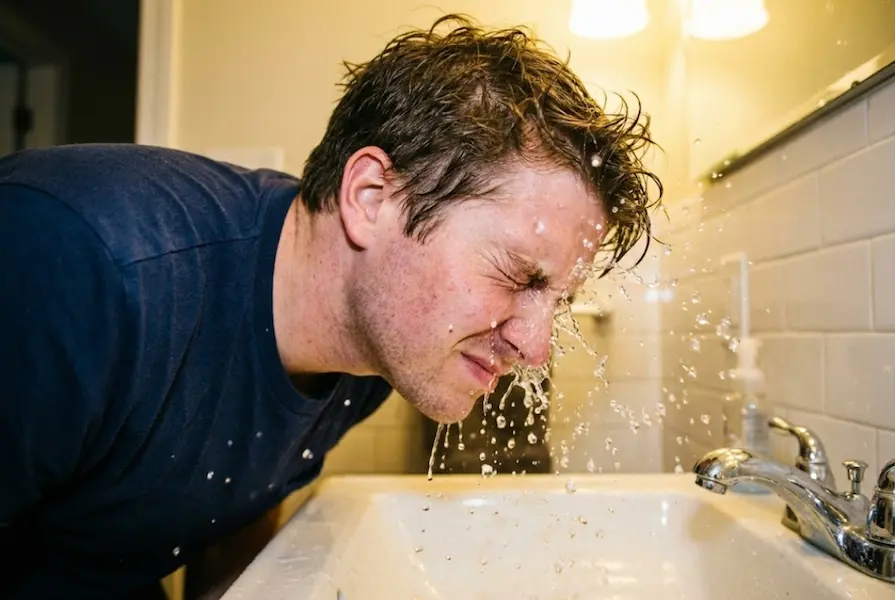
Splashing cold water on your face or holding a cold pack against it triggers something called the “mammalian dive reflex.” Studies confirm this response significantly increases vagal activity, immediately slowing your heart rate and activating your vagus nerve.
How to do it:
- Fill a bowl with cold water and ice
- Hold your breath and dunk your face for 15-30 seconds
- Or simply splash cold water on your face 5-10 times
- Breathing normally, let the cold sensation settle
When to use it: During intense anxiety or panic, when breathing exercises alone aren’t cutting it.
3. Humming or Singing
Your vocal cords are connected to your vagus nerve. When you create vibrations by humming or singing, you’re physically stimulating the nerve.
How to do it:
- Hum any tune (even just one note)
- Feel the vibration in your throat and chest
- Do this for 1-3 minutes
- Louder and lower tones work better
When to use it: In the car, in the shower, while doing chores. It’s an easy add-on to activities you’re already doing.
Level 2: Daily Builders (5-15 Minutes)
These exercises are more powerful but require a bit more time. Do one or two daily to build stronger vagal tone over time.
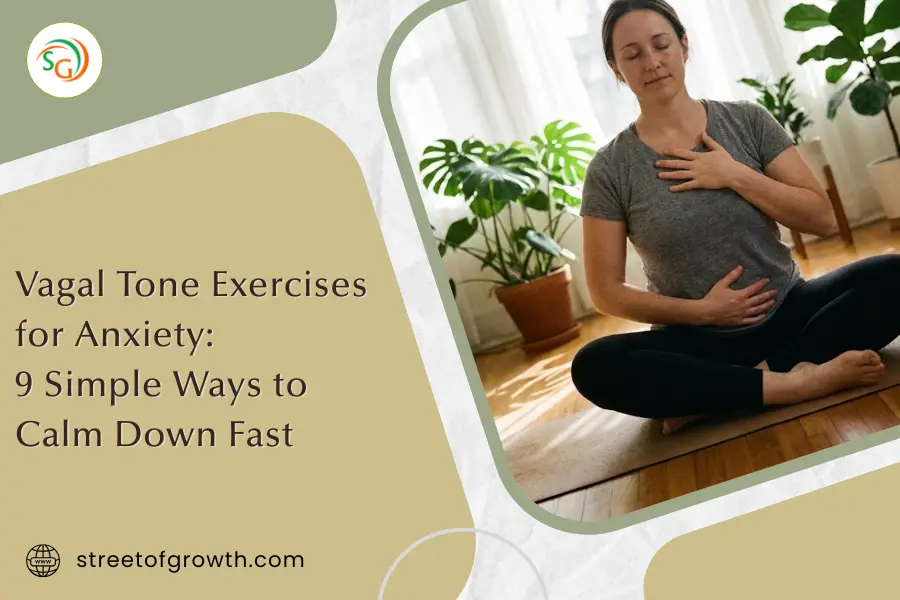
4. Deep Belly Breathing Practice
This goes deeper than the quick extended exhale. You’re training your body to breathe in a way that constantly supports vagal tone. Research demonstrates that slow, deep breathing directly stimulates the vagus nerve and increases parasympathetic activity.
How to do it:
- Lie down or sit comfortably
- Place one hand on your chest, one on your belly
- Breathe in slowly through your nose, letting your belly rise (chest stays still)
- Breathe out slowly through your mouth, belly falls
- Do this for 5-10 minutes
- Aim for 5-6 breaths per minute (slower than normal)
Why it works: Your diaphragm (the muscle that moves when you belly breathe) is directly connected to your vagus nerve. Deep, slow breathing constantly massages and stimulates this nerve.
When to do it: First thing in the morning, before bed, or during a midday break.
5. Mindful Movement (Yoga, Tai Chi, Gentle Stretching)
Moving your body slowly and intentionally while focusing on your breath creates a powerful vagal nerve workout.
How to do it:
- Choose any gentle movement practice
- Move slowly, matching breath to movement
- Pay attention to physical sensations
- 10-15 minutes is plenty
- Focus on the connection between breath and body
Why it works: The combination of movement, breath awareness, and present-moment focus all activate your parasympathetic nervous system.
When to do it: Morning routine, lunch break, evening wind-down.
6. Social Connection
This one surprises people, but authentic connection with others is one of the most powerful ways to strengthen vagal tone.
How to do it:
- Have a real conversation with someone you trust
- Make eye contact
- Listen actively (not planning what you’ll say next)
- Share something genuine
- Even 10-15 minutes counts
Why it works: Your vagus nerve is deeply connected to your social engagement system. Feeling safe with another person is one of the strongest signals that tells your nervous system, “We’re okay. No threat here.”
When to do it: Coffee with a friend, phone call with family, quality time with a partner.
Level 3: Lifestyle Builders (Ongoing)
These aren’t single exercises, but habits that build vagal tone over weeks and months.
7. Regular Exercise
Both cardio and strength training improve vagal tone. You don’t need to become an athlete. Even walking counts.
The goal:
- 20-30 minutes most days
- Mix of cardio (walking, jogging, cycling) and resistance (weights, bodyweight exercises)
- Find something you actually enjoy so you’ll stick with it
Why it works: Exercise increases heart rate variability (the spacing between heartbeats), which is the main way we measure vagal tone. People who exercise regularly have significantly better vagal tone.
8. Cold Exposure
Going beyond the quick face splash, regular cold exposure (cold showers, ice baths, swimming in cold water) is a powerful vagal tone trainer.
How to start:
- Add 30 seconds of cold water at the end of your regular shower
- Gradually increase to 1-2 minutes
- Or place an ice pack on the back of your neck for 2-3 minutes
- Consistency matters more than intensity
Why it works: Cold exposure is a controlled stressor. Your body learns to activate the calm response even during stress, which strengthens overall vagal tone.
9. Quality Sleep
Poor sleep wrecks vagal tone. Good sleep rebuilds it.
The basics:
- Aim for 7-9 hours
- Keep a consistent sleep schedule
- Make your bedroom cool and dark
- Avoid screens 30-60 minutes before bed
Why it matters: Your vagus nerve does a lot of its recovery work during sleep. Chronic poor sleep creates chronically low vagal tone, making anxiety worse.
Building Your Personal Vagal Tone Routine
The truth is you don’t need to do all of these exercises. Pick a few that fit your life, and do them consistently. That’s what actually works.

A simple starter plan:
Morning (5 minutes):
- 5 minutes of deep belly breathing when you wake up
Throughout the Day (2-5 minutes as needed):
- Extended exhale breathing whenever anxiety spikes
- Humming while doing tasks
Evening (10-15 minutes):
- 10 minutes of gentle movement or yoga
- End your shower with 30-60 seconds of cold water
Weekly:
- 3-4 sessions of 20-30 minute exercise
- One meaningful social connection
That’s it. Simple, doable, effective.
After 2-4 weeks, you should notice:
- Anxiety episodes are less intense
- You calm down faster
- Your baseline feels more relaxed
- Physical anxiety symptoms decrease
Quick Relief vs. Long-Term Building: Understanding the Difference
This is important: some exercises give you immediate relief, while others build your vagal tone over time. You need both.
For Immediate Relief (use during anxiety):
- Extended exhale breathing
- Cold water on face
- Humming
For Long-Term Vagal Tone (practice daily):
- Deep belly breathing
- Exercise
- Cold exposure
- Quality sleep
Think of it like this: immediate relief techniques are pain medication. They help right now. Long-term builders are physical therapy. They fix the underlying problem so you need less pain medication over time.
Quick Comparison Table
| Exercise | Time Needed | Difficulty | Best For | When to Use |
|---|---|---|---|---|
| Extended Exhale | 2 min | Easy | Immediate calm | Anytime anxiety hits |
| Cold Water Face | 30 sec | Easy | Quick reset | Panic, intense anxiety |
| Humming/Singing | 1-3 min | Easy | Gentle calming | Daily, while doing tasks |
| Belly Breathing | 5-10 min | Easy | Daily practice | Morning, evening |
| Mindful Movement | 10-15 min | Medium | Body-mind connection | Daily routine |
| Social Connection | 15+ min | Medium | Emotional regulation | Weekly minimum |
| Regular Exercise | 20-30 min | Medium | Overall vagal health | 3-4x per week |
| Cold Exposure | 1-3 min | Hard | Resilience building | Daily (work up to it) |
Common Mistakes (And How to Avoid Them)
Mistake #1: Trying Everything at Once
Don’t overwhelm yourself. Pick 2-3 exercises to start. Get comfortable with those before adding more.
Mistake #2: Only Using Emergency Techniques
If you only do extended exhale breathing when you’re panicking, you’re missing the bigger picture. You need daily practice to build vagal tone.
Mistake #3: Expecting Instant Results
Vagal tone training is like strength training. You won’t see huge changes after one session. Give it 2-4 weeks of consistent practice.
Mistake #4: Breathing Too Fast
More breaths isn’t better. Slower is better. Aim for 5-6 breaths per minute during belly breathing practice.
Mistake #5: Holding Your Breath
When anxious, people often hold their breath without realizing it. This makes everything worse. Check in with your breathing throughout the day.
What If the Exercises Aren’t Working?
If you’ve been practicing consistently for 3-4 weeks and seeing no improvement, consider these possibilities:
- You might need professional support. Vagal tone exercises are powerful, but they’re not a replacement for therapy if you have severe anxiety. They work best as part of a broader treatment plan. The National Institute of Mental Health offers resources for finding professional help if you need additional support.
- You might have an underlying health issue. Some medical conditions affect vagal tone. If nothing is working, talk to your doctor.
- You might not be doing them correctly. The most common issue is breathing too fast or too shallow. Slow down. Focus on making exhales longer than inhales.
- Your lifestyle might be working against you. If you’re getting 4 hours of sleep, drinking 6 cups of coffee, and constantly stressed, no amount of breathing exercises will fully compensate. Address the basics first.
- You need more time. Some people (especially those with trauma or chronic anxiety) need 6-8 weeks to see significant changes. Be patient.
Frequently Asked Questions
How long does it take to improve vagal tone?
Most people notice some improvement within 2-4 weeks of daily practice. Significant changes (like reduced baseline anxiety) typically take 6-8 weeks.
Can I do these exercises if I have a heart condition?
Check with your doctor first, especially before trying cold exposure. Most breathing and movement exercises are safe, but it’s always better to get medical clearance.
Do I need special equipment?
No. The most effective exercises (breathing, humming, movement) require nothing but your body. Cold water is free. The only “equipment” that helps is an ice pack or bowl, which most people already have.
How often should I practice?
Daily is ideal. At minimum, practice some form of vagal tone exercise 5-6 days per week. Even 5 minutes daily beats 30 minutes once a week.
Can children do these exercises?
Yes! Breathing exercises, humming, and gentle movement are all safe and beneficial for kids. They might actually need it more than adults, given how stressed modern kids are.
What if I feel dizzy during breathing exercises?
You’re probably breathing too fast or too deep. Slow down. Breathe more gently. If dizziness continues, stop and try again later with even slower, shallower breaths.
Is vagal tone the same as heart rate variability (HRV)?
Not exactly. HRV is how we measure vagal tone. Higher HRV generally means better vagal tone, but they’re not identical concepts.
Can I combine these with medication?
Absolutely. These exercises complement (not replace) medication or therapy. Many people find they need less medication over time as their vagal tone improves, but only reduce medication under doctor supervision.
Will this cure my anxiety?
These exercises are powerful tools, but “cure” is too strong a word. Think of them as training your nervous system to handle stress better. Most people experience significant improvement, but managing anxiety is usually an ongoing practice.
Why do some exercises work better for me than others?
We’re all different. Some people respond better to physical exercises (cold exposure, movement), while others respond better to breathing exercises. Experiment and stick with what works for you.
Your First Week: A Simple Action Plan
Feeling overwhelmed? Start small. This is your first week:
Day 1-2: Just practice extended exhale breathing for 2 minutes, 3 times a day (morning, midday, evening). That’s it.
Day 3-4: Keep the breathing practice. Add 30 seconds of cold water at the end of your shower.
Day 5-6: Keep everything from days 1-4. Add 5 minutes of humming or singing while doing morning tasks.
Day 7: Keep your daily practices. Add a 10-15 minute walk or gentle stretching session.
After this week, you’ll have a simple routine: breathing practice, cold exposure, humming, and one longer movement session. Build from there.
The Bottom Line
Your anxiety isn’t a character flaw. It’s not weakness. It’s often a nervous system that’s stuck in high alert mode, and your vagus nerve is the key to shifting it.
You can’t think your way out of anxiety (trust me, you’ve tried). But you can train your body to respond differently to stress. You can build a nervous system that bounces back faster, that finds calm more easily, that doesn’t spiral at every trigger.
It takes practice. It takes consistency. But it works.
Start small. Pick one or two exercises from this guide. Do them daily. Give it a few weeks. Notice what changes.
Your calm is already inside you. Sometimes you just need to train your nervous system to access it more easily.
And that’s exactly what these vagal tone exercises do.