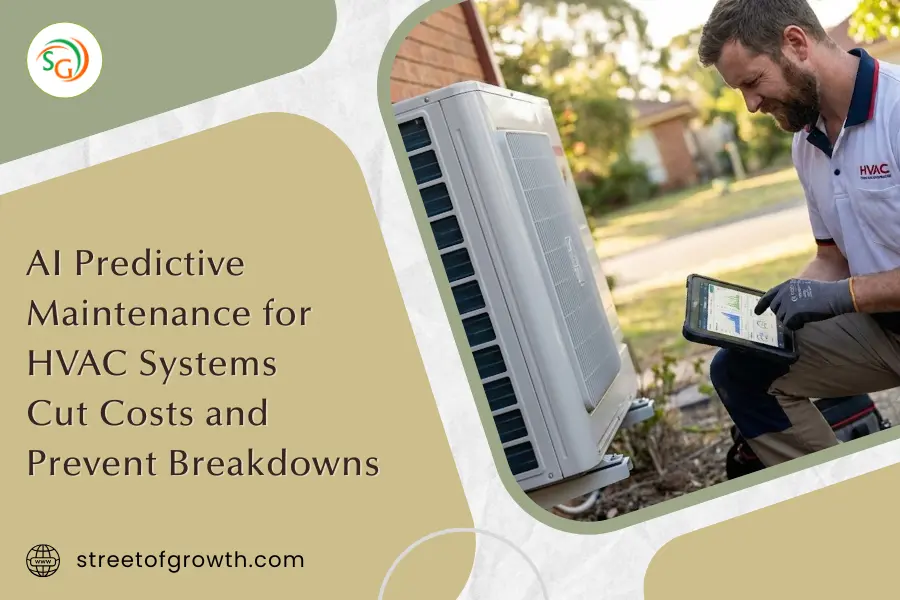
AI Predictive Maintenance for HVAC Systems: Cut Costs and Prevent Breakdowns
Picture this. It’s the hottest day of summer. You walk into your house, expecting cool air. Instead, you’re hit with a wall of heat. Your AC just died.
Now you’re stuck waiting for an emergency repair. That means paying extra. Missing work. And sweating through the night wondering if your frozen groceries will survive.
Sound familiar? Most of us have been there. HVAC breakdowns always seem to happen at the worst time, like on holidays, during a heatwave, or right before guests arrive.
But what if your HVAC system could tell you it was about to fail before it actually did? What if you could fix small problems before they turned into big, expensive ones?
That’s exactly what AI predictive maintenance for HVAC systems does. And in this guide, I’ll explain how it works, why it matters, and whether it’s right for you.
What Is AI Predictive Maintenance?
Let’s break this down in simple terms.
AI predictive maintenance is like having a health monitor for your heating and cooling system. It watches your HVAC around the clock. It learns what “normal” looks like. And when something starts going wrong, even a tiny bit, it spots the problem early.
Think of it this way: It’s like visiting a doctor who can tell you that you’re getting sick before you feel any symptoms. That way, you can take care of the problem while it’s still small and easy to fix.
This is very different from how most people handle HVAC repairs. Usually, we wait until something breaks. Then we call for help. That’s called “reactive maintenance”—you react after the problem happens.
AI flips that around. It predicts problems before they happen. That’s why it’s called “predictive” maintenance.
How Does AI Predictive Maintenance Actually Work?
You might be thinking: “Okay, but how does a computer know my AC is about to break?” Great question. Here’s a step-by-step look at how this technology works:
Step 1: Sensors Collect Data
Small sensors are placed on your HVAC system. These sensors measure things like:
- Temperature
- Humidity levels
- Air pressure
- Vibration
- How much energy the system uses
These sensors work 24/7, constantly gathering information about how your system is running.
Step 2: The AI Learns What’s Normal
All that data goes to an AI system. The AI studies it. Over time, it learns exactly how your HVAC system behaves when everything is working well.
It figures out things like: “On hot days, the compressor runs at this speed. When the house is empty, energy use drops to this level.” It builds a picture of your system’s healthy behavior.
Step 3: The AI Spots Trouble Early
Once the AI knows what “normal” looks like, it starts watching for anything unusual.
Maybe the motor is vibrating a tiny bit more than usual. Maybe energy use crept up by 10% last week. Maybe the temperature isn’t as steady as before.
These small changes are often invisible to us. But the AI catches them right away.
Step 4: You Get an Alert
When the AI detects a potential issue, it sends you an alert. This is usually through a phone app or email. The message might say something like: “Your blower motor may need attention soon.”
This gives you time to schedule a repair on your own terms. No panic. No rushing when the whole system fails.
Step 5: Targeted Repairs Save Time and Money
Instead of waiting for a full breakdown, a technician can fix the specific problem early. This is almost always cheaper and faster than emergency repairs.
Plus, fixing small issues prevents them from damaging other parts of your system.
Why Should You Care? The Real Benefits
Now you understand how it works. But why does it matter? Here’s what AI predictive maintenance can actually do for you:
Save Money on Repairs
Emergency HVAC repairs are expensive. You’re paying premium rates because it’s urgent. You might need after-hours service. And often, by the time the system breaks, more than one part needs fixing.
With AI monitoring, you catch problems early when they’re cheap to fix. Studies show businesses using predictive maintenance cut their repair costs by 25% to 40%. For homeowners, that could mean saving hundreds of dollars each year.
Lower Your Energy Bills
A struggling HVAC system works harder than it should. That means it uses more energy, and you pay for it.
AI keeps your system running at peak efficiency. It can even adjust settings automatically based on weather forecasts and when you’re home.
The result? Energy savings of 10% to 40%, depending on your situation. The U.S. Energy Information Administration reports that air conditioning alone uses about 12% of household electricity. Over a year, those savings really add up.
Make Your System Last Longer
HVAC systems are a big investment. According to the U.S. Department of Energy, heating and cooling accounts for about 35% of all energy used in buildings.
When you take care of small problems early, you reduce wear and tear on your equipment. This can extend your system’s life by 5 to 10 years. That’s a huge financial benefit.
No More Surprise Breakdowns
One of the worst things about HVAC problems is the surprise factor. You never know when your heating or cooling will quit.
AI removes that uncertainty. You’ll know about issues days or weeks before they become serious. No more sweating through summer nights or freezing in winter mornings.
Better Air Quality
Your HVAC doesn’t just control temperature. It also filters the air in your home.
AI systems can alert you when filters need changing or when airflow isn’t right. This helps you breathe cleaner, healthier air. That’s especially important for people with allergies or asthma. The EPA notes that indoor air can be 2 to 5 times more polluted than outdoor air.
Actual Examples That Prove It Works
This isn’t just theory. Real buildings and businesses are already seeing major results with AI predictive maintenance.
St. Mary’s Regional Medical Center
This hospital in Arizona switched to AI-powered predictive maintenance for their critical systems. The results were impressive:
- 35% reduction in overall maintenance costs
- $2 million saved every year
- 47% fewer emergency repair calls
- Zero critical system failures after making the switch
For a hospital, reliable HVAC is about more than comfort. It’s about patient safety. AI helped them achieve both.
A Large Shopping Center in Montreal
A 509,000+ square foot shopping center used AI to make their traditional HVAC system smarter. Within just one year, they achieved:
- 21% electricity savings
- Over 205,000 kWh of energy saved
That translates to thousands of dollars in lower utility bills, and a smaller carbon footprint.
A 50-Story Office Building
A major office building installed an AI-powered HVAC system and saw 30% lower energy costs within the first year. The building’s management no longer had to deal with constant complaints about temperature problems either.
Is AI Predictive Maintenance Right for You?
This technology sounds great, but is it worth it for everyone? Let’s be honest about who benefits most.
It’s a Great Fit If:
- You own a home and plan to stay there for several years
- Your HVAC system is more than 5 years old
- You’ve dealt with expensive repairs in the past
- You run a business where temperature control is critical
- You manage multiple properties or rental units
It Might Not Be Necessary If:
- Your system is brand new with a full warranty
- You’re renting and the landlord handles all repairs
- You live somewhere with mild weather and use HVAC rarely
What About Cost?
AI monitoring systems range widely in price. Simple smart thermostats with basic predictive features start around $150–$300. More advanced whole-home systems can cost $500–$2,000+ including installation.
But remember: if it prevents even one emergency repair (which can easily run $500–$1,500), the system pays for itself quickly.

How to Get Started
Ready to give AI predictive maintenance a try? Here’s how to take the first steps:
Option 1: Start with a Smart Thermostat
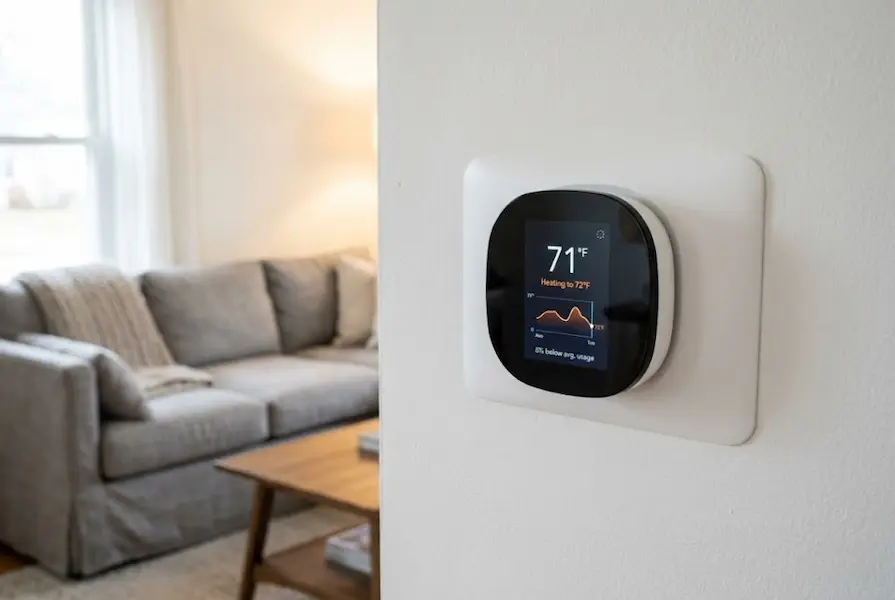
The easiest entry point is a smart thermostat. Brands like Nest, Ecobee, and Honeywell offer models with some predictive features already included. They learn your schedule, adjust settings on their own, and alert you to some potential issues.
Option 2: Ask Your HVAC Company
Many HVAC service companies now offer “smart monitoring” packages. They install sensors on your system and monitor it remotely. When something looks wrong, they contact you before you even notice a problem.
Ask your local HVAC provider:
- Do you offer predictive maintenance or monitoring services?
- What sensors or equipment would I need?
- How would I receive alerts?
- What’s the monthly or annual cost?
Option 3: Upgrade Your Entire System
If your current HVAC is old and unreliable, it might be time for a full upgrade. Newer systems often come with AI and smart features already included. While the upfront cost is higher, you get a more efficient system plus peace of mind.
Frequently Asked Questions
How much does AI predictive maintenance cost?
Costs vary widely. A basic smart thermostat runs $150–$300. Professional monitoring services may charge $20–$50 per month. Full AI-integrated systems can cost $500–$2,000+ upfront. The savings on repairs and energy often exceed the cost within the first year or two.
Can I add AI to my existing HVAC system?
Yes, in most cases. You don’t need to replace your entire HVAC. Sensors and monitoring devices can usually be added to existing systems. Check with an HVAC professional to see what options work for your setup.
How accurate is AI at predicting failures?
Modern AI systems can achieve up to 95% accuracy in detecting potential failures. They’re especially good at catching gradual issues, like motors wearing out or refrigerant slowly leaking, that humans would miss until something breaks.
Does this work for homes, or just commercial buildings?
AI predictive maintenance works for both. While early systems focused on large commercial buildings, today’s technology is scaled for regular homes too. Homeowners can benefit just as much as businesses.
Will it really save me money?
Most likely, yes. Between lower repair costs, reduced energy bills, and longer equipment life, most users see their investment pay off within 1–2 years. The bigger and older your system, the more you typically save.
Do I need internet for this to work?
Yes. AI systems need an internet connection to send data to the cloud for analysis and to send alerts to your phone. A standard home WiFi connection is usually all you need.
The Bottom Line
HVAC breakdowns are frustrating, expensive, and always seem to happen at the worst time. But they don’t have to catch you off guard.
AI predictive maintenance for HVAC systems gives you a heads-up before problems get serious. It saves money on repairs. It lowers your energy bills. And it helps your equipment last years longer.
Whether you start with a smart thermostat or go all-in with a full monitoring system, the technology is more accessible than ever. And once you’ve experienced the peace of mind that comes from knowing your system is healthy, you’ll wonder how you ever lived without it.
The future of home comfort isn’t about reacting to problems. It’s about preventing them. And that future is already here.