Longevity Lifestyle Habits for Beginners: Start With Just One
Want to add more healthy years to your life but don’t know where to start? You’re not alone. Most people feel overwhelmed by the flood of health advice online. The good news? You don’t need to change everything at once. This beginner-friendly guide will show you exactly how to start a longevity lifestyle in 2026, one simple step at a time.
What Is a Longevity Lifestyle?
A longevity lifestyle means making daily choices that help you live longer AND stay healthy while doing it. It goes beyond reaching age 100. It’s about feeling good, staying active, and enjoying life at every age.
Something that might surprise you: only 25% of how long you live comes from your genes. The other 75% depends on your lifestyle choices. That means you have real power to change your future, starting today.
What makes 2026 different? This year, longevity is becoming more personalized and accessible. Forget extreme diets and expensive supplements. In 2026, the focus is on sustainable habits that actually fit into your life. Think of it as “longevity made simple.”
The Biggest Mistake Beginners Make (And How to Avoid It)
Before we get into the habits, let’s talk about the number one mistake most beginners make: trying to change everything at once.
You’ve probably seen articles listing 8, 10, or even 13 habits you “need” to adopt. They make it sound like you should wake up tomorrow and completely overhaul your life. That’s a recipe for failure.
What research shows: Studies from Harvard and the National Institutes of Health reveal that even adopting just ONE healthy habit can lower your risk of early death by 26%. Add more habits over time, and the benefits multiply.
So instead of overwhelming you with a giant list, I’m going to show you exactly how to start small and build up gradually.
Your Beginner’s Roadmap: The 3-Phase Approach
Think of building a longevity lifestyle like building a house. You start with the foundation, then add walls, and finally the finishing touches. This is your roadmap:
Phase 1 (Months 1-2): Pick ONE foundation habit Phase 2 (Months 3-4): Add a second habit while maintaining the first Phase 3 (Months 5-6): Gradually add more habits at your own pace
This approach works because your brain needs time to turn new behaviors into automatic habits. Neuroscience research shows it takes about 66 days for a new habit to become automatic. That’s why we’re not rushing.
Phase 1: Your Foundation Habit (Pick Just One to Start)
Choose the habit that feels easiest for you right now. Don’t pick the one that sounds most impressive or the one your friend is doing. Pick the one YOU can actually stick with.
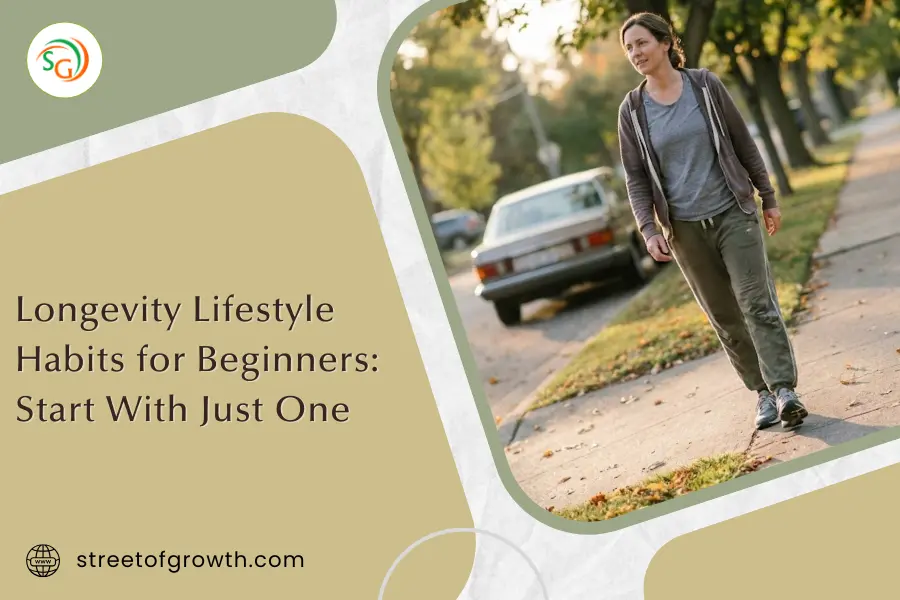
Option 1: Move Your Body for 20 Minutes Daily
This is the single most powerful habit for longevity. A comprehensive study analyzing data from over 700,000 veterans found that higher physical fitness was associated with dramatically lower mortality risk across all age, sex, and race groups.
Why it works: Exercise strengthens your heart, improves blood flow, builds muscle, lifts your mood, and even helps your brain stay sharp.
How to start (the beginner way):
- Week 1-2: Walk for just 10 minutes after breakfast or dinner
- Week 3-4: Increase to 15 minutes
- Week 5-6: Reach 20 minutes
- Week 7-8: Try adding a second walk during the day
Tips from experience:
- Use your phone’s timer so you don’t have to think about it
- Walk around your neighborhood, at a mall, or even in your home
- Listen to music, podcasts, or audiobooks to make it enjoyable
- Don’t worry about speed. Just keep moving at a comfortable pace
Common beginner mistake: Starting too intense and burning out after a week. Remember, a gentle 20-minute walk you do every day beats an intense workout you quit after three days.
Option 2: Eat More Plants (Without Going Full Vegetarian)
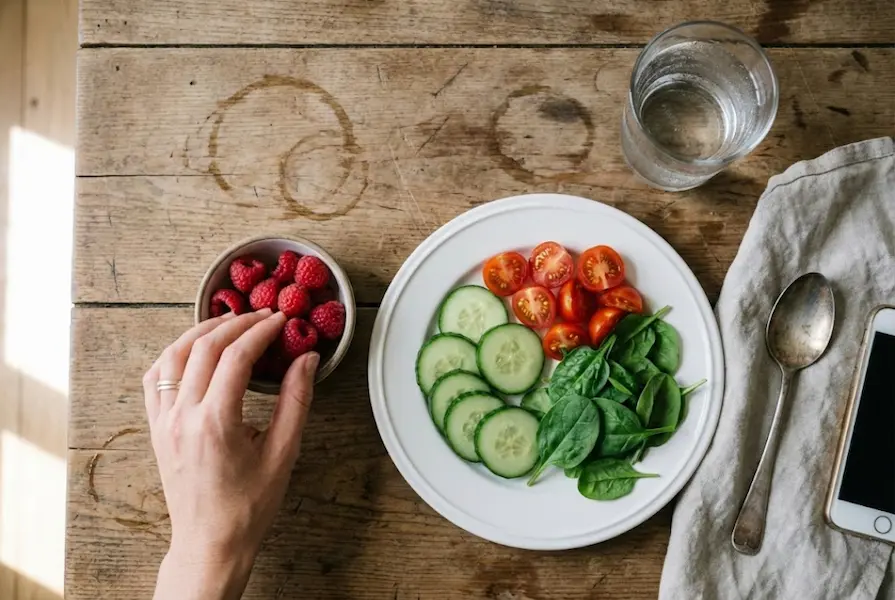
You don’t need to give up meat or follow a strict diet. Research consistently shows that people who eat more fruits, vegetables, whole grains, and legumes live longer and have fewer diseases.
Why it works: Plant foods are packed with fiber, vitamins, antioxidants, and other nutrients that protect your cells from damage. They help prevent heart disease, cancer, diabetes, and other chronic illnesses.
How to start (the beginner way):
- Week 1-2: Add one extra serving of vegetables to your dinner plate
- Week 3-4: Start your lunch with a piece of fruit or a small salad
- Week 5-6: Replace one snack per day with something plant-based (like nuts, carrots, or an apple)
- Week 7-8: Try adding beans or lentils to one meal per week
Tips from experience:
- Keep it simple. Frozen vegetables are just as healthy as fresh ones and easier to prepare
- You don’t need fancy recipes. Steamed broccoli with a bit of olive oil works great
- Add vegetables to foods you already eat (throw spinach in your pasta, add peppers to eggs)
- Start with vegetables you actually like, not ones you think you “should” eat
Common beginner mistake: Trying to eat perfectly from day one. You’re not aiming for perfection. You’re aiming for “more plants than yesterday.”
Option 3: Get Consistent Sleep (Same Bedtime Every Night)
Sleep might be the most underrated longevity habit. Research from Oxford Academic shows that sleep regularity is a stronger predictor of mortality risk than sleep duration, with irregular sleep patterns linked to significantly higher death rates.
Why it works: During sleep, your body repairs cells, processes memories, balances hormones, and clears waste from your brain. Without quality sleep, everything else suffers.
How to start (the beginner way):
- Week 1-2: Pick a bedtime and stick to it (even on weekends). Start with what feels natural for you
- Week 3-4: Create a simple wind-down routine 30 minutes before bed (dim lights, put phone away, do something relaxing)
- Week 5-6: Make your bedroom slightly cooler and darker
- Week 7-8: Wake up at the same time every day, even if you didn’t sleep well
Tips from experience:
- Set a phone alarm for “bedtime” just like you set one for waking up
- Your bedroom should be for sleep only (not TV, work, or scrolling social media)
- If you can’t fall asleep after 20 minutes, get up and do something boring until you feel sleepy
- Aim for 7-8 hours, but consistency matters more than hitting a perfect number
Common beginner mistake: Expecting to fix years of poor sleep in one week. Your body needs time to adjust to a new schedule. Be patient.
Why Starting With Just One Habit Changes Everything
I know what you’re thinking: “Just one habit? That seems too simple. Shouldn’t I do more?”
Starting with one habit is actually the smartest approach:
1. You build confidence. When you successfully stick with one habit for two months, you prove to yourself that you CAN change. That confidence makes the next habit easier.
2. You avoid decision fatigue. Your willpower is limited. Trying to change ten things at once drains your mental energy fast. One change is manageable.
3. You learn what works for YOUR life. Everyone’s schedule and circumstances are different. Starting with one habit helps you figure out what actually fits into your routine.
4. You prevent burnout. Most people who try to change everything at once quit within a month. Slow and steady always wins the longevity race.
Phase 2: Adding Your Second Habit (Months 3-4)
After two months, your first habit should feel pretty automatic. You’re not thinking about it much anymore. You just do it. That’s when you’re ready for habit number two.
Look back at the three foundation habits I mentioned earlier. Pick a different one from the list. For example:
- If you started with walking, now add more plant foods
- If you started with sleep, now add daily movement
- If you started with plants, now fix your sleep schedule
Use the same gradual approach you used with your first habit. Don’t rush it.
Phase 3: Building Your Complete Longevity Lifestyle (Months 5+)
Once you’ve locked in two habits, you can start adding more at your own pace. These are additional habits to consider, but remember: only add one new habit at a time, and only when the previous habits feel easy.
Habit 4: Build Strong Social Connections
According to the U.S. Surgeon General, loneliness poses health risks as deadly as smoking up to 15 cigarettes daily. On the flip side, strong social ties can add years to your life.
Simple starting point:
- Text or call one friend or family member per week
- Join one local group or club (book club, walking group, hobby class)
- Say yes to at least one social invitation per month (even if you usually decline)
Habit 5: Manage Your Stress Better
Chronic stress damages your body at the cellular level. Learning to handle stress doesn’t mean eliminating it completely. It means having tools to cope.
Simple starting point:
- Try 5 minutes of slow breathing when you feel stressed (breathe in for 4 counts, hold for 4, breathe out for 4)
- Take short breaks during your workday to step away from screens
- Find one activity that genuinely relaxes you and schedule it weekly
Habit 6: Stop Smoking (If You Smoke)
Quitting smoking is one of the fastest ways to improve your longevity. Studies show that quitting at age 40 can add 9 years to your life, and it’s never too late to benefit.
Simple starting point:
- Talk to your doctor about cessation aids (medications, patches, gum)
- Pick a quit date and tell supportive friends
- Replace the smoking routine with a different habit (like going for a short walk)
Habit 7: Drink Less Alcohol
Even moderate drinking carries some health risks. You don’t need to quit completely, but reducing your intake helps.
Simple starting point:
- Have at least three alcohol-free days per week
- Replace one alcoholic drink with water or sparkling water
- Drink a full glass of water between alcoholic beverages
Habit 8: Find Your Purpose
Research published in Psychological Science shows that people with a strong sense of purpose have a significantly lower risk of premature death. Purpose doesn’t have to be grand. It’s about having something that makes you want to get out of bed.
Simple starting point:
- Write down three things that make you feel fulfilled or excited
- Volunteer for a cause you care about once a month
- Set small personal goals (learn a skill, help someone, create something)
The 2026 Approach: Making It Personal
What’s new in 2026 is the shift toward personalization. Instead of following a one-size-fits-all plan, smart longevity strategies now focus on what works for YOUR body and YOUR life.
Track what matters to you:
- Keep a simple journal noting how you feel after different habits
- Pay attention to your energy levels, mood, and sleep quality
- Adjust based on what actually makes YOU feel better
Use technology wisely:
- Fitness trackers can help you see progress, but don’t obsess over numbers
- Apps can remind you of habits, but don’t let them stress you out
- If tech isn’t your thing, a paper calendar works just as well
Customize your approach:
- Morning person? Exercise in the AM. Night owl? Evening walks work great too
- Hate vegetables? Start with fruits and gradually expand
- Busy schedule? Ten 3-minute movement breaks beat one 30-minute session you’ll skip
Common Beginner Questions Answered
Question: How long until I see results?
Some benefits happen fast. You’ll likely feel more energetic within 2-3 weeks of regular movement and better sleep. Other benefits (like reduced disease risk) take months to years, but they’re happening even if you can’t see them immediately.
Question: What if I miss a day or mess up?
Missing one day doesn’t ruin your progress. Just get back on track the next day. Think of it like this: missing one day is like missing one note in a song. The whole song isn’t ruined.
Question: Do I need expensive supplements or special equipment?
No. The most powerful longevity habits cost very little or nothing at all. A good pair of walking shoes is helpful, but you don’t need a gym membership, fancy devices, or expensive supplements.
Question: I’m already over 50. Is it too late to start?
Absolutely not. Research consistently shows that adopting healthy habits at ANY age provides significant benefits. One study found that people who adopted healthier lifestyles in their 50s and 60s still gained years of life expectancy.
Question: How do I stay motivated when progress feels slow?
Focus on the process, not just the outcome. Celebrate small wins (like completing a full week of your new habit). Remember that slow progress is still progress. The goal isn’t perfection. It’s consistency.
Your Action Plan for the Next 30 Days
Forget trying to implement everything at once. This is your simple action plan:
Week 1:
- Read through this article again
- Choose ONE foundation habit that feels most achievable for you
- Write down your specific starting point (for example: “Walk for 10 minutes after dinner”)
- Do it tomorrow
Week 2:
- Continue your chosen habit daily
- Track it with a simple checkmark on your calendar
- Notice how you feel after doing it
Week 3:
- Keep going with your habit
- Make it slightly easier if you’re struggling (maybe 5 minutes instead of 10)
- Or make it slightly harder if it feels too easy (maybe 12 minutes instead of 10)
Week 4:
- Celebrate completing one month
- Assess honestly: Does this habit feel more automatic now?
- If yes, consider when you’ll add a second habit
- If no, keep going for another month before adding anything new
The Power of Small Changes
The beautiful truth about longevity: you don’t need to be perfect. You just need to be a little bit better than you were yesterday.
A landmark study following 78,000 women and 44,000 men over 30 years found that people who maintained just five key healthy habits lived 14 extra years (women) and 12 extra years (men) compared to those who maintained none. But even adopting some of these habits, not all of them, provided significant benefits.
Every small choice compounds over time. That 10-minute walk today might not feel like much, but do it consistently for years and you’ve dramatically reduced your risk of heart disease, stroke, and early death. That extra serving of vegetables might seem insignificant, but over a lifetime, it protects you from cancer and chronic illness.
What Success Really Looks Like
Success isn’t waking up one day with a completely new life. Success is:
- Taking a walk even when you don’t feel like it
- Choosing an apple instead of chips most of the time (not all the time)
- Getting to bed on time four nights out of seven
- Missing a few days but getting back on track without guilt
- Still maintaining these habits six months, one year, five years from now
That’s real longevity. Not perfection. Just consistency with compassion for yourself.
The Bottom Line: Your Path Starts With One Step
Living a longer, healthier life doesn’t require a complete lifestyle overhaul or expensive interventions. It starts with one simple decision followed by one small action.
Pick one habit from this guide. Start tomorrow. Stick with it for two months. Then add another. That’s your entire strategy.
The year 2026 is about sustainable, personalized longevity habits that fit into real life. Not extreme protocols. Not overwhelming lists. Just simple, proven actions that anyone can start today.
Your future self will thank you for taking that first step. And the best part? You already know what that step is. Now it’s time to take it.
Quick Reference: Beginner’s Habit Comparison
| Habit | Time Required | Difficulty | Benefits Timeline |
|---|---|---|---|
| Daily Walking | 20 minutes | Easy | 2-4 weeks for energy boost |
| More Plant Foods | No extra time | Easy | 4-8 weeks for digestive improvements |
| Consistent Sleep | No extra time | Moderate | 1-3 weeks for better energy |
| Social Connections | 1-2 hours/week | Moderate | Ongoing mood improvements |
| Stress Management | 5-10 minutes | Moderate | Immediate calming effects |
| Quit Smoking | Ongoing | Hard | Days to months for various benefits |
| Reduce Alcohol | No extra time | Easy to Moderate | 2-4 weeks for better sleep |
| Find Purpose | Varies | Moderate | Ongoing fulfillment |
Implementation Note: Schema Markup Suggestions
For better SEO performance, consider implementing the following schema types on your webpage:
- Article Schema: Standard article markup with headline, author, date published, and featured image
- HowTo Schema: Step-by-step instructions for implementing each habit
- FAQ Schema: Mark up the Q&A section for rich snippet opportunities
- Table Schema: Mark up the habit comparison table
- BreadcrumbList Schema: For site navigation
- Organization Schema: For author/publisher credibility
These structured data implementations can help improve visibility in Google search results and increase click-through rates from search engine result pages.