Nervous System Reset Morning Routine – 10 Minutes to Better Days
You know that feeling when you wake up and your heart is already racing? When your mind starts spinning with worries before your feet even hit the floor? When you check your phone and suddenly feel like you’re already behind?
Yeah, I’ve been there too. And here’s the thing nobody talks about: that frantic morning feeling isn’t just about being “stressed.” It’s actually your nervous system stuck in overdrive, and it’s setting the tone for your entire day.
But what if I told you that the first 10-20 minutes of your morning could completely change how your body and brain function for the next 16 hours? That’s exactly what a nervous system reset morning routine does, and trust me, it’s way simpler than you think.
What Is a Nervous System Reset
Let’s skip the complicated medical talk for a second. Your nervous system is basically your body’s control center. It has two main modes:
Fight-or-Flight Mode (Sympathetic Nervous System): This is your body’s alarm system. Heart races, muscles tense, breathing gets shallow. Great for running from danger, terrible for living your daily life.
Rest-and-Calm Mode (Parasympathetic Nervous System): This is your body’s chill setting. Heart rate slows, muscles relax, digestion works properly. This is where healing and balance happen.
A “nervous system reset” is simply the process of switching your body from alarm mode back to calm mode. Think of it like restarting your computer when it starts glitching. Your body needs the same thing, especially in the morning.
Why Your Morning Routine Is Make-or-Break for Your Nervous System
Here’s something most people don’t realize: your morning sets your nervous system’s baseline for the entire day.
When you wake up, your body naturally has higher cortisol levels (that’s your main stress hormone). This is actually normal and helpful. It’s designed to wake you up and get you moving. But here’s where things go wrong.
If you immediately grab your phone, jump out of bed in a panic, skip breakfast, and rush through your morning, you’re telling your nervous system, “We’re in danger! Stay on high alert!”
Your body can’t tell the difference between actual danger and the stress of running late. So it keeps pumping out stress hormones, keeping you in fight-or-flight mode all day long.
But when you take just 10-20 minutes to intentionally reset your nervous system in the morning, you’re essentially telling your body, “Hey, we’re safe. You can relax now.” This creates a calm foundation that lasts throughout your entire day.
Signs Your Nervous System Needs a Morning Reset
Not sure if this applies to you? Here are the telltale signs your nervous system is running on empty:
- You wake up feeling tired even after 7-8 hours of sleep
- Your mind starts racing with worries the moment you open your eyes
- You feel anxious or overwhelmed before the day even starts
- You grab your phone immediately and can’t put it down
- You rush through your morning in a constant state of panic
- Your jaw is clenched or shoulders are tense first thing in the morning
- You rely on coffee just to feel human
- Small things irritate you more than they should
- You feel disconnected from your body
- By noon, you’re already exhausted
If you checked off three or more, your nervous system is desperately asking for a morning reset.
The Nervous System Reset Morning Routine (Step-by-Step)
Okay, here’s the part you’ve been waiting for: the actual routine. I’m going to give you three versions based on how much time you have. Pick the one that fits your life right now. You can always build up to the longer version later.
The 5-Minute Emergency Reset (For Crazy Busy Mornings)
Sometimes you literally have five minutes. That’s fine. This mini-reset is still powerful.
Step 1: Stay Off Your Phone (2 minutes) When you wake up, resist the urge to grab your phone. Just sit on the edge of your bed for two minutes. Look around your room. Notice the light, the temperature, how your body feels. That’s it.
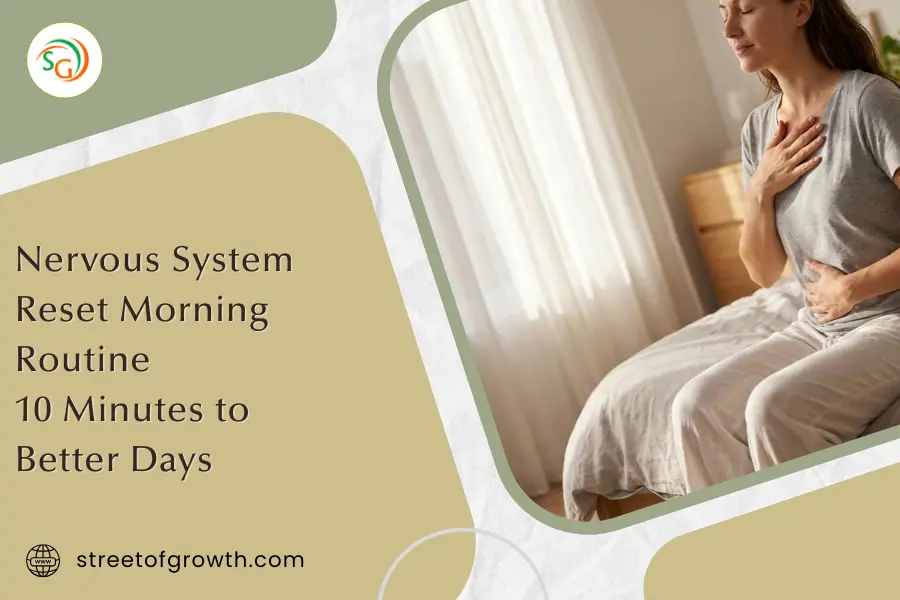
Step 2: Deep Belly Breathing (3 minutes) Put one hand on your chest and one on your belly. Breathe in slowly through your nose for 4 counts (your belly should expand, not your chest). Hold for 4 counts. Exhale slowly through your mouth for 6 counts. Repeat this 5-7 times.
Why this works: Long exhales activate your parasympathetic nervous system, literally switching your body into calm mode.
The 10-Minute Foundation Reset (The Sweet Spot)
This is the routine most people find perfect. It’s short enough to stick with but long enough to make a real difference.

Step 1: Gentle Wake-Up (1 minute) Before getting out of bed, take a moment to stretch your body gently. Extend your arms overhead, point and flex your toes, roll your shoulders. No rushing.
Step 2: Hydration First (1 minute) Drink a full glass of water before anything else. Your body is dehydrated after sleep, and this simple act tells your nervous system you’re taking care of it.
Step 3: Breathing Practice (3 minutes) Use the same belly breathing from the 5-minute reset, but do it for a bit longer. If your mind wanders (it will), just gently bring your attention back to your breath. No judgment.
Step 4: Gentle Movement (3 minutes) This isn’t a workout. Do some slow stretches, gentle yoga poses, or even just walk around your home slowly. The goal is to wake up your body without spiking your stress response. Try cat-cow stretches, forward folds, or simple neck rolls.
Step 5: Set an Intention (2 minutes) Before diving into your day, take a moment to set a simple intention. It could be “I’m going to stay calm today” or “I’ll be kind to myself.” Say it out loud or write it down.
The 20-Minute Full Reset (For Maximum Impact)
If you can carve out 20 minutes, this is the gold standard for nervous system regulation.
Step 1: Mindful Waking (2 minutes) When you wake up, don’t move right away. Take a few moments to scan your body. Notice any tension, discomfort, or tightness without trying to fix it. Just observe.
Step 2: Morning Hydration (2 minutes) Drink a glass of room-temperature water slowly. Actually taste it. This sounds simple, but mindful hydration grounds you in the present moment.
Step 3: Extended Breathing Work (5 minutes) Try box breathing: Inhale for 4 counts, hold for 4, exhale for 4, hold for 4. Repeat this cycle for five minutes. You can set a gentle timer on your phone (but don’t get distracted by notifications!).
Step 4: Mindful Movement (5 minutes) Do gentle yoga, tai chi, or simple stretching. Focus on movements that feel good to your body. Child’s pose, downward dog, and gentle twists are excellent choices. Move slowly and intentionally.
Step 5: Gratitude or Journaling (3 minutes) Write down three things you’re grateful for, or journal about how you’re feeling. This shifts your brain from worry mode to appreciation mode, which calms your nervous system naturally.
Step 6: Positive Affirmation (3 minutes) Stand in front of a mirror (yes, really) and say something kind to yourself. “I am doing my best” or “I am safe and capable.” It might feel awkward at first, but this practice rewires your brain over time.
Quick Comparison: Which Routine Is Right for You?
| Routine Length | Best For | Key Benefits | When to Use |
|---|---|---|---|
| 5-Minute Emergency Reset | Super busy mornings, beginners, stressful periods | Quick stress relief, prevents total overwhelm | When you’re running late or feeling panicked |
| 10-Minute Foundation Reset | Daily maintenance, sustainable long-term | Balanced stress management, good habit building | Most mornings, ideal for consistency |
| 20-Minute Full Reset | Weekends, high-stress periods, when you need extra support | Total nervous system regulation, maximum calm | When you have time and need serious reset |
Common Mistakes People Make (And How to Avoid Them)
Mistake #1: Trying to Do Everything Perfectly Look, you don’t need to do this routine flawlessly. Some mornings you’ll nail it, other mornings you’ll barely manage five deep breaths. Both count. Progress over perfection, always.
Mistake #2: Checking Your Phone “Just for a Second” I know it’s tempting, but that “quick check” floods your brain with information and immediately activates your stress response. Keep your phone on Do Not Disturb for at least the first 30 minutes after waking.
Mistake #3: Rushing Through the Routine If you’re speed-breathing and speed-stretching while mentally planning your day, you’re missing the point. Slow down. The slowness IS the practice.
Mistake #4: Expecting Instant Results Some people feel better immediately. Others need a week or two of consistent practice. Give it time. Your nervous system has been running on high alert for a while; it needs time to learn this new pattern.
Mistake #5: Skipping It When You “Feel Fine” The best time to do this routine is when you think you don’t need it. Prevention is always easier than recovery.
How to Know If It’s Actually Working
You might be wondering, “Okay, but how do I know if this is doing anything?” Here are the signs your nervous system is responding well:
Within the First Week:
- You feel slightly less frantic in the mornings
- You catch yourself taking deeper breaths naturally throughout the day
- You’re less reactive to small annoyances
- You sleep a bit better
After 2-3 Weeks:
- Your overall anxiety levels drop noticeably
- You have more energy throughout the day
- You’re able to handle stress without completely falling apart
- Your mind feels clearer and less foggy
- Physical tension (tight jaw, tense shoulders) reduces
After a Month or More:
- You genuinely look forward to your morning routine
- Your baseline stress level is significantly lower
- You bounce back from stressful situations faster
- People might comment that you seem calmer or more centered
- You sleep better consistently
What About Mornings When Everything Goes Wrong?
Real talk: some mornings are going to be a disaster. Your kid might wake up sick, your alarm might not go off, or you might have an emergency work situation. That’s life.
On those mornings, here’s your backup plan: do just ONE thing from the routine. Even if it’s only three deep breaths before you leave the house. Something is always better than nothing.
And if you completely miss your morning routine? Don’t beat yourself up. You can do a mini nervous system reset at any point during the day. Take five minutes in your car before work, in a bathroom stall, or during your lunch break. Your nervous system doesn’t care when you reset it, only that you do.
Building This Into Your Life (Making It Stick)
The biggest challenge isn’t knowing what to do. It’s actually doing it consistently. Here’s how to make this routine a non-negotiable part of your life:
Start Stupidly Small Don’t try to do the 20-minute routine right away. Start with five minutes. Master that. Then gradually add more time as it becomes natural.
Set Up Your Environment Leave a glass of water on your nightstand the night before. Put your yoga mat by your bed. Make it so easy that you’d have to go out of your way NOT to do it.
Connect It to Something You Already Do Link your nervous system reset to an existing habit. “Right after I wake up, I do my breathing practice.” This technique, called habit stacking, makes new routines stick faster.
Track It (But Don’t Obsess) Use a simple calendar to check off days you complete your routine. Seeing those checkmarks builds momentum, but don’t let a missed day derail you completely.
Find Your Why Why are you doing this? To be more patient with your kids? To feel less anxious? To sleep better? Write down your reason and look at it when motivation drops.
Frequently Asked Questions
Do I have to do this routine at the exact same time every day?
Not necessarily. While consistency helps train your nervous system, doing it at roughly the same time is more important than doing it at the EXACT same time. If you wake up at 6 AM on weekdays and 8 AM on weekends, just do it shortly after waking both days.
Can I drink coffee before my nervous system reset?
Ideally, no. Coffee immediately spikes your already-high morning cortisol, which works against what you’re trying to achieve. Try doing your routine first, then having your coffee. You might find you don’t need as much caffeine once your nervous system is regulated.
What if I fall asleep during the breathing exercises?
That’s actually a sign your nervous system is responding! If you keep falling back asleep, try doing your routine sitting up instead of lying down, or do it after splashing some cold water on your face.
Is it okay to listen to music during this routine?
Yes, but choose wisely. Calming instrumental music, nature sounds, or silence are best. Avoid anything with lyrics or anything upbeat that might activate you rather than calm you.
What if I share a bedroom and don’t want to wake my partner?
You can do most of this routine in another room, or even in your bed very quietly. The breathing practices are silent, gentle stretches can be done carefully, and you can journal in the bathroom if needed.
How long before I see real results?
Some people notice immediate effects (feeling calmer that same day), while others need 1-2 weeks of consistent practice. Stick with it for at least three weeks before deciding if it’s working for you.
Can kids do this routine too?
Absolutely! Kids actually respond really well to nervous system regulation. You can simplify it for them: deep belly breaths (make it fun by having them pretend to blow up a balloon), gentle stretches, and maybe talking about one thing they’re looking forward to that day.
Your Morning Sets the Tone for Everything

Here’s the bottom line: your morning routine isn’t just about those first few minutes. It’s about setting a nervous system baseline that carries you through your entire day.
When you wake up in a panic and immediately start running, you’re training your nervous system to stay in fight-or-flight mode all day. But when you take even just 5-10 minutes to intentionally reset your system, you’re creating a foundation of calm that makes everything else easier.
Think about it. When you’re calm, you’re more patient with your kids or partner. When you’re regulated, you make better decisions at work. When your nervous system is balanced, you sleep better at night, which makes the next morning easier.
It’s not about adding more to your plate. It’s about starting your day in a way that actually makes everything else on your plate feel more manageable.
So tomorrow morning, before you grab your phone, before you start your to-do list, before you jump into the chaos, take a few minutes to reset. Your nervous system has been working hard keeping you safe. Give it a chance to rest, and watch how your entire day shifts.
You’ve got this. One morning at a time.