Neurocosmetics Skincare: Does It Really Work? (Science-Backed Answer)
Ever finished your skincare routine and felt genuinely calmer? That warm, peaceful feeling isn’t in your head. Your skin and brain are having a two-way conversation, and the newest wave of skincare products is designed to make that chat work in your favor.
Welcome to neurocosmetics, where science meets self-care in the most exciting way possible.
What Exactly Are Neurocosmetics?
Think of neurocosmetics as skincare products with a secret superpower. While regular moisturizers just sit on your skin doing their hydrating thing, neurocosmetic products actually talk to your nervous system.
The explanation: Your skin has around 800,000 neurons (nerve cells) packed into it. These neurons are connected directly to your brain through something scientists call the “skin-brain axis”. When you apply neurocosmetic products, special ingredients interact with these nerve cells and send messages that can calm stress, lift your mood, and help your skin look better at the same time.
It’s not magic. It’s neuroscience meeting skincare.
The Science Made Simple
Your skin isn’t a wrapper for your body. It’s actually your largest organ, and it’s packed with nerve endings that communicate with your brain constantly. When you’re stressed, your brain sends signals that can cause breakouts, redness, or dullness. When you’re happy and relaxed, your skin often looks clearer and healthier.
Neurocosmetics work by targeting the nerve receptors in your skin with special ingredients. These ingredients can:
- Trigger the release of feel-good chemicals (like endorphins and serotonin)
- Reduce stress hormones that damage your skin (like cortisol)
- Calm inflammation caused by stress
- Strengthen your skin’s protective barrier
- Help your skin repair itself faster
Why Everyone’s Talking About Neurocosmetics Right Now
The beauty industry has figured out something important: people don’t want to look good anymore. They want to feel good too.
Recent studies show that 22% of women are spending more time on skincare routines, and it’s about fighting wrinkles. It’s about creating moments of calm in a stressful world. The neurocosmetics market is growing fast because these products deliver both results you can see and feelings you can experience.
Gen Z and Millennials are especially interested in neurocosmetics because they care deeply about mental health and wellness. For them, skincare is about vanity—it’s self-care, meditation, and therapy rolled into one relaxing ritual.
Neurocosmetics vs. Traditional Skincare: What’s the Difference?
Let’s break down how neurocosmetics are different from the face cream sitting on your bathroom shelf right now.
| Traditional Skincare | Neurocosmetics Skincare |
|---|---|
| Focuses only on skin appearance | Targets both skin health and emotional wellness |
| Works on the skin’s surface layers | Interacts with nerve receptors in deeper skin layers |
| Addresses physical symptoms (dryness, wrinkles) | Addresses root causes linked to stress and emotions |
| Results are purely visual | Results are both visual and emotional |
| Contains standard moisturizers, vitamins, acids | Contains neuroactive ingredients like adaptogens, peptides, CBD |
The Ingredients That Make Neurocosmetics Work
Not all skincare ingredients can communicate with your nervous system. These are the superstars that actually make neurocosmetics different:

1. Adaptogens (Stress Fighters)
Adaptogens like ashwagandha and rhodiola help your skin and body handle stress better. They work by balancing stress hormones and reducing inflammation.
What they do: Calm stress-related skin issues like redness, sensitivity, and breakouts.
2. CBD (Cannabidiol)
CBD has become incredibly popular in neurocosmetics because it interacts with your skin’s endocannabinoid receptors. These receptors help control inflammation, pain signals, and stress responses.
What it does: Reduces inflammation, calms irritated skin, and promotes a sense of relaxation when applied.
3. Neuropeptides
These are tiny protein fragments that mimic your body’s natural chemical messengers. Some peptides can trigger endorphin release (your body’s natural “happy chemicals”) or help relax facial muscles to reduce fine lines.
What they do: Build collagen, reduce wrinkles, and trigger feel-good responses in your skin.
4. GABA (Gamma-Aminobutyric Acid)
GABA is a neurotransmitter that helps your brain and body relax. When used in skincare, it helps soothe the skin and reduce signs of tension.
What it does: Calms reactive skin, reduces inflammation, and helps smooth fine lines.
5. Essential Oils
Lavender, bergamot, and chamomile are more than nice smells. These oils trigger responses in your brain’s emotional centers through your sense of smell, reducing stress and promoting calmness.
What they do: Create aromatherapy benefits that reduce anxiety and improve your skincare ritual.
6. Melatonin
Yes, the sleep hormone! When applied to skin, melatonin acts as a powerful antioxidant and helps repair damage while you sleep.
What it does: Protects against environmental damage and supports overnight skin repair.
Real Benefits You Can Expect
Okay, so what happens when you actually use neurocosmetic products? This is what research and real users report:
For Your Skin
- Reduced stress-related breakouts: Less cortisol means fewer stress pimples
- Calmer, less reactive skin: Perfect if you have sensitive or easily irritated skin
- Stronger skin barrier: Better protection against pollution, weather, and aging
- Fewer wrinkles and fine lines: Some ingredients relax facial muscles naturally
- Faster healing: Your skin repairs itself more efficiently when stress is reduced
- Better glow: Balanced, healthy skin looks more radiant
For Your Mind and Mood
- Genuine relaxation during application: The sensory experience actually calms your nervous system
- Reduced stress and anxiety: Ingredients work with your body’s natural calming mechanisms
- Better sleep quality: Some products (especially those with melatonin) support better rest
- Improved mood: Endorphin-boosting ingredients create a subtle lift in how you feel
- More mindfulness: The ritual becomes a form of meditation and self-care
How to Know If a Product Is Really Neurocosmetic
The truth: lots of brands are slapping “neurocosmetic” on their labels because it sounds cool. But not every product with a nice texture and good smell is actually neurocosmetic.
Look for These Signs of Real Neurocosmetics:
1. Specific neuroactive ingredients: Check the ingredient list for adaptogens, neuropeptides, CBD, GABA, or other proven neuroactive compounds.
2. Scientific backing: Legitimate neurocosmetic brands mention studies, clinical trials, or specific mechanisms of action.
3. Focus on the skin-brain connection: The product description should explain how it interacts with your nervous system, not how it feels nice.
4. Targeted benefits: Real neurocosmetics specify both skin benefits (smoother, clearer) AND emotional benefits (calmer, more relaxed).
Red Flags (Probably Marketing):
- Only talks about texture, scent, and “self-care vibes” without mentioning neuroactive ingredients
- Makes vague claims like “makes you feel amazing” without explaining how
- No ingredient list showing actual neurocosmetic compounds
- Claims to “cure” anxiety or depression (real neurocosmetics support wellness, they don’t treat medical conditions)
Building Your Neurocosmetic Skincare Routine
Ready to try neurocosmetics? Start without overwhelming yourself or your wallet.
Start Small (The Beginner’s Approach)
Step 1: Choose ONE neurocosmetic product to add to your existing routine. Good starter options:
- A facial serum with neuropeptides
- A nighttime moisturizer with melatonin and adaptogens
- A facial oil with CBD
Step 2: Use it consistently for at least 4 weeks. Neurocosmetic effects build over time.
Step 3: Pay attention to both your skin AND how you feel during and after application.
Full Neurocosmetic Routine (For the Committed)
Morning:
- Cleanser with gentle, calming ingredients
- Serum with neuropeptides and adaptogens
- Moisturizer with antioxidants
- Sunscreen (always!)
Evening:
- Double cleanse (oil cleanser + gentle foam)
- Toning mist with soothing botanicals
- Treatment serum (with retinol or acids if needed)
- Neurocosmetic facial oil or cream with CBD, melatonin, or GABA
- Eye cream with peptides
Weekly:
- Calming face mask with adaptogens
- Facial massage with a nourishing oil (improves both circulation and relaxation)
Getting the Most from Your Neurocosmetic Experience
The ingredients are only part of the equation. This is how to get more from your neurocosmetic routine:
Create a Ritual, Not a Routine
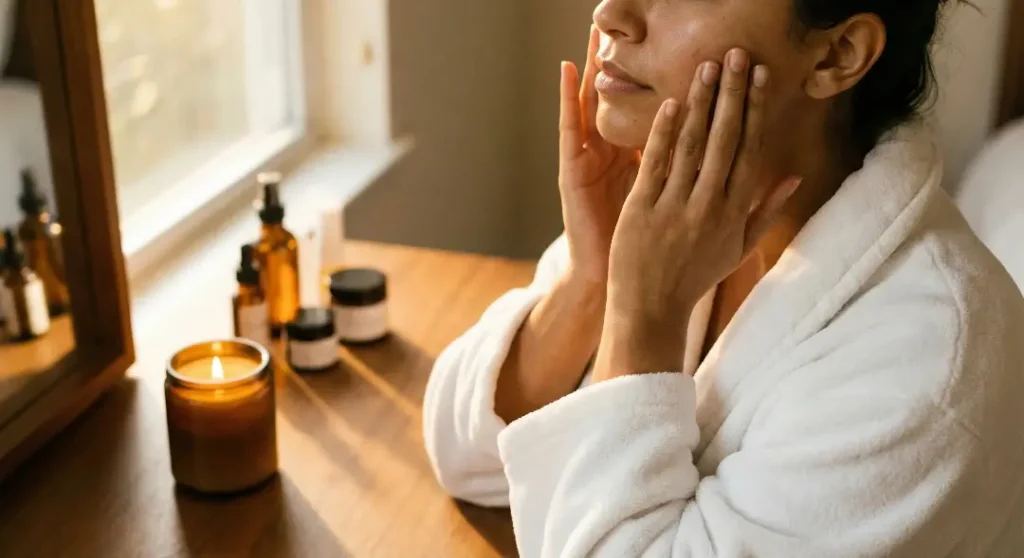
- Set the mood: Dim the lights, play soft music, or light a candle
- Take your time: Rushing defeats the purpose. Spend at least 10 minutes on your routine
- Focus on sensations: Notice how each product feels, smells, and makes your skin feel
- Practice mindful breathing: Take slow breaths while you massage products in—it amplifies the calming effects
- Put away your phone: This is YOUR time. Make it screen-free
Timing Matters
Research shows the first 5 minutes after applying neurocosmetic products are critical. This is when your skin’s nerve receptors are most active and responsive. Take a moment to sit quietly and let the products work their magic before jumping into your next task.
Pair with Other Wellness Practices
Neurocosmetics work even better when combined with:
- Meditation or slow breathing exercises
- Gentle yoga or stretching
- Adequate sleep (7-9 hours)
- Stress management techniques
- Balanced nutrition
Popular Neurocosmetic Brands to Know
Several brands are leading the neurocosmetics movement. Some names to check out:
- Neuraé: French brand focused on emotion-linked skincare with proprietary neuro-ingredients
- SCINQ: Indian brand positioning itself as a neurocosmetic pioneer with science-backed formulas
- I.D. Swiss Botanicals: Uses Swiss botanical ingredients to combat stress-related skin issues
- Murad: Long-established brand that recently embraced neurocosmetics with a wellness approach
- UpCircle Beauty: Sustainable brand incorporating neurocosmetic principles with upcycled ingredients
What Science Says (And What’s Still Unknown)
Let’s be honest about what we know and what we’re still figuring out.
What’s Proven:
- The skin-brain connection is real and well-documented
- Stress hormones like cortisol genuinely affect skin health
- Certain ingredients (like adaptogens and CBD) have anti-inflammatory and calming properties
- Peptides can trigger biological responses in skin cells
- Aromatherapy and sensory experiences affect mood and stress levels
What’s Still Being Researched:
- The long-term effects of specific neurocosmetic ingredients
- How much neurocosmetic ingredients penetrate skin and reach nerve receptors
- The exact mechanisms of action for many newer ingredients
- Whether topical products can significantly alter brain chemistry (spoiler: they shouldn’t—that would make them drugs, not cosmetics)
Important note: Legitimate neurocosmetics work at the skin level by modulating your skin’s nervous system. They don’t directly change your brain chemistry. If a product claims to cure depression or anxiety, that’s a red flag.
Who Should Use Neurocosmetics?
Neurocosmetics can benefit almost anyone, but they’re especially helpful for:
- People with stress-related skin issues (breakouts, sensitivity, redness)
- Those dealing with anxiety or high stress levels
- Anyone with sensitive or reactive skin
- Busy professionals who need skincare that doubles as self-care
- People interested in wellness approaches
- Anyone who wants more from their skincare routine than moisturization
Common Myths About Neurocosmetics (Debunked)
Myth 1: “It’s fancy marketing for regular skincare.”
Reality: True neurocosmetics contain specific ingredients that interact with your skin’s nervous system. There’s real science behind the good ones.
Myth 2: “Neurocosmetics can cure mental health conditions.”
Reality: Neurocosmetics support wellness and can help manage stress-related symptoms, but they’re not medical treatments. If you’re struggling with anxiety or depression, see a healthcare professional.
Myth 3: “Any skincare product that feels nice is neurocosmetic.”
Reality: Pleasant textures and nice smells don’t automatically make something neurocosmetic. Look for specific neuroactive ingredients.
Myth 4: “Results are instant.”
Reality: While some people feel relaxation benefits immediately, visible skin improvements typically take 4-6 weeks of consistent use.
Myth 5: “Neurocosmetics are a passing trend.”
Reality: The science behind the skin-brain connection is solid and growing. This category is here to stay.
Frequently Asked Questions
Are neurocosmetics safe?
Yes, when made by reputable brands. Neurocosmetic ingredients work at the skin level and don’t enter your bloodstream or directly affect your brain. However, always patch-test new products and consult a dermatologist if you have concerns.
How long until I see results?
Emotional benefits (feeling calmer, more relaxed) can happen immediately or within a few uses. Visible skin improvements typically appear after 4-6 weeks of consistent use.
Can I use neurocosmetics with my regular skincare?
Absolutely! Neurocosmetics can complement your existing routine. Start by adding one neurocosmetic product and build from there.
Do neurocosmetics work for all skin types?
Yes. Look for formulations designed for your specific skin type (oily, dry, sensitive, combination). The neuroactive ingredients work regardless of skin type.
Are neurocosmetics expensive?
Prices vary widely. You can find affordable options starting around $25-40, while luxury brands may charge $100+. The price doesn’t always reflect effectiveness—check the ingredients.
Can men use neurocosmetics?
Of course! The skin-brain connection works the same regardless of gender. Men dealing with stress-related skin issues or anyone wanting the dual benefits can use neurocosmetics.
Will neurocosmetics replace my current skincare?
Not necessarily. Think of them as an upgrade or addition. You can swap some products for neurocosmetic versions or layer them into your existing routine.
Do I need a prescription?
No. Neurocosmetics are cosmetic products, not medications. You can buy them without a prescription.
The Bottom Line: Is Neurocosmetics Worth the Hype?
The honest truth: neurocosmetics represent something genuinely new in skincare. They’re not a miracle cure, and they’re not going to replace therapy or medical treatment for serious skin conditions or mental health issues.
But they do offer something worth having: a scientifically-backed way to address both how your skin looks and how you feel. In our increasingly stressful world, products that support both physical and emotional wellness make a lot of sense.
If you’re curious, start with one product. Pay attention to your experience. Notice if you feel calmer, if your skin looks better, if your whole skincare routine becomes something you genuinely look forward to.
The best part about neurocosmetics? Even if you’re skeptical about the science, creating a mindful, relaxing skincare ritual has proven benefits for stress reduction and well-being. Either way, you win.
Your Next Steps
Ready to try neurocosmetics? What to do:
- Assess your needs: What are you hoping to address? Stress-related breakouts? Sensitive skin? Want to feel more relaxed?
- Research ingredients: Look for products containing adaptogens, peptides, CBD, GABA, or other neuroactive ingredients that target your concerns.
- Start with one product: Don’t overhaul your entire routine at once. Add one neurocosmetic product and see how it works for you.
- Create your ritual: Set aside time each day for a mindful skincare routine. Make it a practice you look forward to.
- Be patient: Give products at least 4-6 weeks to show results. Track changes in both your skin and your stress levels.
- Listen to your skin: Everyone’s skin is different. What works for others might not work for you, and that’s okay.
Remember: skincare is personal. The best routine is one you’ll actually do consistently. If neurocosmetics help you create a practice that benefits both your skin and your mind, that’s worth trying.
Your skin and brain are already in conversation. Neurocosmetics help make sure they’re saying the right things to each other.
This article is for informational purposes only and is not medical advice. If you have skin conditions or mental health concerns, consult with healthcare professionals.