Tofu Cat Litter vs Clay: Which One’s Actually Better for Your Cat?
If you’re standing in the pet store aisle right now, staring at bags of cat litter and wondering which one to buy, I get it. The choice between tofu and clay litter isn’t about scooping poop (though that’s definitely part of it). It’s about your cat’s health, your wallet, your back, and honestly, whether you’ll spend your Saturday mornings coughing from dust clouds.
I’m going to walk you through both options. No fluff, no corporate jargon, just straight talk about what works and what doesn’t.
What Exactly Is Tofu Cat Litter?
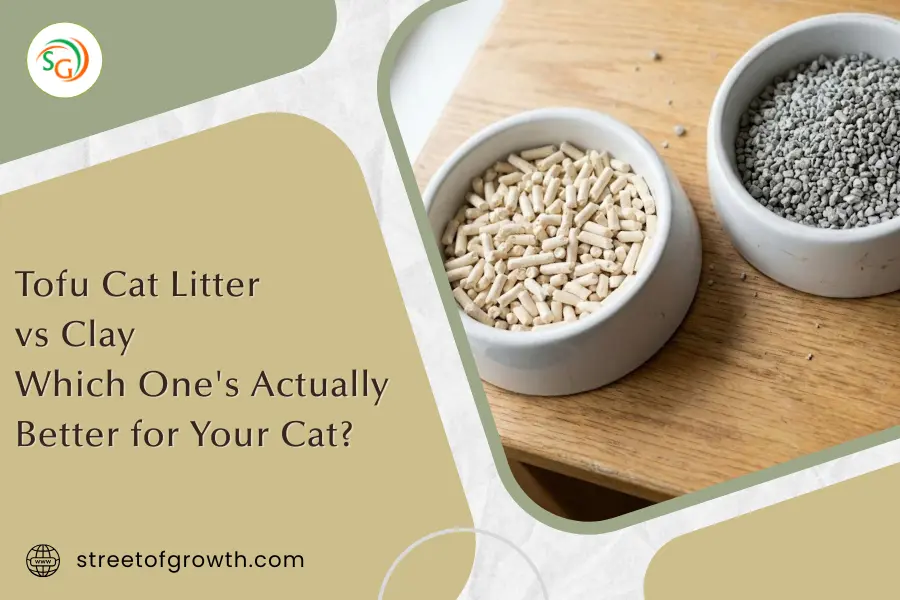
Before we get into comparisons, I need to clear something up. Tofu cat litter isn’t leftover cubes from your stir-fry. It’s made from soybean pulp, which is basically what’s left over after making regular tofu for people to eat. Instead of tossing this stuff in the trash, companies compress it into little pellets that look kind of like tiny logs.
The pellets are usually cream or light tan colored, and they’re surprisingly soft compared to rough clay granules. Most brands keep them unscented, though some add natural fragrances like green tea or lavender.
And What About Clay Litter?
Clay litter has been around since 1947, which makes it the grandparent of cat litters. It’s made from bentonite clay, which is mined from the ground. The cool thing about bentonite is that it swells up to 15 times its size when it gets wet. That’s what makes those tight clumps you can scoop out.
Clay comes in two types: clumping (the kind that forms solid balls when wet) and non-clumping (the kind that absorbs liquid and sits there). Most people use clumping because, honestly, scooping is way easier than dumping the whole box every few days.
The Big Differences That Actually Matter
The Dust Situation (This Is a Big One)
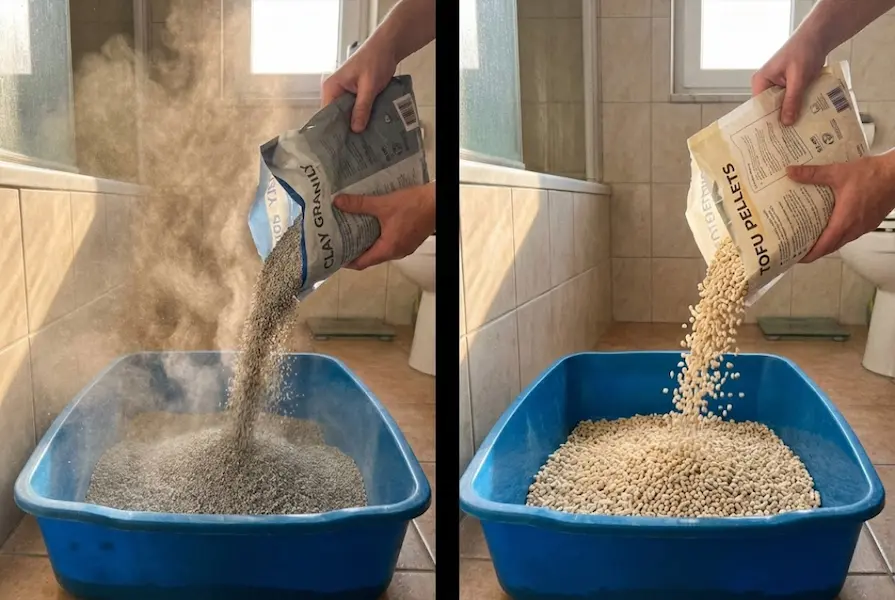
I need to tell you about dust because this is where clay really shows its ugly side.
When you pour clay litter into the box, you create a dust cloud. It’s like a little sandstorm in your bathroom or laundry room. That dust contains silica, which isn’t great for anyone’s lungs. If you or your cat has asthma or allergies, clay dust can trigger symptoms like wheezing, sneezing, and coughing.
What most articles won’t tell you: that dust doesn’t vanish after you pour. Every time your cat digs around in there (which cats love to do), they’re kicking up more dust. They breathe it in. They get it on their paws. Then they lick their paws during grooming and ingest that dust.
Tofu litter is basically dust-free. Like, actually dust-free, not “low dust” marketing speak. Pour it in the box and you won’t need to hold your breath or leave the room. Your cat can dig to their heart’s content without creating a respiratory hazard.
Winner: Tofu (by a mile)
How They Feel on Paws
Cats are picky about texture. Some won’t use a litter box if the litter feels wrong under their feet.
Clay granules can be sharp and gritty. Think about walking barefoot on a gravel driveway versus walking on wood chips. That’s kind of the difference. For cats with sensitive paws or declawed cats (please don’t declaw your cats), clay can be uncomfortable.
Tofu pellets are softer and smoother. They’re gentle on paws, which is why vets often recommend tofu litter for cats recovering from surgery or dealing with paw injuries. The wound won’t get clogged with abrasive particles.
Winner: Tofu
Clumping Power
Clay clumps are rock-hard. They’re solid, they hold together, and they won’t break apart when you scoop them. This is great if you like the satisfaction of scooping out a perfectly formed clump that doesn’t crumble.
Tofu clumps are softer. They still hold together well enough to scoop, but they’re not cement-hard like clay. Some people find tofu clumps a bit more delicate, meaning you need to be slightly more careful when scooping. The flip side? They break down instantly when flushed, which clay absolutely cannot do.
Winner: Tie (depends on your priority)
The Smell Test
I need to talk about odor control because this matters a lot if you live in a small apartment or keep the litter box in a shared space.
Clay litter traps odors okay, but the thing is, it doesn’t neutralize them. The ammonia smell from cat pee can build up over time, especially if you have multiple cats. Many clay litters add artificial fragrances to mask smells, which creates a weird combination of “flowery cat bathroom.”
Tofu litter naturally neutralizes odors. Soybeans are slightly acidic, which helps break down ammonia instead of covering it up. Most tofu litters don’t need added fragrances because they actually control smells rather than hide them.
Winner: Tofu
Weight and Your Back
If you’ve ever lugged a 40-pound bag of clay litter from your car to your apartment, you know this matters.
Clay is HEAVY. A typical bag weighs between 20 to 40 pounds, and it feels like you’re carrying a bag of rocks (because you basically are). If you have back problems, live on the second floor, or you’re an older adult, clay litter can be a serious physical challenge.
Tofu litter weighs about half as much as clay for the same volume. An 8-pound bag of tofu goes as far as a 20-pound bag of clay. This makes a huge difference when you’re shopping, carrying it home, and pouring it into the box.
Winner: Tofu
Getting Rid of Used Litter
Clay litter must go in the trash. You scoop it into a bag, tie it up, and throw it away. You cannot flush clay down the toilet because it will absolutely destroy your plumbing. That bentonite clay that swells so nicely in the litter box? It turns into cement in your pipes. Trust me, you don’t want that repair bill.
Clay isn’t biodegradable either. Every clump you throw away will sit in a landfill basically forever. When you think about the fact that Americans use about 2 million tons of cat litter every year, that’s a lot of permanent trash.
Tofu litter is flushable (in most cases, check your plumbing first). You can scoop clumps directly into the toilet, flush, and done. No trash bags, no trips to the dumpster, no smell building up in your garbage can. The pellets dissolve quickly in water.
Tofu is also biodegradable. If you prefer not to flush, you can compost it (though don’t use it on vegetable gardens because cat waste can carry parasites). Or toss it in the trash knowing it’ll actually break down instead of mummifying.
Winner: Tofu
The Price Situation (With Actual Numbers)
Okay, this is where clay fights back. Clay litter is cheaper upfront. You can find a 20-pound bag for about $5 to $10 at basically any store.
Tofu litter costs more per bag. You’re looking at $10 to $20 for a bag that covers the same amount as clay.
But most comparisons skip the REAL cost over time.
If you have one cat:
- Clay: You might use one 20-pound bag per month = $5-10/month
- Tofu: You might use one 10-pound bag per month = $10-20/month
So yes, tofu costs more monthly. BUT, factor in:
- No dust means less cleaning (your furniture, floors, and air vents stay cleaner)
- No heavy lifting might save you from chiropractor visits
- Better health might mean fewer vet bills for respiratory issues
- Easier disposal saves time and garbage bags
Also, tofu litter often lasts longer because it’s more absorbent. Some people find they use less because each pellet holds more liquid.
Winner: Clay for upfront cost, Tofu for value
Tracking (AKA the Little Paw Prints Everywhere)
Both litters track, meaning your cat will carry some on their paws when they leave the box. But they track differently.
Clay granules are small and sticky. They cling to paws and get carried all over your house. You’ll find clay pieces in your bed, on your couch, and somehow in rooms your cat barely visits.
Tofu pellets are larger and smoother. They don’t stick as much, so tracking is usually less of an issue. You’ll still get some tracking (it’s unavoidable), but it’s typically less than clay.
Winner: Tofu
What Type of Cat Do You Have?
For Kittens: Go with tofu. Kittens are curious and taste everything. If they nibble tofu litter (which happens), it won’t hurt them because it’s made from food-grade materials. Clay can cause serious intestinal blockages in kittens if they eat it. Also, kittens have smaller, more sensitive respiratory systems, making clay dust extra risky.
For Senior Cats: Tofu is usually better. Older cats often develop arthritis or breathing issues. The softer texture is easier on arthritic paws, and the dust-free formula is better for aging lungs. The lighter weight also makes it easier for YOU to manage as you age alongside your cat.
For Multi-Cat Households: This could go either way. Clay’s rock-hard clumps make frequent scooping easier when you have several cats using the same boxes. But tofu’s better odor control might be worth the slightly softer clumps. Consider trying tofu and seeing if it handles your household’s volume.
For Cats with Health Issues: Tofu wins. If your cat has asthma, allergies, recent surgery, or any paw sensitivity, tofu is the safer choice. The Cornell Feline Health Center has helpful information about managing feline asthma and environmental triggers if you want to read more about respiratory health in cats.
For Picky Cats: This is tricky. Some cats prefer the texture of clay because it’s more like dirt (their natural bathroom). Some cats take to tofu immediately. The only way to know is to try it, which brings us to…
How to Switch Without Your Cat Staging a Protest
If you want to try tofu but your cat has used clay forever, don’t swap it out all at once. Cats hate change, and they WILL show their displeasure (usually by peeing on your bed).
Week 1: Mix 25% tofu with 75% clay. Keep everything else the same.
Week 2: Go to 50/50 if your cat is using the box normally.
Week 3: Move to 75% tofu, 25% clay.
Week 4: Try 100% tofu.
Watch for signs your cat isn’t happy: peeing outside the box, scratching around the litter excessively without going, or avoiding the box entirely. If this happens, slow down the transition.
Some cats switch easily. Some need a month or more. Be patient.
The Environmental Reality Check
I’m going to be honest about the planet stuff because it matters to a lot of people.
Clay mining is rough on the environment. It involves strip mining, which tears up habitats and leaves scars on the landscape. The clay doesn’t break down in landfills. When you throw away clay litter, it’s essentially permanent trash.
Tofu litter uses a byproduct that would otherwise be waste from tofu production. Instead of throwing away soybean pulp, companies turn it into litter. It’s biodegradable and actually breaks down whether you flush it, compost it, or trash it.
If environmental impact matters to you, tofu is the obvious choice.
Quick Comparison Table
| Feature | Tofu Litter | Clay Litter |
|---|---|---|
| Dust Level | Virtually none | Heavy dust clouds |
| Paw Comfort | Soft, gentle | Rough, gritty |
| Weight | Light (half the weight) | Heavy (hard to carry) |
| Clumping | Good (softer clumps) | Excellent (rock-hard) |
| Odor Control | Neutralizes naturally | Traps but doesn’t neutralize |
| Disposal | Flushable & biodegradable | Trash only, permanent |
| Price | $10-20 per bag | $5-10 per bag |
| Tracking | Moderate | High |
| Safety if Eaten | Safe (food-grade) | Dangerous (causes blockages) |
| Best For | Health-conscious owners, apartments, eco-minded folks | Budget shoppers, multiple cats |
Problems People Don’t Talk About
Problem 1: Tofu Litter and Moisture Tofu litter can absorb moisture from the air if you live somewhere humid. Store it in a dry place, keep the bag sealed, or transfer it to an airtight container. Don’t buy a six-month supply if you live in Florida or you’ll end up with pre-clumped litter.
Problem 2: Cats Eating Tofu Litter Some cats try to eat tofu litter, especially at first. While it’s safe if they nibble, you don’t want them filling up on litter instead of food. If your cat is eating substantial amounts, talk to your vet. It might signal a nutritional deficiency or behavioral issue called pica.
Problem 3: Clay Litter After Surgery Vets often tell you to switch from clay after your cat has surgery because the small granules can get into wounds. This is good advice, but the articles that mention it don’t tell you WHERE to buy tofu litter on short notice or what to do if your cat refuses it post-surgery. (Answer: Most pet stores carry it now, and you can use shredded paper as a temporary alternative if needed.)
Problem 4: Not All Tofu Litter is Flushable Check the package. Some tofu litters have added ingredients that make them not-quite-flushable. Also, if you have a septic system or old plumbing, even flushable litter might not be a great idea. Test with small amounts first.
Problem 5: Clay Litter in Automatic Boxes If you have an automatic litter box, check the manufacturer’s recommendations. Some automatic boxes work better with clay’s harder clumps. Tofu clumps might break apart during the automatic rake cycle.
What About Other People’s Cats?
Something interesting: your cat’s opinion matters most, but if you have multiple cats, they might not all agree.
I’ve heard from people who have one cat that loves tofu and another that refuses to use anything but clay. In those cases, you might need two different litter boxes with two different litters. It’s annoying but better than finding surprises outside the box.
Cost Breakdown Over a Year
Getting specific with one cat:
Clay Litter:
- Monthly: $7 average × 12 months = $84/year
- Plastic trash bags for disposal: ~$15/year
- Cleaning supplies for dust: ~$20/year
- Total: About $119/year
Tofu Litter:
- Monthly: $15 average × 12 months = $180/year
- No bags needed (flushable): $0
- Minimal cleaning supplies: ~$5/year
- Total: About $185/year
The difference? About $66 per year, or $5.50 per month. That’s one fancy coffee per month. For many people, that’s worth the benefits.
When Clay Might Actually Be the Right Choice
Look, I’ve been pretty pro-tofu in this article because the benefits are legit. But clay isn’t wrong for everyone.
Clay makes sense if:
- You’re on a very tight budget and every dollar counts
- Your cat has used clay for years and absolutely refuses to try anything else
- You have many cats and need the strongest clumping power for frequent scooping
- You live somewhere with easy trash access and hauling heavy bags isn’t an issue
- Your cat has no health issues and dust doesn’t bother anyone in your home
There’s no shame in using clay if it works for your situation. The best litter is the one your cat will actually use.
The Bottom Line
If you want the short answer: tofu litter is better for most people and most cats. It’s healthier, easier to handle, better for the planet, and honestly more pleasant to deal with day-to-day.
The tradeoffs are a higher price and slightly softer clumps. For most households, those tradeoffs are worth it.
But if budget is your main concern or your cat is extremely picky, clay is still a solid, proven option that millions of cats use without problems.
Frequently Asked Questions
Can I really flush tofu litter?
Most tofu litters are flushable in small amounts, but check your specific brand and your plumbing situation. If you have a septic system, ask a plumber first. Never flush clay litter under any circumstances.
Will my cat definitely use tofu litter?
Most cats adjust fine, but there’s no guarantee. Do a gradual transition over 2-4 weeks. If your cat consistently refuses after a month, they might prefer clay.
Does tofu litter smell weird?
Some brands have a natural soybean scent, kind of like a mild earthy smell. It’s not strong, and it definitely doesn’t smell like garbage or cat pee. Most people don’t notice it after a day or two.
Is tofu litter actually better than clay for asthma?
Yes. The lack of dust makes a noticeable difference for both cats and humans with respiratory issues. Many people report fewer asthma symptoms after switching.
How long does a bag last?
For one cat, an 8-10 pound bag of tofu typically lasts about a month, similar to a 20-pound bag of clay. Your mileage will vary based on how often you scoop and how much your cat uses the box.
Can I mix tofu and clay forever?
You can, but it’s not ideal long-term. The different textures don’t blend perfectly, and you lose some of tofu’s benefits (like flushability). It’s fine during transition but aim to pick one eventually.
What if I can’t afford tofu litter?
Look for store brands or bulk options online, which can be cheaper. Some people also mix tofu with a small amount of cheaper alternatives like paper or wood pellets to stretch it further. Or use clay without guilt. It’s still better than not having a litter box at all.
Will tofu litter hurt my cat if they eat it?
Tofu litter is made from food-grade materials and won’t cause blockages like clay. However, cats shouldn’t be eating substantial amounts of ANY litter. If your cat is eating litter regularly, consult your vet.
Final Thoughts
Choosing cat litter isn’t the most exciting decision you’ll make as a cat owner, but it impacts your daily life way more than you’d think. You’re scooping that stuff every day. You’re breathing the air around it. Your cat is standing in it multiple times a day.
My advice? If you’ve been using clay and wondering about tofu, give it a try. Buy one bag. Do the transition. See how you and your cat like it. The worst that happens is you’re out $15 and you go back to clay knowing you tried.
But there’s a good chance you’ll wonder why you didn’t switch sooner. Less dust, less smell, easier disposal, and peace of mind about your cat’s health. That’s worth trying.
Whatever you choose, keep that litter box clean. Scoop daily, change regularly, and give your cat the bathroom dignity they deserve. They’re stuck using whatever you pick, so make it a good choice.
Now go make that litter box decision with confidence. Your cat (and your lungs) will thank you.