

What Order to Apply Skincare Products at Night
You know that sinking feeling when you’re standing in your bathroom at 10 PM, staring at seven different bottles, and thinking, “Which one goes first again?”
I’ve been there. And honestly? So has everyone else who cares about their skin.
Here’s the thing. You can buy the most expensive serums and the fanciest night creams on the planet, but if you slap them on in the wrong order, you’re basically throwing money down the drain. Your skin won’t absorb them properly, and you’ll wake up wondering why you’re not seeing results.
But don’t worry. I’m going to walk you through this step by step, and by the end of this article, you’ll know exactly what to do. No confusing science words, no overwhelming routines. Just simple, clear instructions that actually make sense.
Why Does the Order Even Matter?
Think of your skin like a sponge. If you pour thick, heavy cream on it first, nothing else can get through. But if you start with light, watery products and work your way up to thicker ones, everything soaks in beautifully.
That’s basically the golden rule: go from thinnest to thickest. Light products first, heavy products last.
Plus, some products create a barrier on your skin (which is great for locking in moisture), but that barrier blocks other products from getting through. So timing and order? They matter a lot.
The Simple Nighttime Skincare Routine (Bare Minimum)
Let’s start with the basics. If you only do three things before bed, make it these three:
- Cleanser (get the day’s junk off your face)
- Moisturizer (keep your skin hydrated)
- Maybe a treatment (if you have a specific concern like acne or wrinkles)
That’s it. If that’s all you do, you’re already ahead of most people.
But if you want to take it up a notch and really give your skin what it needs at night? Keep reading.
The Full Nighttime Skincare Order (Step by Step)
Here’s your full routine in the right order. You don’t need to use every single step, just pick what works for your skin and your budget.
Step 1: Makeup Remover or Cleansing Oil (If You Wore Makeup or Sunscreen)
When to use it: Only if you wore makeup, SPF, or both during the day.
Why it matters: Regular face wash isn’t strong enough to break down makeup and sunscreen. You need an oil-based product to dissolve all that stuff first.
How to do it: Apply it to dry skin (yes, dry!), massage it around for about 30 seconds, then rinse with warm water.
Think of this like using dish soap to cut through grease on a pan. Regular water won’t do it, you need something stronger.
Step 2: Cleanser
When to use it: Every single night, no exceptions.
Why it matters: This is where you wash away the dirt, sweat, oil, and pollution that built up all day. Your skin can’t repair itself properly if it’s covered in gunk.
How to do it: Wet your face, use about a nickel-sized amount of cleanser, massage gently for 30-60 seconds, then rinse. Pat your face dry with a clean towel.
Pro tip: If you used makeup remover in Step 1, this is your second cleanse (called “double cleansing”). If you didn’t wear makeup, just wash once.
Step 3: Exfoliator (2-3 Times Per Week Only)
When to use it: Only 2-3 nights per week, not every night.
Why it matters: Exfoliating removes dead skin cells that make your face look dull and clog your pores. But doing it too often will irritate your skin like crazy.
How to do it: Apply a chemical exfoliant (like one with glycolic acid or salicylic acid) to your clean, dry face. Follow the product instructions, most you just leave on.
Important: Don’t use a physical scrub (those scratchy ones with beads). They’re too harsh. Chemical exfoliants work way better and are gentler.
Skip this step if: You’re using retinol that same night. They don’t play nice together and will irritate your skin.
Step 4: Toner (Optional)
When to use it: Right after cleansing, while your skin is still a bit damp.
Why it matters: Toner helps balance your skin’s pH and preps it to absorb the next products better. But honestly? It’s optional. If your routine already works, you don’t need to add it.
How to do it: Pour a little onto a cotton pad and swipe it over your face, or just pat it on with your hands.
Make sure: Your toner doesn’t smell like nail polish remover. If it does, toss it. You want one with hydrating ingredients like hyaluronic acid, not harsh alcohols.
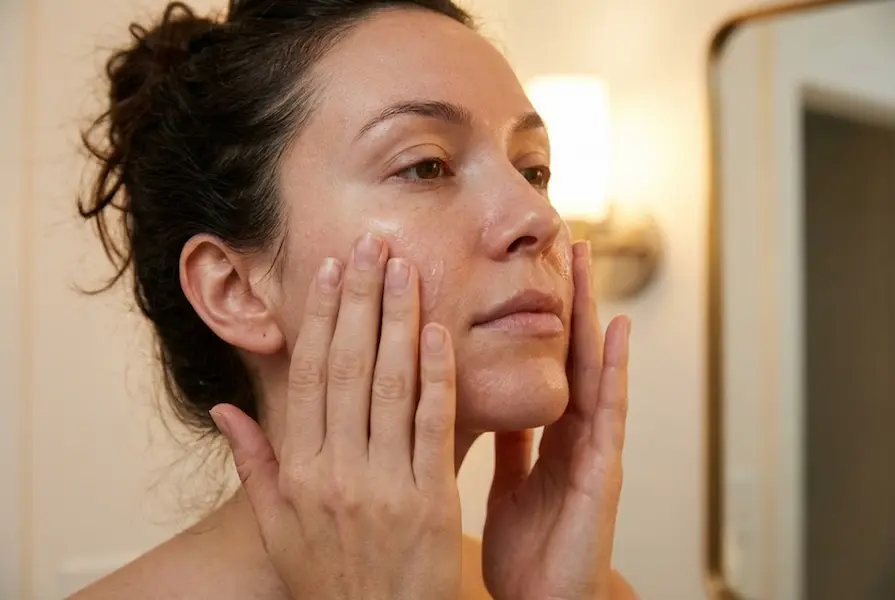
Step 5: Serums and Treatments
When to use it: After your skin is clean and toned (if you use toner).
Why it matters: This is where the magic happens. Serums have concentrated active ingredients that target specific problems like acne, dark spots, or fine lines.
How to do it: Apply 2-3 drops of serum to your face and gently press it in (don’t rub hard). Wait about 60 seconds before moving to the next step so it can sink in.
What to use at night:
- Retinol or retinoids: For anti-aging, acne, and texture. These are superstars but can only be used at night because sunlight deactivates them. Dermatologists recommend starting slowly if you’re new to retinoids, as they can be powerful.
- Hyaluronic acid: For hydration. Apply this when your skin is slightly damp so it can grab onto that moisture.
- Niacinamide: For evening out skin tone and reducing redness.
- Peptides: For firming and plumping.
Don’t use vitamin C at night. It’s meant to protect your skin during the day from sun damage and pollution. Using it at night is just wasteful.
Layer your serums: If you’re using more than one, go from thinnest to thickest. Let each one absorb before adding the next.
Step 6: Eye Cream (Optional)
When to use it: After serums, before moisturizer.
Why it matters: The skin around your eyes is super delicate and gets dry easily. Eye cream helps with puffiness, dark circles, and fine lines.
How to do it: Dab a tiny amount (about the size of a grain of rice per eye) around your orbital bone. Don’t pull or tug, just gently pat it in with your ring finger (it’s your weakest finger, so you won’t press too hard).
Skip this if: Your regular moisturizer works fine around your eyes. Eye cream isn’t a requirement for everyone.
Step 7: Spot Treatment (If Needed)
When to use it: After serums but before moisturizer.
Why it matters: Spot treatments tackle specific pimples or problem areas without affecting your whole face.
How to do it: Dab a small amount directly on the blemish. Let it dry completely before moving on.
Step 8: Moisturizer
When to use it: Every single night. Yes, even if you have oily skin.
Why it matters: Moisturizer locks in all the products you just applied and keeps your skin hydrated while you sleep. Even oily skin needs moisture (oil and hydration are different things). Your skin’s barrier function depends on proper hydration to protect you from irritants and keep your skin healthy.
How to do it: Take about a pea-sized amount and gently massage it all over your face and neck. Use upward motions.
Choose the right texture:
- Gel moisturizers for oily skin
- Cream moisturizers for dry skin
- Lightweight lotions for combination skin
Step 9: Face Oil (Optional)
When to use it: As the very last step, after moisturizer.
Why it matters: Face oils seal everything in and add an extra layer of nourishment. They’re especially good if you have dry skin or live in a cold climate.
How to do it: Warm 2-3 drops between your palms and press gently onto your face.
Skip this if: You have very oily skin or your moisturizer is already super rich.
Step 10: Sleeping Mask or Overnight Treatment (Optional)
When to use it: As the absolute final step, maybe once or twice a week.
Why it matters: These are like supercharged moisturizers that work while you sleep to give you extra glowy skin.
How to do it: Follow the product instructions. Most you just apply and leave on all night.
The Quick Reference Table
| Step | Product | How Often | Required? |
|---|---|---|---|
| 1 | Makeup Remover/Cleansing Oil | Nightly (if you wore makeup/SPF) | If applicable |
| 2 | Cleanser | Every night | YES |
| 3 | Exfoliator | 2-3 times per week | Optional |
| 4 | Toner | Nightly | Optional |
| 5 | Serums/Treatments (Retinol, Hyaluronic Acid, etc.) | Nightly | Highly recommended |
| 6 | Eye Cream | Nightly | Optional |
| 7 | Spot Treatment | As needed | If applicable |
| 8 | Moisturizer | Every night | YES |
| 9 | Face Oil | Nightly | Optional |
| 10 | Sleeping Mask | 1-2 times per week | Optional |
How Long Should You Wait Between Steps?
This is something almost nobody talks about, but it matters.
- After cleansing: Pat your face dry and move right to the next step. Don’t wait.
- After toner: Apply while skin is still damp.
- Between serums: Wait 30-60 seconds for each one to absorb.
- After retinol: Wait a full 60 seconds before moisturizer. Retinol needs time to penetrate.
- After moisturizer: You can go straight to bed, or wait 5 minutes if you’re adding face oil.
The whole routine should take about 5-10 minutes total. If it’s taking 20+ minutes, you’re waiting too long between steps.
Common Nighttime Skincare Mistakes (And How to Fix Them)
Mistake 1: Using Too Many Products at Once
More is not better. If you layer 10 different serums, your skin can’t absorb them all and they’ll just sit on top making your face feel sticky and gross.
Fix it: Stick to 1-2 serums max per night. Rotate them if you want to use different ones.
Mistake 2: Over-Exfoliating
I get it, exfoliating feels good and makes your skin look smooth. But doing it every night will destroy your skin’s protective barrier and leave you red, irritated, and breaking out.
Fix it: Limit exfoliation to 2-3 times per week. Your skin needs time to recover.
Mistake 3: Applying Hyaluronic Acid to Bone-Dry Skin
Hyaluronic acid is like a sponge. It grabs moisture from the air and pulls it into your skin. But if your face is totally dry when you apply it, it’ll actually pull moisture OUT of your skin, making you more dehydrated.
Fix it: Apply hyaluronic acid to damp skin right after cleansing or toning.
Mistake 4: Skipping Moisturizer Because You Have Oily Skin
Oil and hydration are not the same thing. Your skin produces oil, but it can still be dehydrated underneath. Skipping moisturizer makes your skin produce even MORE oil to compensate.
Fix it: Use a lightweight, gel-based moisturizer even if you’re oily.
Mistake 5: Using Vitamin C at Night
Vitamin C is designed to protect your skin from UV rays and environmental damage during the day. At night, you’re not exposed to any of that, so you’re just wasting it.
Fix it: Save vitamin C for mornings. Use retinol or other repair treatments at night instead.
Mistake 6: Not Washing Your Hands First
Your hands touch your phone, doorknobs, and everything else all day. If you don’t wash them before touching your face, you’re basically smearing bacteria all over your clean skin.
Fix it: Wash your hands before starting your skincare routine. It takes 10 seconds.
Mistake 7: Mixing Retinol with Strong Acids on the Same Night
Using retinol and exfoliating acids (like AHAs or BHAs) together is like hitting your skin with a sledgehammer. It’s way too harsh and will irritate the heck out of your face.
Fix it: Use acids on Monday and Wednesday, retinol on Tuesday and Thursday. Give your skin breaks in between.
Mistake 8: Sleeping on a Dirty Pillowcase
Your pillowcase soaks up oil, dead skin cells, and bacteria every night. If you don’t wash it regularly, all that gross stuff transfers back to your face and causes breakouts.
Fix it: Change your pillowcase at least once a week. Twice a week if you’re acne-prone.

What If Your Products Are Pilling or Not Absorbing?
Pilling is when your products roll up into little balls on your face instead of sinking in. It’s annoying and means they’re not working.
Why it happens:
- You’re using too much product
- You’re rubbing instead of patting
- You’re layering incompatible products (like silicone and water-based formulas)
- You’re not waiting long enough between steps
How to fix it:
- Use smaller amounts (a little goes a long way)
- Pat products in gently instead of rubbing
- Wait 30-60 seconds between layers
- Check your product ingredients and make sure they’re compatible
Customizing Your Routine for Your Skin Type
For Dry Skin
Focus on hydration. Use a creamy cleanser, hydrating toner, hyaluronic acid serum, rich moisturizer, and definitely add a face oil.
For Oily Skin
Keep it light. Use a gel cleanser, skip the oil, and stick with a gel moisturizer. You still need moisture, just not heavy creams.
For Combination Skin
Mix and match. Use a gel moisturizer on your T-zone (forehead, nose, chin) and a creamier one on your cheeks if needed.
For Sensitive Skin
Less is more. Avoid fragrances, skip exfoliation (or do it very gently once a week), and look for products with calming ingredients like ceramides and centella.
For Acne-Prone Skin
Avoid anything heavy or pore-clogging. Use salicylic acid or retinol, lightweight moisturizer, and spot treatments as needed.
The Absolute Minimalist Nighttime Routine (For Lazy Nights)
Look, life happens. Sometimes you’re exhausted and just want to fall into bed. On those nights, do this bare minimum:
- Makeup remover or micellar water (if you wore makeup)
- Cleanser
- Moisturizer
That’s it. Three steps. Takes 2 minutes. Your skin will thank you for at least doing this much instead of sleeping in your makeup like a monster.
When Will You See Results?
This is what everyone wants to know, right?
From cleansing and moisturizing: Immediate. Your skin will look and feel better right away.
From retinol: 4-12 weeks for visible improvement in wrinkles and texture.
From acne treatments: 4-6 weeks for consistent improvement.
From hydrating serums: 1-2 weeks for plumper, more glowy skin.
The key: Consistency. Using products twice and then quitting won’t do anything. You have to stick with it.
Your Quick Answers to Common Questions
Can I use retinol every night?
If you’re new to retinol, start with 2-3 times per week and work up to nightly. Your skin needs time to adjust.
Do I really need eye cream, or is regular moisturizer fine?
Regular moisturizer works fine for most people. Eye cream is optional unless you have specific under-eye concerns.
Should I apply products to my neck too?
Yes! Your neck ages just like your face. Bring all your products down to your neck and chest.
Can I mix different brands in one routine?
Absolutely. You don’t need everything from the same brand. Just make sure the products work together.
What if my skin feels tight after cleansing?
That means your cleanser is too harsh. Switch to something gentler and more hydrating.
How do I know if a product is too heavy for my skin?
If you wake up with clogged pores or your face feels greasy all morning, it’s too heavy. Try something lighter.
Can I skip toner?
Yes. Toner is nice to have but not necessary if your routine already works.
Should I use different products in winter vs summer?
Yes! Winter calls for richer, more hydrating products. Summer works better with lighter formulas.
Order matters less if you rush it, so the exact waiting times between steps is the natural follow-on. In the morning the same logic applies to sunscreen under makeup.
The Bottom Line
What you really need to remember:
- Always cleanse before bed. Non-negotiable.
- Go from thinnest to thickest products.
- Give each layer time to absorb (about 60 seconds).
- Moisturize every single night, even if you’re oily.
- Save retinol for nighttime, vitamin C for daytime.
- Don’t overdo it. More products doesn’t mean better skin.
- Be consistent. Results take time.
And most importantly? Your routine should work for YOUR life. If 10 steps feels overwhelming, do 3. If you can only afford drugstore products, that’s totally fine. The best skincare routine is the one you’ll actually stick with.
Now go wash your face and get that glowy skin. You’ve got this.