
How to Apply Sunscreen Under Makeup Without Pilling: Simple Steps That Actually Work
You’re standing in front of your bathroom mirror, running late for work. You’ve just applied your sunscreen, and now it’s time for makeup. But wait. Your foundation is clumping up. Little white balls of product are rolling across your face. Your base looks patchy and uneven. Sound familiar?
That frustrating pilling problem isn’t your fault. It happens to almost everyone who tries to layer sunscreen under makeup. The good news? Once you understand why it happens and how to prevent it, you’ll never deal with those annoying little product balls again.
I’m going to walk you through everything you need to know. No complicated science. No fancy products you can’t afford. Just real advice that works.
Why Does Sunscreen Pill Under Makeup?
Before we fix the problem, let’s understand what’s actually happening on your skin.
Pilling occurs when products don’t blend together properly. Think of it like mixing oil and water. They sit on top of each other instead of combining smoothly. When you rub your makeup over your sunscreen, the products clash and start balling up.
These are the main reasons this happens:
Your products don’t match. Silicone-based sunscreens don’t play nice with water-based foundations (and vice versa). When you mix two different formulas, they literally push each other away.
You’re rushing the process. Sunscreen needs time to absorb into your skin. If you slap makeup on top while it’s still wet or tacky, you’re creating a recipe for pilling.
You’re using too much product. More isn’t always better. When you pile on thick layers of skincare, sunscreen, and primer, there’s nowhere for all that product to go. It sits on the surface and starts rolling up.
Your skin isn’t prepped correctly. Dry, flaky skin creates an uneven surface. Dead skin cells mix with your products and cause texture issues.
You’re rubbing too hard. Aggressive application disrupts the sunscreen layer you just created. This physically pushes the products around and causes them to bunch up.
Now that you know what causes the problem, let’s fix it.
Step 1: Prep Your Skin the Right Way
Everything starts with clean, smooth skin. You can’t build a good foundation on a rough surface.
Cleanse gently. Use a cleanser that matches your skin type. If you have oily skin, go for a gel or foam formula. If you’re on the dry side, pick a creamy, hydrating cleanser. Wash your face with lukewarm water (hot water strips your skin) and pat dry with a clean towel.
Exfoliate regularly. You don’t need to do this every day, but once or twice a week makes a huge difference. Use a gentle chemical exfoliant with AHAs or BHAs. This removes dead skin cells that cause texture and pilling. Your products will glide on much smoother afterward.
Skip heavy serums in the morning. Some ingredients just don’t work well under sunscreen. Thick vitamin C serums, heavy oils, and rich treatments are better saved for nighttime. In the morning, stick with lightweight, fast-absorbing products.
Moisturize smartly. Even if you have oily skin, you need moisture. But choose the right formula. Oily skin types do best with gel or water-based moisturizers. Dry skin types can handle richer creams. The key is to let it sink in completely before moving to the next step.
Wait 2 to 3 minutes after your moisturizer before applying sunscreen. I know you’re in a hurry, but this tiny pause makes all the difference. Use this time to do something else (brush your teeth, make coffee, pick out your clothes).
Step 2: Choose the Right Sunscreen
Not all sunscreens are created equal when it comes to makeup application. The texture and formula matter way more than you think.
Chemical vs. Mineral: What Works Best?
Chemical sunscreens absorb into your skin and convert UV rays into heat. They’re usually lightweight and feel invisible. Most of them blend beautifully under makeup without leaving any white cast. If you want something that feels like it’s not even there, chemical sunscreens are your friend.
Mineral sunscreens sit on top of your skin and physically block UV rays using zinc oxide or titanium dioxide. They can be great for sensitive or acne-prone skin. Some give you a nice matte finish, which is perfect if you get shiny during the day. The downside? They can sometimes leave a slight white tint, especially on deeper skin tones.
Texture Matters More Than You Think
What works best for different situations:
Gel sunscreens are ultra-lightweight and absorb fast. They’re perfect for oily or combination skin. They don’t leave any sticky residue, so makeup glides right over them. Great for hot, humid weather too.
Lotion sunscreens are the middle ground. Not too thick, not too light. They work for most skin types and provide good hydration without feeling heavy. These are your everyday workhorses.
Cream sunscreens are richer and more moisturizing. If you have dry skin, these are ideal. Just make sure to let them fully absorb before makeup, or they can feel greasy.
Sunscreen primers do double duty. They protect your skin AND create a smooth base for makeup. If you’re short on time or steps, these are lifesavers.
Quick Compatibility Chart
| Your Sunscreen Type | Works Best With | Avoid Pairing With |
|---|---|---|
| Silicone-based | Silicone primers, liquid foundations with dimethicone | Water-based products |
| Water-based | Water-based primers and foundations, gel moisturizers | Heavy silicone products |
| Mineral/Physical | Water-based products, mattifying primers | Very dewy foundations |
| Gel formulas | Lightweight foundations, BB creams | Thick, creamy makeup |
Step 3: Apply Your Sunscreen Correctly
This is where most people mess up. Even with the right products, bad application technique ruins everything.
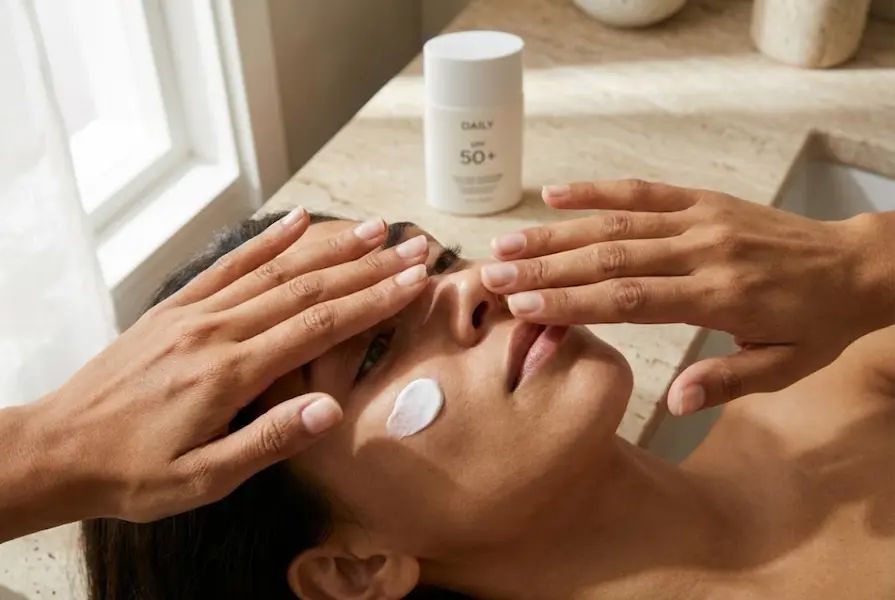
Use the right amount. You need about a nickel-sized dollop for your face, or roughly 1/4 teaspoon. I know it seems like a lot, but anything less won’t give you proper sun protection. According to dermatologists’ recommendations on sunscreen application, using the correct amount is critical for getting the SPF protection listed on the bottle.
Pat, don’t rub. This is the golden rule. Squeeze the sunscreen onto your fingertips, then gently press it into your skin. Use light patting motions instead of rubbing back and forth. This helps it absorb without disturbing your skin’s surface.
Cover everywhere. Don’t forget your jawline, hairline, and neck. These spots are easy to miss but they still need protection.
Wait 10 to 15 minutes. I can’t stress this enough. Your sunscreen needs time to settle into your skin. Set a timer if you need to. This waiting period is the number one thing that prevents pilling. While you wait, finish the rest of your morning routine (do your hair, get dressed, feed your pet).
Check if it’s ready. Touch your face gently. If it feels dry and no longer sticky or greasy, you’re good to go. If it still feels tacky, give it a few more minutes.
Step 4: Apply Makeup Without Messing Things Up
Now comes the fun part. But we need to be smart about how we layer everything.
Start with primer (if you use one). Make sure your primer matches your sunscreen base. If you used a silicone sunscreen, use a silicone primer. If you used a water-based sunscreen, stick with water-based primer. When in doubt, skip the primer entirely. Your sunscreen can work as one.
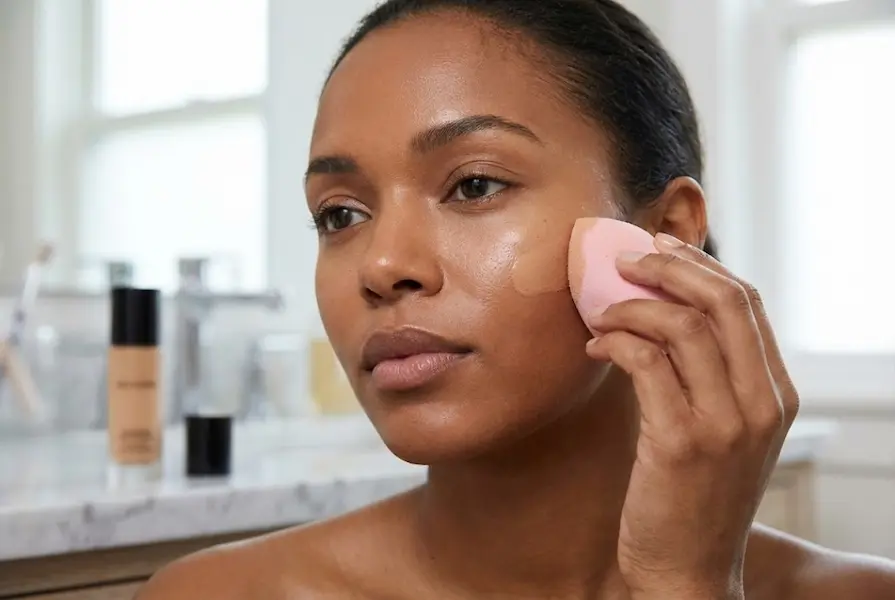
Use a damp makeup sponge. Forget your brush for a second. A slightly damp beauty sponge is your best tool for applying foundation over sunscreen. It uses a bouncing motion instead of dragging, which prevents pilling.
Apply foundation with a light hand. Less is more. Start with a small amount and build up if needed. Press the foundation onto your skin rather than swiping it across.
Set gently. If you use powder, dust it on lightly. Don’t rub or swirl your brush aggressively.
Foundation Type Matters Too
Different makeup formulas work better with different sunscreens:
| Foundation Type | Best Sunscreen Match | Why It Works |
|---|---|---|
| Liquid (dewy finish) | Gel or lightweight chemical | Both are hydrating and blend well together |
| Liquid (matte finish) | Mineral or mattifying SPF | Prevents excess shine, sets nicely |
| Powder foundation | Any (just wait longer) | Powder sits on top regardless |
| BB/CC cream | Lightweight gel SPF | Similar textures layer well |
| Stick foundation | Cream or lotion SPF | Both have similar consistency |
What If You Have Specific Skin Types?
Everyone’s skin is different. Adjust based on your needs:
Oily Skin
Your main enemy is extra shine and products sliding off your face.
Go for gel or lightweight chemical sunscreens. They won’t add more oil to your already shiny situation. Look for words like “oil-free,” “matte finish,” or “shine control” on the label.
Use a mattifying primer after your sunscreen (give it time to dry first). This creates a barrier between your sunscreen and foundation.
Blot before makeup application. If your sunscreen looks shiny after 15 minutes, gently press a tissue or blotting paper on your face. This removes excess oil without disturbing the SPF layer.
Dry Skin
You need extra moisture without looking cakey.
Choose cream or lotion sunscreens with hydrating ingredients (look for hyaluronic acid, glycerin, or ceramides). These give you sun protection and moisture at the same time.
Don’t skip moisturizer. Even though your sunscreen might feel rich, your skin still needs that hydration layer underneath.
Use a damp sponge for makeup. This helps your foundation blend into dry patches instead of sitting on top of them.
Combination Skin
You’re dealing with both oily and dry areas.
Pick a lightweight lotion sunscreen. These work well across different zones of your face.
Apply different amounts to different areas. Use a bit more on dry spots, less on your T-zone.
Consider spot-treating. You can use a mattifying primer on oily areas and a hydrating one on dry areas if needed.
Sensitive or Acne-Prone Skin
You need protection without irritation or breakouts.
Mineral sunscreens are usually gentler. Look for zinc oxide or titanium dioxide as the main ingredients.
Make sure everything is non-comedogenic. This means it won’t clog your pores.
Keep it simple. The fewer products you layer, the less chance of irritation. Skip the primer if you can.
Troubleshooting: When Things Go Wrong
Even with perfect technique, sometimes pilling happens. How to fix common problems:
“My sunscreen is still pilling even though I waited.”
Your products probably aren’t compatible. Check the ingredient list. If your sunscreen has a lot of silicones (dimethicone, cyclopentasiloxane) and your foundation is water-based, that’s your problem. Switch one of them.
“Everything was fine, then my makeup started balling up when I touched my face.”
You’re using too much product. Next time, use half the amount of sunscreen and foundation. Build up slowly if you need more coverage.
“My face feels greasy even after waiting 15 minutes.”
You might need a different sunscreen formula. Try a gel or mattifying version. You can also lightly dust translucent powder over your sunscreen before makeup.
“My makeup looks patchy over my sunscreen.”
Your skin probably needs exfoliation. Dead skin cells create an uneven surface. Exfoliate 2 to 3 times a week, and this should improve.
“I have dry patches that get worse with sunscreen.”
Increase your moisturizer, not your sunscreen amount. Let your moisturizer really sink in (5 minutes instead of 2) before applying SPF.
Quick Hacks for Busy Mornings
Life gets hectic. Some shortcuts when you’re running late:
Use a sunscreen primer combo. This eliminates one entire step and waiting period.
Apply sunscreen right after you get out of the shower. By the time you’re dressed and ready, it’s already absorbed.
Keep a powder sunscreen at your desk. If you mess up your morning application, you can touch up with powder SPF later.
Switch to a tinted sunscreen. These give you light coverage and SPF in one step. You might not even need foundation afterward.
Prep your skin the night before. Do your exfoliation and heavy hydration at night. This makes morning application much smoother.
How to Reapply Sunscreen During the Day (Without Ruining Your Makeup)
Nobody tells you this: sunscreen wears off. Even the best formulas need reapplication every 2 hours if you’re in direct sunlight, or every 4 hours if you’re mostly indoors. The Skin Cancer Foundation’s guidelines on sun protection emphasize that regular reapplication is just as important as your morning application.
But you can’t just wash your face and start over. So what do you do?
Powder sunscreen is your best friend. Brush-on SPF powders let you add protection without touching your makeup. Just swirl a fluffy brush in the powder and dust it over your face. Easy.
SPF setting sprays work too. Hold the bottle about 6 to 8 inches from your face. Close your eyes, spray a few light mists, and let it dry naturally. Don’t rub it in.
Sunscreen sticks for spot touch-ups. These are great for your nose, forehead, or cheekbones (areas that get the most sun). Gently dab the stick on your skin and pat with your finger.
Cushion compacts are genius. Some Korean beauty brands make cushion foundations with high SPF. These let you touch up coverage and sun protection at the same time.
Just remember: powder and spray SPFs are great for reapplication, but they shouldn’t be your first layer in the morning. You still need regular sunscreen as your base.
Common Myths About Sunscreen and Makeup
Let me clear up some confusion:
“Foundation with SPF is enough protection.” No. To get the SPF listed on your foundation, you’d need to use way more than anyone actually does. Always use separate sunscreen.
“I can mix sunscreen with my foundation to save time.” Don’t do this. Mixing dilutes the SPF and you won’t get proper protection. Keep them separate.
“If I layer multiple products with SPF, it adds up.” Nope. If you use SPF 30 sunscreen and SPF 15 foundation, you don’t get SPF 45. You just get SPF 30 (the highest one).
“Expensive sunscreen works better under makeup.” Not necessarily. Drugstore options can work just as well. It’s about finding the right texture and formula for your skin, not about price.
“Mineral sunscreens always cause white cast.” Older formulas did, but modern mineral sunscreens are much better. Many brands now make tinted versions that blend into all skin tones.
The Bottom Line: Your Foolproof Routine
Let’s put it all together. Your step-by-step routine that prevents pilling every single time:
Morning prep: Cleanse your face gently and pat dry.
Moisturize: Apply a lightweight moisturizer for your skin type. Wait 2 to 3 minutes.
Sunscreen application: Use a nickel-sized amount. Pat it gently into your skin with your fingertips. Cover your entire face, neck, and ears.
Wait time: Set a timer for 10 to 15 minutes. Do other things while you wait. Don’t touch your face.
Check readiness: Touch your face lightly. If it’s dry and not sticky, you’re ready for makeup.
Primer (optional): If you use primer, make sure it matches your sunscreen base. Apply thinly.
Foundation: Use a damp makeup sponge. Bounce the foundation onto your skin instead of rubbing.
Rest of makeup: Apply concealer, powder, and other products as normal.
Reapply during the day: Use powder SPF, setting spray, or a stick for touch-ups every few hours.
That’s it. No complicated steps. No expensive products. Just smart layering and a little patience.
If the makeup itself is the problem rather than the sunscreen, fixing cakey foundation on dry skin is the one to read. Pilling is often a timing issue too, which how long to wait between steps sorts out.
Frequently Asked Questions
How long should I really wait between sunscreen and makeup?
Ideally, 10 to 15 minutes. If you’re really rushed, bare minimum is 5 minutes. But the longer you wait, the better your results will be.
Can I use the same sunscreen in summer and winter?
You can, but you might want different formulas. Summer calls for lighter, oil-free options. Winter might need something more hydrating. Your skin’s needs change with the weather.
What if I work from home and barely go outside?
You still need sunscreen. UV rays come through windows. Your computer and phone screens expose you to blue light, which can also damage skin over time. Make SPF a non-negotiable step.
Is it okay to skip sunscreen if my foundation has SPF 30?
No. Most people don’t apply enough foundation to get the full SPF benefit. You’d need about 7 times more foundation than you normally use. Always wear separate sunscreen underneath.
My sunscreen makes me break out. What should I do?
Look for non-comedogenic formulas, which won’t clog pores. Mineral sunscreens with zinc oxide are usually gentler on acne-prone skin. Make sure you’re washing your face thoroughly at night to remove all product.
Can I use body sunscreen on my face?
You can, but it’s not ideal. Body sunscreens are often thicker and greasier. They’re not designed to work under makeup. Facial sunscreens are formulated to be more cosmetically elegant and comfortable for daily wear.
Does sunscreen really need to be the last step in skincare?
Yes. Sunscreen works best when applied directly to clean skin with just moisturizer underneath. If you put other products (like serums or oils) on top of sunscreen, you’re breaking up that protective layer.
How do I know if my products are silicone-based or water-based?
Check the ingredient list. If you see ingredients ending in “-cone” or “-siloxane” (like dimethicone or cyclopentasiloxane) near the top, it’s silicone-based. If water (aqua) is the first ingredient and there are no silicones listed early, it’s water-based.
Can I use retinol in the morning before sunscreen?
It’s better to use retinol at night. It makes your skin more sensitive to the sun. If you must use it in the morning, apply it before sunscreen (never after), and make sure you’re diligent about sun protection all day.
What’s the best way to remove sunscreen at night?
Use a double cleanse method. Start with an oil-based cleanser or micellar water to break down the SPF. Then follow with your regular face wash. This makes sure you remove all traces without irritating your skin.
Final Thoughts
Getting sunscreen and makeup to work together isn’t rocket science. It just takes the right products, proper timing, and gentle technique.
The most important takeaway? Patience. Those 10 to 15 minutes of waiting make all the difference between perfect makeup and a pilling disaster.
Start with these basics, adjust based on your skin type, and don’t be afraid to experiment with different products until you find your perfect combination. Your future self will thank you for the sun protection, and your current self will love how smooth your makeup looks.
No more white balls. No more patchy foundation. Just protected, beautiful skin all day long.