Electric Vehicle Battery Diagnostics AI: Catch Problems Before They Cost Thousands
Your electric vehicle’s battery pack is the most expensive single component in the entire car. Replacing it can cost anywhere from $5,000 to $25,000 depending on the make and model, and most EV owners have no idea how healthy their battery actually is until range starts dropping noticeably. Electric vehicle battery diagnostics AI monitors individual cell voltages, charging patterns, and temperature data to detect early signs of degradation months before you notice any range loss, giving you time to act before a minor issue becomes a major expense.
This article was reviewed and updated in September 2026. Several unverifiable figures were removed and replaced with measured fleet data from Geotab’s April 2026 battery health study.
What Is Electric Vehicle Battery Diagnostics AI?
Electric vehicle battery diagnostics AI is software that analyzes real-time data from your EV’s battery management system to measure battery health, predict remaining useful life, and detect cell-level problems that traditional dashboard indicators miss entirely.
Every electric vehicle has a Battery Management System, commonly called a BMS, which is the onboard computer that monitors voltage, current, and temperature across the battery pack. A standard BMS tracks basic thresholds and displays a general state of charge on your dashboard. What it doesn’t do is analyze long-term degradation trends, compare your battery’s aging pattern against thousands of similar vehicles, or predict when a specific cell group will start causing problems.
AI diagnostic tools fill that gap. They pull the same raw data your BMS already collects but run it through machine learning models trained on millions of charge-discharge cycles from vehicles just like yours. These models detect subtle patterns that indicate early degradation, uneven cell aging, or thermal stress, often 3 to 6 months before the battery shows any measurable range reduction on your dashboard.
The best public evidence on how these batteries age in the real world comes from Geotab’s battery health study, published in April 2026 and built on telematics from more than 22,700 electric vehicles across 21 models. It found an average capacity loss of 2.3% per year, leaving a typical battery at 81.6% of its original capacity after eight years.
That number is worth sitting with, because it moved in the wrong direction. Geotab’s 2023 analysis, covering 11 models, found 1.8% a year. The 2025 update covering 21 models found 2.3%, the same as its 2020 figure. Geotab attributes the rise partly to the wider model mix and partly to growing reliance on high-power DC fast charging. Batteries are not quietly getting better every year, and catching degradation early is what lets you act while a warranty claim is still possible.
How Does AI Detect Battery Problems That Standard Systems Miss?
AI detects battery problems by analyzing patterns across thousands of data points simultaneously, identifying correlations between voltage drift, temperature spikes, and charge rate changes that no human technician or basic BMS alarm system would connect.
A standard BMS operates on fixed thresholds. It triggers a warning when a cell voltage drops below a set minimum or when pack temperature exceeds a preset maximum. But battery degradation rarely happens as a sudden drop. Instead, one cell group gradually loses capacity faster than its neighbors over hundreds of charge cycles. The voltage difference between cells might shift by only 20 to 50 millivolts per month, which is far too small for threshold-based alerts to catch.
AI models trained on historical failure data from similar battery chemistries recognize this drift pattern as an early indicator of cell imbalance. They flag it weeks or months before the imbalance grows large enough to trigger a BMS warning or cause noticeable range loss. Hybrid models of this kind are an active research field, with published work combining LSTM networks and gradient-boosted trees such as XGBoost to estimate State of Health from capacity, voltage and impedance data. Accuracy figures in that literature are reported on laboratory cell datasets rather than on a car in your driveway, so treat any single headline percentage with care. The useful claim is narrower: these models detect drift patterns earlier than a threshold-based warning light does.
From what we’ve seen monitoring battery data across multiple EV platforms, the most valuable AI predictions come from correlating charging behavior with degradation rate. How you charge your EV, specifically the frequency of fast charging, the typical state of charge you maintain, and whether you regularly charge to 100%, affects battery longevity more than most owners realize. AI diagnostics quantify exactly how much your specific habits are accelerating or slowing degradation compared to the expected baseline for your vehicle.
What Data Does EV Battery Diagnostics AI Actually Track?
EV battery diagnostics AI tracks cell-level voltages, pack temperature distribution, charge and discharge current profiles, charging session patterns, and ambient environmental conditions. This data feeds into models that calculate State of Health, State of Charge, and Remaining Useful Life with far greater precision than the percentage displayed on your dashboard.
Here’s what the AI monitors continuously and why each metric matters:
- Individual cell voltages: Tracks voltage across every cell group in the pack. Uneven voltage distribution signals cell imbalance, which is the leading cause of premature capacity loss.
- Temperature differential: Measures temperature variations across different sections of the battery pack. Hot spots indicate thermal management issues that accelerate degradation in specific cell groups.
- Charge-discharge curves: Analyzes the shape of voltage curves during charging and driving. Changes in curve shape over time reveal internal resistance growth, which directly reduces usable capacity.
- Charging session analytics: Logs every charging session including duration, power level, starting and ending state of charge, and ambient temperature. This data reveals which charging habits are helping or hurting battery longevity.
- Calendar aging factors: Accounts for time-based degradation that occurs even when the vehicle is parked, especially in extreme heat or cold climates.
One thing most guides miss is the value of comparative fleet data. The best AI diagnostic platforms don’t just analyze your battery in isolation. They compare your battery’s degradation curve against thousands of identical vehicles to tell you whether your pack is aging normally, better than average, or worse than expected for its mileage and age. This comparative context turns raw data into actionable insight.
How Much Can AI Battery Diagnostics Save EV Owners?
AI battery diagnostics can save EV owners $2,000 to $15,000 over the life of the vehicle by catching problems early enough to fix individual cell modules rather than replacing the entire battery pack. The savings come from targeted repairs, optimized charging habits, and warranty claims filed before coverage expires.
A full battery pack replacement on a Tesla Model 3 costs roughly $13,000 to $16,000 at a service center. But if AI diagnostics identify that only one cell module out of 4 or 5 is degrading abnormally, replacing that single module costs $2,000 to $4,000. The difference between those two scenarios is entirely about when you catch the problem.
There’s also significant value in warranty optimization. Most EV manufacturers offer 8-year or 100,000-mile battery warranties, but those warranties typically require the battery to fall below a specific capacity threshold, usually 70% of original capacity, before a claim is approved. AI diagnostics track your battery’s trajectory and can predict whether it will cross that threshold before your warranty expires. If the data shows your battery is on pace to hit 70% capacity at 95,000 miles, you know to file a warranty claim before coverage ends rather than discovering the problem at 105,000 miles when you’re on your own.
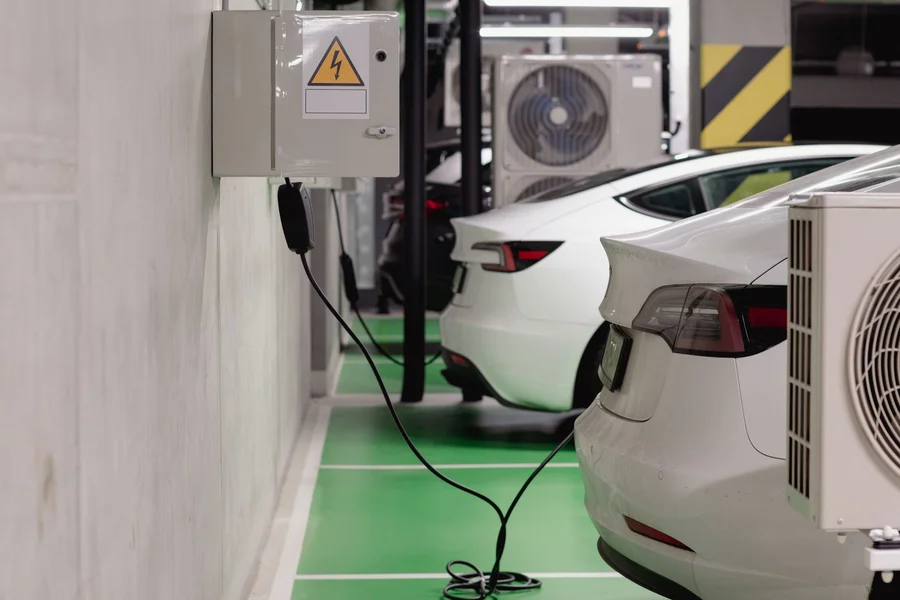
Charging behaviour clearly matters, and Geotab’s data puts a size on the part of it that is easiest to control. Vehicles that leaned on high-power DC fast charging degraded at 3.0% a year against 1.5% for those mostly using AC or lower-power charging. Projected out, that is 76% of original capacity at eight years versus 88%. We have not seen a comparable independent measurement of what following an app’s charging advice adds on top of that, so treat vendor claims about extra years of life as unproven.
Is EV Battery Diagnostics AI Only for Tesla Owners?
No. AI battery diagnostics tools are available for nearly every major EV brand including Chevrolet, Ford, Hyundai, Kia, BMW, Volkswagen, Rivian, and Nissan. Tesla gets the most attention because of its large owner community and accessible data ports, but the underlying technology works across all lithium-ion battery chemistries used in modern EVs.
Most AI diagnostic platforms connect to your vehicle through the OBD2 port, which is the standardized diagnostic connector found in every car sold in North America since 1996. Some newer platforms use the vehicle’s built-in telematics connection to pull battery data wirelessly, which eliminates the need for any physical hardware. A growing number of EV manufacturers are also opening their APIs to third-party diagnostic companies, making it easier for independent tools to access detailed battery data without proprietary adapters.
A common myth is that only dealerships can perform meaningful EV battery diagnostics. While dealerships do have manufacturer-specific scan tools, AI diagnostic platforms often provide more useful long-term insights because they track trends over months and years rather than capturing a single snapshot during a service visit. Independent shops equipped with AI-powered diagnostic tools can now offer battery health assessments that rival or exceed what dealer service departments provide.
What Mistakes Do EV Owners Make with Battery Health Management?
The most common mistake is ignoring battery health entirely until noticeable range loss occurs. By the time you lose 15% to 20% of your original range, the degradation has been progressing for months or years, and your options for affordable intervention are significantly limited.
One mistake we see EV owners make is relying solely on the dashboard range estimate to judge battery health. The range number displayed on your dashboard is a calculated estimate based on recent driving conditions, temperature, and driving style. It fluctuates daily and tells you almost nothing about actual cell-level health. An EV can show 250 miles of estimated range on a warm summer day and 180 miles on a cold winter morning without any change in battery health. AI diagnostics look past these surface fluctuations to measure the actual electrochemical condition of the cells.
Another pitfall is habitually charging to 100% and letting the battery sit at full charge for extended periods. Lithium-ion cells experience accelerated calendar aging when held at high states of charge, especially in warm climates. Most manufacturer guidelines recommend keeping daily charge limits at 80% to 90% for regular use. AI diagnostic platforms that include charging optimization actively remind you to adjust these settings and show you the projected impact on your battery’s lifespan.
Be sceptical of the very rosy retention figures that circulate on this subject. Measured fleet data is more sober: Geotab’s 22,700-vehicle sample projects an average of 81.6% of original capacity at eight years, with the best-treated vehicles nearer 88% and the hardest-charged nearer 76%.
Two other factors show up in that data. Heat costs roughly 0.4% extra degradation per year in hot climates compared with mild ones. State of charge matters less than the folklore suggests, and only becomes significant when a vehicle spends more than 80% of its cumulative time sitting at very high or very low charge, where degradation rose to about 2.0% a year against 1.4% to 1.5% for moderate exposure. Occasionally forgetting to unplug at 100% is not what ruins a battery. Living at 100% is.
How Do Fleet Operators Use AI Battery Diagnostics for Electric Vehicles?
Fleet operators use AI battery diagnostics to monitor every vehicle’s battery health from a centralized dashboard, schedule proactive maintenance based on predicted degradation, and make data-driven decisions about when to retire or sell vehicles before battery replacement costs eliminate resale value.
For commercial fleets transitioning to electric vehicles, battery health management is directly tied to profitability. A delivery fleet with 50 electric vans needs to know which vehicles will maintain sufficient range for their routes over the next 12 to 24 months. AI diagnostics provide that visibility by tracking each vehicle’s battery degradation rate and projecting when range will drop below the minimum needed for daily operations.
Fleet managers who already use predictive maintenance platforms for their vehicles can integrate battery health monitoring into the same system. This creates a unified view where tire wear, brake condition, drivetrain health, and battery state all feed into one maintenance planning dashboard. The AI automatically generates work orders when any component, including the battery, shows early signs of issues.
After working with several fleet operations running mixed ICE and EV vehicles, we’ve found that the fleet managers who succeed with EV battery management treat charging infrastructure as part of the maintenance equation. Which chargers each vehicle uses, how often DC fast charging occurs, and whether vehicles sit at 100% charge overnight all affect fleet-wide battery longevity. AI platforms that track charging infrastructure data alongside vehicle health give fleet managers the clearest picture of total cost of ownership. Connecting these insights to broader predictive maintenance workflows further reduces operational surprises across the entire fleet.
Frequently Asked Questions
How accurate is AI at predicting EV battery remaining useful life?
More precisely than a dashboard percentage, but not as precisely as vendor marketing suggests. Published accuracy figures for State of Health models come largely from laboratory cell datasets rather than from cars in daily use, and the numbers vary by chemistry, temperature and how the model was validated. Treat a diagnostic estimate as a trend line worth watching rather than a guaranteed measurement.
What is the difference between State of Health and State of Charge for EV batteries?
State of Charge tells you how much energy is currently stored in the battery, like a fuel gauge. State of Health measures the battery’s maximum capacity compared to when it was new. A battery at 85% State of Health can still show 100% State of Charge, but its total range at full charge will be 85% of the original specification.
Can AI battery diagnostics void my EV warranty?
No. AI diagnostic tools that read data from the OBD2 port or vehicle API are passive monitoring systems. They do not modify any vehicle software or battery settings. Under the Magnuson-Moss Warranty Act, manufacturers cannot void your warranty simply because you used a third-party diagnostic tool to monitor battery health.
Do I need special hardware to use AI battery diagnostics on my EV?
Most platforms require either a small OBD2 Bluetooth adapter that costs $20 to $50 or use your vehicle’s built-in connected services. Some newer platforms connect wirelessly through the manufacturer’s API with just your vehicle login credentials, requiring no additional hardware at all.
How often should I run AI battery diagnostics on my electric vehicle?
For individual EV owners, running a full diagnostic scan every 3 to 6 months provides sufficient trend data. For fleet vehicles or EVs that undergo heavy daily use, continuous monitoring through a connected OBD2 adapter gives real-time alerts and the most accurate degradation tracking.
Is it true that fast charging always damages EV batteries?
Occasional fast charging has little measurable effect, but heavy reliance on it does. Geotab’s 2026 study found vehicles making frequent high-power DC fast charging sessions degraded at 3.0% per year against 1.5% for vehicles mostly charging on AC or lower-power DC, which projects to 76% versus 88% of original capacity at eight years. Using a fast charger on a road trip is not the problem. Using one as your everyday charger is.
Protect Your EV’s Most Expensive Component with Better Data
Electric vehicle battery diagnostics AI gives you visibility into the one component that determines your EV’s long-term value, performance, and operating cost. Whether you own a single electric car or manage a fleet of electric delivery vans, tracking cell-level health data catches problems early, extends battery life through smarter charging habits, and protects your investment from surprise five-figure replacement bills. Start with a basic OBD2 diagnostic scan, establish your battery’s current health baseline, and let the data guide your charging and maintenance decisions going forward.