ETIAS Visa for Americans 2026 – How to Apply in 10 Minutes
Imagine this. You’ve booked your dream trip to Paris. Your flights are confirmed, hotels are reserved, and you’re counting down the days. Then, at the airport check-in counter, you’re told you can’t board because you don’t have something called “ETIAS approval.” Your trip? Canceled. Your money? Likely not refundable.
This nightmare scenario could become reality for thousands of American travelers in 2026 if they don’t understand the new ETIAS requirement. But the good news is this: getting your ETIAS approval is actually simple. You just need to know what to do, when to do it, and how to avoid the mistakes that cause delays or denials.
This guide will walk you through the full ETIAS process, from start to finish, in plain English that anyone can understand.
What Exactly Is ETIAS? (And Why Should Americans Care?)
ETIAS stands for European Travel Information and Authorization System. Think of it as Europe’s version of the ESTA system that foreign visitors use when traveling to the United States.
Starting in late 2026, if you’re an American citizen planning to visit most European countries, you’ll need to get ETIAS approval before you travel. This applies even if you’re just going for vacation, a business meeting, or connecting through a European airport.
What ETIAS is NOT:
- It’s not a visa
- It’s not a physical document you carry
- It’s not something you need to visit an embassy for
What ETIAS IS:
- An online travel authorization linked to your passport
- A security check done before you travel
- Required for all Americans visiting 30 European countries
- Valid for 3 years or until your passport expires (whichever comes first)
The ETIAS vs. ESTA Comparison:
If you’ve ever traveled to the U.S. from another country (or helped someone who has), you already understand how ETIAS works. It’s almost identical to America’s ESTA system.
| Feature | ETIAS (for Europe) | ESTA (for U.S.) |
|---|---|---|
| Application Type | Online only | Online only |
| Cost | €20 (about $23) | $21 |
| Processing Time | Minutes to 96 hours | Usually instant |
| Validity Period | 3 years | 2 years |
| Purpose | Security screening | Security screening |
| Guarantees Entry | No | No |
The main takeaway? Just like foreign visitors need ESTA to come to America, Americans now need ETIAS to visit Europe. It’s fair, reciprocal, and designed to make travel safer for everyone.
Important Dates: When Does ETIAS Actually Start?
This is where many travelers get confused. I’ll break down the timeline clearly:
October 12, 2025: The Entry/Exit System (EES) launches. This is a separate system that replaces passport stamps with digital records. You’ll have your photo and fingerprints taken at the border. No advance application needed for EES.
Late 2026 (Q4 2026): ETIAS officially launches. The European Union hasn’t announced an exact date yet, but they’ve confirmed it will be in the last quarter of 2026 (October, November, or December).
6-Month Transitional Period: After ETIAS launches, there will be a 6-month grace period where you’re encouraged to get ETIAS but won’t be turned away if you don’t have it (as long as you meet all other entry requirements).
Mid-2027: ETIAS becomes mandatory. After the transitional period ends, you absolutely cannot board a flight to Europe without an approved ETIAS.
What This Means for You:
If you’re traveling to Europe before late 2026, you don’t need ETIAS. But if you’re planning a trip for late 2026 or any time in 2027 and beyond, you should apply for ETIAS before you book anything else.
Who Needs ETIAS? A Simple Breakdown
You NEED ETIAS if:
- You’re a U.S. citizen
- You’re visiting Europe for tourism, business, medical treatment, or transit
- You’re staying for up to 90 days in any 180-day period
- You’re traveling to any of these 30 countries: Austria, Belgium, Bulgaria, Croatia, Cyprus, Czech Republic, Denmark, Estonia, Finland, France, Germany, Greece, Hungary, Iceland, Italy, Latvia, Liechtenstein, Lithuania, Luxembourg, Malta, Netherlands, Norway, Poland, Portugal, Romania, Slovakia, Slovenia, Spain, Sweden, Switzerland
You DON’T NEED ETIAS if:
- You’re a U.S. citizen with dual citizenship (and you enter using your EU passport)
- You already have a Schengen visa
- You’re visiting the United Kingdom or Ireland (they have separate systems)
- You have an EU residence permit
- You’re staying entirely within the airport’s international transit area (not going through border control)
Important Note About Children:
Every traveler needs their own ETIAS, including babies and children. There’s no family ETIAS. However, children under 18 don’t pay the application fee.
What You’ll Need Before You Apply
Before you start your application, gather these items:
1. Your U.S. Passport
- Must be valid for at least 3 months after your planned departure from Europe
- Must be a valid, biometric passport (all current U.S. passports meet this requirement)
- You’ll need the passport number, issue date, and expiration date
2. A Valid Email Address
- Use an email you check regularly
- All communication about your ETIAS will come via email
- Double-check that you type it correctly
3. A Credit or Debit Card
- For the €20 application fee (about $23)
- Most major cards are accepted
4. Your Travel Information
- First European country you plan to visit
- Planned arrival date (approximate is fine)
5. Background Information
- Current occupation
- Education level
- Any criminal convictions (be honest)
- Past travel to conflict zones
Having all this information ready before you start will make the process much faster. Most people complete the application in 10-15 minutes.
Step-by-Step: How to Apply for ETIAS
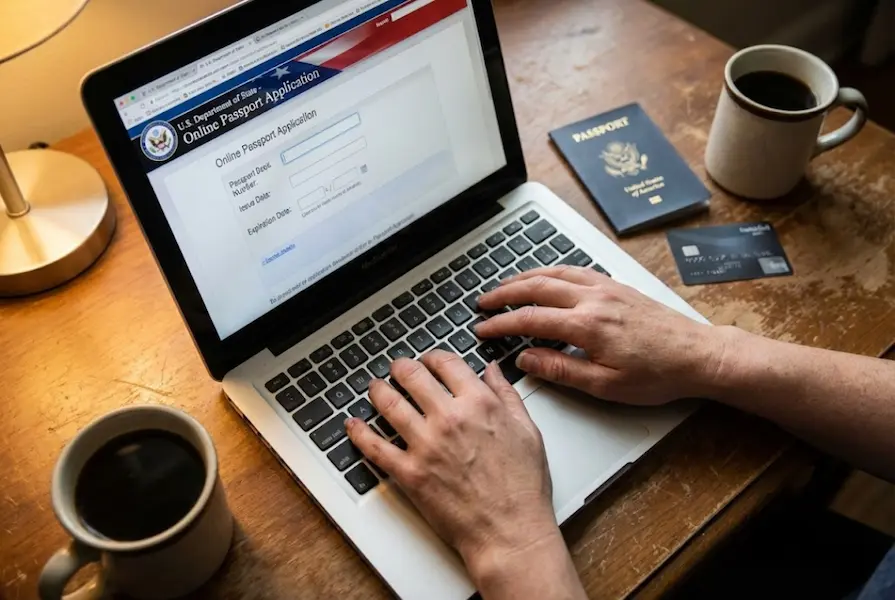
I’ll walk you through the exact process, step by step:
Step 1: Go to the Official ETIAS Website
When ETIAS launches in 2026, the official website will be available at travel-europe.europa.eu/etias. You can also use the official ETIAS mobile app.
WARNING: Be extremely careful about which website you use. Many scam websites will pop up claiming to process ETIAS applications. These sites charge extra fees (sometimes $50-$100 or more) and may steal your personal information.
How to Spot a Scam Site:
- Asks for fees higher than €20
- Promises “instant approval” or “guaranteed approval”
- Has URLs that don’t end in “.europa.eu” or aren’t clearly affiliated with the EU
- Requires unnecessary documents
- Has poor grammar or spelling
Always use the official European Union website or a link from a trusted source like the U.S. State Department’s Europe travel page.
Step 2: Create an Account
You’ll need to create an account using your email address. Make sure to verify your email before continuing.
Step 3: Fill Out the Personal Information Section
This is the most important part. You’ll enter:
- Full name (exactly as it appears on your passport)
- Date of birth
- Place of birth
- Nationality
- Gender
- Home address
- Phone number
- Email address
Critical Tip: Even small typos here can cause your application to be denied. Double-check every letter and number.
Step 4: Enter Your Passport Details
You’ll provide:
- Passport number
- Issue date
- Expiration date
- Issuing country
Common Mistake: Confusing the letter “O” with the number “0” or the letter “I” with the number “1”. Look carefully at your passport and enter exactly what you see.
Step 5: Provide Travel Information
You’ll answer:
- First European country you plan to visit
- Approximate date of arrival
- Purpose of visit (tourism, business, medical, transit)
Note: You don’t need to have everything planned perfectly. If your plans change after approval, that’s okay. ETIAS is valid for any of the 30 participating countries.
Step 6: Answer Background Questions
This section asks about:
- Your current occupation
- Education level
- Any criminal convictions
- Past visits to war or conflict zones
- Previous immigration violations in Europe
Be Honest: Lying on your application can result in a permanent ban from entering Europe. Even if you have a criminal record, you can still get approved in most cases. It’s better to be truthful than to hide information.
Step 7: Review Everything Carefully
Before you submit, review every single detail. This is your last chance to catch mistakes.
Check:
- Your name spelling
- Your passport number
- Your email address
- All dates
Step 8: Pay the Application Fee
The fee is €20 (approximately $23 in U.S. dollars). Payment is processed securely online.
Remember: If you’re under 18 or over 70, you don’t pay the fee. But you still need to complete the full application.
Step 9: Submit Your Application
Click submit, and you’re done! You’ll receive a confirmation email immediately.
How Long Does ETIAS Approval Take?
Most applications are approved within minutes. Seriously. The system is automated, and if everything checks out, you’ll get your approval email almost instantly.
However, some applications take longer:
- 96 hours (4 days): Standard maximum processing time
- Up to 14 days: If they need additional information
- Up to 30 days: If they require an interview (extremely rare, less than 0.1% of applicants)
When to Apply:
Apply at least 4 weeks before your trip. This gives you plenty of time if there are any issues or if you need to provide additional information.
Never wait until the last minute. Airlines will check for ETIAS approval at check-in, and you won’t be allowed to board without it.
Common Mistakes That Cause Denials (And How to Avoid Them)
I’ll share the most common reasons Americans get their ETIAS applications denied, plus how to prevent each one:
Mistake #1: Passport Information Errors
This is the number one reason for denials. Even one wrong digit or letter means your ETIAS won’t match your passport at the border.
How to Avoid: Type slowly. Check twice. Compare your application to your physical passport before submitting.
Mistake #2: Using an Expired or Soon-to-Expire Passport
Your passport must be valid for at least 3 months after you plan to leave Europe.
How to Avoid: Check your passport expiration date. If it expires within 6 months of your trip, renew it first, then apply for ETIAS.
Mistake #3: Wrong Email Address
If they can’t reach you, they can’t approve you.
How to Avoid: Type your email carefully. Check your spam folder after applying. Consider using a Gmail or other major email provider rather than a work email that might get blocked.
Mistake #4: Leaving Questions Blank
Incomplete applications are automatically denied.
How to Avoid: Answer every single question. If something doesn’t apply to you, look for options like “N/A” or “None.”
Mistake #5: Dishonesty About Criminal Records
The system checks international databases. They will find out.
How to Avoid: Be truthful. Most minor offenses won’t prevent approval. But lying about them will result in an automatic denial and possible ban.
Mistake #6: Applying Too Close to Travel Date
If your application needs manual review, you might not get approved in time.
How to Avoid: Apply at least 4 weeks before your trip.
Mistake #7: Using Scam Websites
Third-party sites often make errors in your application or charge excessive fees.
How to Avoid: Only use the official ETIAS website or app.
What Happens After You Get Approved?
Once you receive your approval email, this is what you need to know:
You Don’t Need to Print Anything
Your ETIAS is electronically linked to your passport number. Border agents and airline staff can see it in their systems.
However, it’s smart to:
- Save a digital copy of the approval email on your phone
- Take a screenshot
- Or print a copy to keep with your travel documents (just as a backup)
Your ETIAS Is Valid for 3 Years
Or until your passport expires, whichever comes first. You can use it for multiple trips during this time.
If You Get a New Passport
Your ETIAS becomes invalid. You’ll need to apply for a new one because ETIAS is linked to your specific passport number.
What Happens at the Airport?
When you check in for your flight to Europe:
- The airline will verify your ETIAS in their system
- They’ll check that your passport matches the one used in your application
- If everything looks good, you’ll get your boarding pass

What Happens at the European Border?
When you arrive in Europe:
- You’ll go through passport control
- The border agent will scan your passport
- Your ETIAS will automatically appear in their system
- They may ask standard questions (purpose of visit, how long you’re staying, where you’re staying)
- If everything checks out, you’ll get entry
Important: An approved ETIAS does not guarantee entry. Border agents can still deny entry if you don’t meet other requirements or if they have security concerns.
The Difference Between ETIAS and EES (Don’t Get Confused!)
Many articles mix these up, so I’ll clarify:
ETIAS: Travel authorization you apply for online before you travel
EES (Entry/Exit System): Digital border system that replaces passport stamps
How They Work Together:
- Before you travel: You apply for ETIAS online
- At the border: The EES system records your entry using biometrics (photo and fingerprints)
- When you leave: The EES system records your exit
You need to do ETIAS in advance. EES happens automatically at the border. You don’t apply for EES separately.
Frequently Asked Questions
How much does ETIAS cost for Americans?
€20 (about $23). If you’re under 18 or over 70, the application is free, but you still need to apply.
Can I use ETIAS to work or study in Europe?
No. ETIAS is only for short stays up to 90 days for tourism, business visits, medical treatment, or transit. If you want to work or study, you need a different visa.
What if I’m only connecting through a European airport?
If you stay in the international transit area and don’t go through passport control, you don’t need ETIAS. However, if you leave the airport or pass through border control, you need it.
Can I apply for ETIAS on behalf of my children?
Yes. Parents or legal guardians can apply for minors. You’ll need to sign a declaration of representation.
What if my ETIAS application is denied?
You’ll receive an email explaining why. You can appeal the decision or fix any errors and reapply. If you’re denied because of security concerns, you may need to apply for a traditional Schengen visa instead.
Does ETIAS replace my passport?
No. You still need your valid U.S. passport. ETIAS is just an additional authorization linked to your passport.
Can I visit the UK with ETIAS?
No. The UK has its own system called ETA (Electronic Travel Authorization). Ireland also has separate rules. ETIAS is only for the 30 European countries listed earlier in this guide.
What if my passport expires while my ETIAS is still valid?
When you renew your passport, your old ETIAS becomes invalid. You need to apply for a new ETIAS with your new passport number.
How do I know if my ETIAS was approved?
You’ll receive an email to the address you provided. Check your spam folder if you don’t see it. Most approvals come within minutes, but it can take up to 96 hours.
Can I extend my ETIAS while I’m in Europe?
No. ETIAS cannot be extended. If you need to stay longer than 90 days, you must leave and apply for a proper visa.
What to Do If Something Goes Wrong
Scenario 1: You Made a Mistake on Your Application
If you notice an error after submitting, the best option is to apply again with correct information. You’ll need to pay the fee again, but it’s faster than trying to correct the original application.
Scenario 2: Your Application Is Taking Too Long
If it’s been more than 96 hours without approval, check your email (including spam) for any requests for additional information. If you see nothing, contact the ETIAS support office.
Scenario 3: You’re Denied
Read the denial email carefully. It will explain why and how to appeal. If the denial was due to a simple error (like a typo), fixing it and reapplying is often the fastest solution.
Scenario 4: You Lost Your Approval Email
Don’t panic. Your ETIAS is in the system. You can log back into the ETIAS portal with your account to access your approval information.
Take Action Now: Your ETIAS Checklist
Exactly what you need to do right now, depending on when you’re traveling:
If You’re Traveling to Europe Before Late 2026:
✓ You don’t need ETIAS yet
✓ Just make sure your passport is valid
✓ Bookmark this guide for future trips
If You’re Traveling to Europe in Late 2026 or 2027:
✓ Check your passport expiration date
✓ Renew your passport if it expires within 9 months of your trip
✓ Set a reminder to apply for ETIAS 4-6 weeks before your departure
✓ Bookmark the official ETIAS website
✓ Read this guide again closer to your trip date
If You’re Traveling After 2027:
✓ Apply for ETIAS at least 4 weeks before your trip
✓ Make sure you have all required documents
✓ Use only the official ETIAS website
✓ Save your approval email in multiple places
✓ Enjoy your trip!
Final Thoughts: ETIAS Made Simple
Look, I get it. Adding another step to your travel plans feels like a hassle. But the truth is this: ETIAS is actually designed to make things easier and safer in the long run. Once you understand what it is and how it works, getting approved takes less time than ordering a pizza online.
The important thing is being prepared. Know what you need, avoid common mistakes, and apply early. Do those three things, and ETIAS approval will be the easiest part of planning your European adventure.
Remember: ETIAS is not a visa. It’s not complicated. It’s just a simple security check that takes 10 minutes to complete and gives you 3 years of stress-free travel to 30 amazing European countries.
Now that you know the full story about ETIAS, there’s nothing stopping you from booking that trip to Paris, Rome, Barcelona, or anywhere else in Europe you’ve been dreaming about. The only question left is: where will you go first?
Safe travels!