Smart Waste Management AI: How It Works, Who Uses It, and Why It Matters
In 2022, the world made 2.56 billion tonnes of trash. A March 2026 report based on World Bank solid waste data says this could hit 3.86 billion tonnes by 2050. That is a 50% jump in less than 30 years.
The old ways to handle garbage can’t keep up. Trucks run on fixed schedules. Workers sort trash by hand. Bins overflow. Smart waste management AI solves these problems. It uses sensors and robots to make trash pick-up fast and cheap.
This article shows how the new system works. You’ll see which cities use it and what results they get. We’ll also cover the problems that still need a fix.
What Is Smart Waste Management AI?
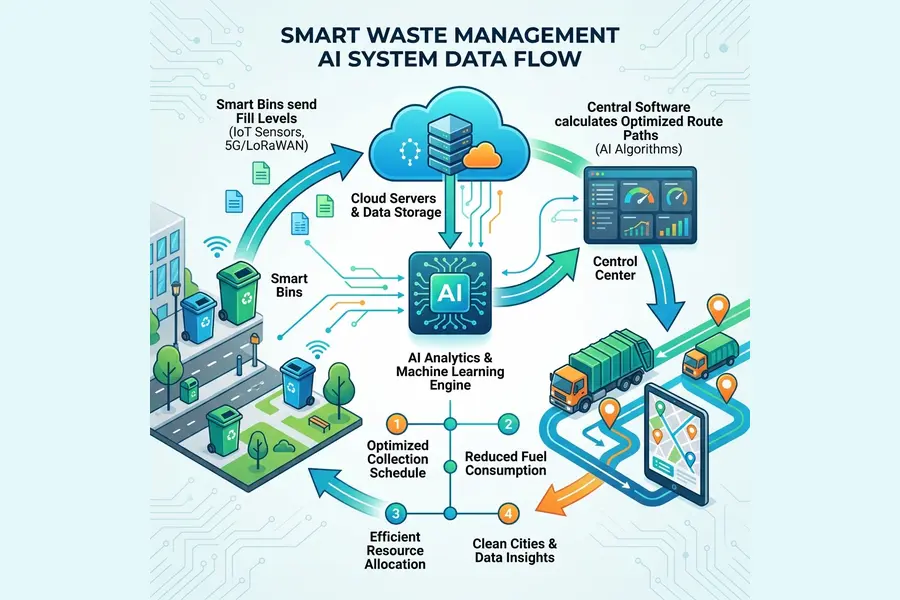
Smart waste management AI is a group of tools that use computer programs to handle trash. These tools check how full bins are. They find the best paths for trucks. They also sort recyclables with cameras and robot arms. This tech helps cities save time and cash.
Think of it as giving your city’s trash system a brain. Trucks don’t need to run on the same paths every day. Instead, the system looks at live data like fill levels, traffic, and weather. It then makes smart choices on the spot.
Artificial intelligence, or AI, is software that learns from data to make its own choices. In waste management, AI does three key jobs. It predicts when bins are full. It plans truck routes. And it sorts recycling with robot arms.
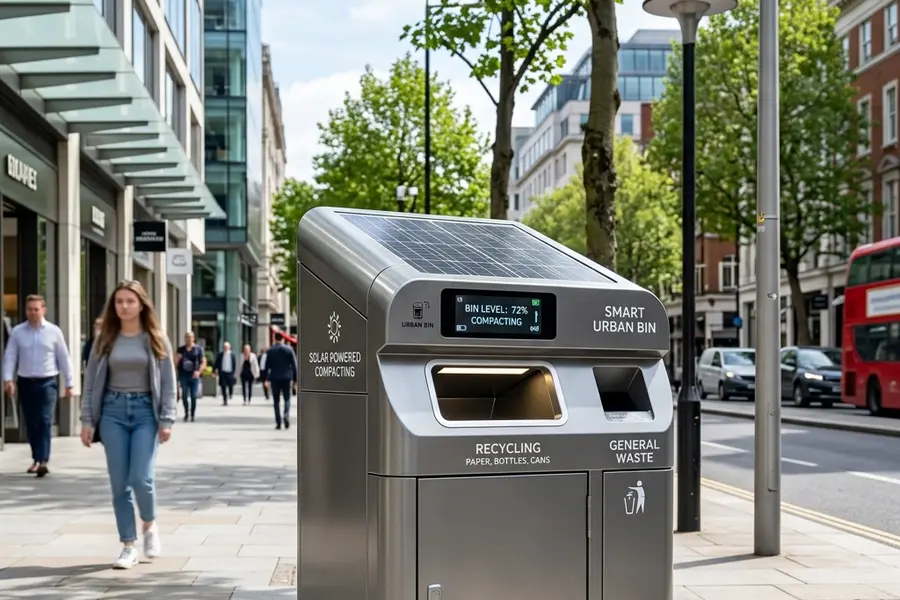
The global market for AI in waste management was worth about $43.23 billion in 2025, according to Grand View Research. The smaller ‘smart waste’ market hit $4.78 billion in 2026, according to Fortune Business Insights. This field grows by 16.26% each year. For instance, when you walk past a solar-powered trash bin on a city street, you see this tech in action.
Why Do Cities Need AI for Waste Management?
Cities need AI because trash levels grow faster than city services can keep up. Old truck routes run on fixed schedules. This means trucks visit empty bins but miss the ones that overflow.
According to the World Bank’s 2026 data, about 30% of all waste is left on streets or in dumps. The fastest-growing areas are Sub-Saharan Africa and South Asia. By 2050, their waste will grow by 124% and 99%. These places face huge gaps in trash pick-up.
A shortage of workers makes the problem worse. Finding people to pick up and sort trash is a real struggle in North America and Europe. AI helps fill this gap. It handles simple tasks with machines. This lets smaller crews cover more ground.
New laws add more pressure. Cities in Europe face tough limits on land waste. Many U.S. states raised their recycling goals. AI helps cities hit these goals. It improves how they sort and track trash. Imagine a truck driving through a busy street just to empty a bin that is mostly empty. This happens daily in old systems and wastes fuel.
Landfill space is running out in many places. More than half of the cities in some countries have no room left to dump trash. Shipping waste to other areas is expensive and leads to political fights. AI helps by sorting more trash before it goes to a dump, which saves space.
How Does Smart Waste Management AI Work?
Smart waste management AI works by linking sensors, software, and sorting machines. This system tracks bins, plans truck routes, and sorts trash in real time.
These tools connect to help cities handle waste. They replace old rules with live data. The system has three main parts.
IoT Sensors and Smart Bins
IoT stands for the Internet of Things, which is a network of items that share data over the web. In waste management, small sensors go inside trash bins to track how full they are.
These smart bins include those made by Enevo, which is a tech company in Finland. They also use sensors from BrighterBins, which is a firm in Belgium. The sensors send data to a computer. This program predicts when a bin will be full. It looks at past usage, weather, local events, and the day of the week.
The result is that collection crews only visit bins that are full. In Seoul, for example, bins that pack trash have raised capacity by up to 500%. This means each bin holds five times more waste before it needs to be emptied.
These sensors use very little power. Most smart bin sensors run on batteries that last for five to ten years. They use basic radio signals to share data. This means crews don’t need to check on the sensors often. This keeps costs low.
AI-Powered Route Planning
Once the AI knows which bins are full, it maps out the shortest paths for trucks. This goes far beyond what a human can do with a paper map or a basic GPS.
The AI looks at live traffic, road conditions, and how full each bin is. It then finds paths that cut down on driving and fuel use. According to 2026 industry data, this planning cuts fuel costs and truck trips by 30% to 50%.
Rubicon is a tech firm that runs a platform for trash services. Their system finds routes that change during the day.
Before AI, route planning was done by hand. A dispatcher would look at a map and plan truck paths for the week. If a road was closed, the driver had to find a new path on their own, which wasted fuel. This is like how AI helps electricians save time on the road.
Computer Vision and Robotic Sorting
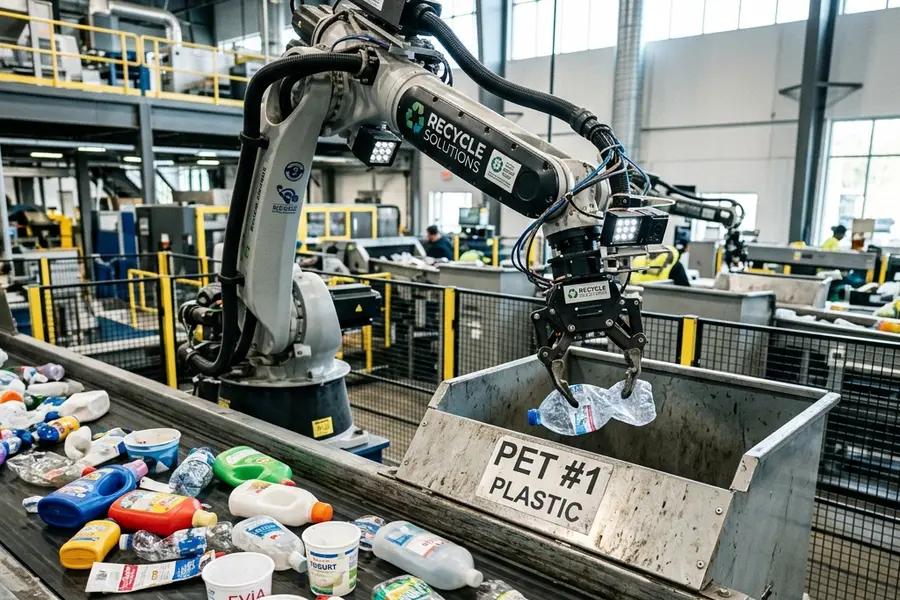
Computer vision is a type of AI that lets machines see things. In recycling plants, cameras scan items on a belt. They find the type of trash in a split second. Is it plastic, paper, or metal? The system knows right away.
Robot arms then pick and sort trash based on what the cameras see. These systems are built by ZenRobotics, which is a firm in Finland. They are also made by Recycleye, which is a UK tech company. The machines run all day and night without a break. This is a big step up from how AI robots clean carpets in homes.
Greyparrot is a firm in London. They make software to scan waste. The program tells managers what trash is in their plant. This helps catch problems early.
New systems can name over 200 types of waste. According to a 2026 industry report, these AI systems reach 90% to 95% accuracy in clean plants. That’s much better than hand sorting. Workers sorting by hand only hit 60% to 80%. That rate drops as they get tired.
Recycling plants are dirty and dangerous for people. Sharp glass, heavy trash, and bad fumes are common. Robot arms can work in these harsh areas with no health risks. This keeps human crews safe.
What Are the Biggest Benefits of AI in Waste Management?
AI helps cities cut costs, clean the air, and recycle more. It does this by using live data instead of guesses.
- Lower costs: Cities using AI save money. A 2026 survey shows bills drop by 25%. They save cash on fuel and labor.
- Less pollution: Trucks drive shorter paths. This cuts the fuel they burn. Some cities cut truck gas waste by 30% after using AI routes.
- Better recycling: AI sorting catches trash that people miss. This makes for clean batches. They sell for more cash and get used again.
- Cleaner streets: Smart bins send alerts before they get too full. This stops trash from spilling onto sidewalks. Streets and parks stay clean.
- Better data: Planners get reports on how much trash each street makes. They can plan new routes using facts, not guesses.
By early 2026, about 67% of waste firms use some form of AI, according to tracking data. Most use it to manage trucks (78%) and plan paths (71%). AI sorting in plants is growing fast too, reaching 34%. For example, a city with 50 trucks can save lots of fuel each year by skipping empty bins.
Which Cities Are Already Using Smart Waste Management AI?
A few big cities have moved past test phases. They now run AI waste systems at scale. Three cities stand out for the size of their programs and their results.
Seoul, South Korea
Seoul has lots of trash and very little space for waste. The city uses smart bins that pack trash. This raises their space by up to 500%. Some areas also use underground pipes to move trash without trucks.
AI cameras check recycling bins for items that don’t belong. When the system spots a problem, it flags it in real time. This has raised recycling rates and cut costs. Seoul shows how AI and smart design work together when landfill space runs out.
Barcelona, Spain
Barcelona ties its waste system to its Zero Waste Plan. The city uses smart bins and software to change truck routes on the fly. Trucks only visit bins that are full, which cuts fuel and keeps the air clean.
Barcelona is different. It asks people to help. The city shares data so people make good choices. A study by Taylor and Francis shows that this builds trust. It works well, even if the job takes more time.
Singapore
Singapore has almost no land for trash. Managing waste is a key issue for this city-state. It uses a system of sensors, trucks with GPS, and AI sort robots.
Material recovery facilities, or MRFs, are recycling plants that sort waste. In these plants, robot arms sort trash fast. They work up to 12 times faster than humans. A program called BINgo uses AI to help people sort trash as they toss it. Sorting output jumped from 400 kg to 600–700 kg per tonne of waste in plants using these tools.
What Are the Challenges and Limits of AI Waste Management?
AI waste management isn’t a perfect fix. It comes with real costs and risks. Cities and firms should weigh these trade-offs before they buy in.
- High upfront costs: Smart sensors and robot arms cost a lot. Small cities and poor areas often can’t pay the starting bills.
- Poor waste data: AI is only as good as the data it learns from. In many towns, waste data is messy or missing. Putting bad data into an AI system leads to bad choices. Teams call this garbage in, disaster out.
- Old system problems: Many plants use old machines. Linking new AI tools to older setups takes time and custom work. For example, a new robot arm may fail if the conveyor belt runs too fast or the room light is too dim.
- Green costs of AI: Data hubs use lots of power. A report from the United Nations Environment Programme warned about e-waste from AI itself. It’s sad that tech made to cut waste also makes some.
- Fewer job roles: When robots sort trash, cities need fewer workers. AI does make new jobs like tech support. Still, the change is hard on the people who lose their work.
- Hidden choices: Some AI models are so complex that teams can’t explain their paths. This causes issues when laws ask for clear logs of how trash was handled.
To run these systems, cities need workers who know how to use them. These tech experts are hard to find and cost a lot of money to hire. Many cities struggle to pay for the IT staff needed to keep smart bins and robot arms running day after day.
None of these problems are impossible to solve. But ignoring them would be dishonest. The best AI waste programs plan for these issues from the start and adjust as they go.
Key Companies and Tools Shaping the Industry
Many firms build the AI and IoT tools that make smart waste systems work. Each one focuses on a different part of the problem.
- Rubicon: Rubicon is a tech firm that runs a platform for trash services. Their system finds routes that change during the day.
- Greyparrot: Greyparrot is a firm in London. They make software to scan waste. The program tells managers what trash is in their plant. This helps catch problems early.
- ZenRobotics: ZenRobotics is a firm in Finland. They make robot arms to sort trash. The machines work in recycling plants. They pick and sort waste much faster than humans can.
- Recycleye: Recycleye is a firm in the UK. They make tools that fit onto old machines. This lets older plants use AI without a full rebuild.
- CleanRobotics: CleanRobotics is a firm in the U.S. that builds smart bins. Their bin, called TrashBot, uses software to sort waste as you drop it in. This cuts down on errors right away.
- Bin-e: Bin-e is a firm in Poland. They make smart bins for malls and offices. Their bins sort trash on the spot and send data to a central system.
- Enevo: Enevo is a tech firm in Finland. They make wireless sensors for trash cans. The sensors fit inside old bins, which makes it easy for cities to start small.
These firms all focus on clear, simple jobs. They want to make sorting better, cut truck trips, and get clean data. This focus on real results sets them apart from older plans. It works like a smart home setup where everything connects to save you time. Those plans promised a lot but stayed vague.
What Does the Future Look Like for AI in Waste Management?
The next wave of AI will focus on speed and privacy. It will also track waste before it hits the bin. Three trends are already growing fast.
Edge AI is tech that processes data on local devices. It moves computer power into bins and trucks. Bins don’t need to send data to a server. This means fast choices. It also helps in areas with weak web links.
Federated learning is a way to train AI using data from many places. The data doesn’t leave each spot. This keeps files safe. It lets cities make tools better without sharing files.
Lifecycle tracking goes beyond sorting. New AI tools check items before they become waste. They see if a cup or bag can be reused or must go to a dump. This links waste to a wider green life, much like using sustainable wardrobe ideas to cut down on waste. This is a system where we reuse things in a loop instead of throwing them away.
According to Fortune Business Insights, the smart waste management AI market is growing at 16.26% per year through 2034. This tech is moving from a nice-to-have tool to standard practice. Cities that build these systems now will have a head start by 2030. In the future, a smart bin might scan a bottle and tell you if your city can recycle it.
Frequently Asked Questions
Here are answers to the top questions about how AI helps pick up trash. Find out about costs, jobs, and city plans.
How much does smart waste management AI cost?
Costs depend on the size of the system. A basic sensor setup for a city might start at $50,000 to $200,000. Large systems with robot arms and software can run into the millions. Many firms now offer monthly billing to keep starting costs low.
Can small cities afford AI waste management systems?
Yes, but they usually start small. A city can begin with smart bin sensors and route software. They can add robot arms later. Grants from groups like the World Bank also help cities cover these starting costs.
What’s the difference between smart bins and regular bins?
A regular bin is just a box. A smart bin has sensors inside. These sensors track how full it is and how often people use it. Smart bins send this data to a computer. This tells truck crews which bins need to be emptied. Some smart bins also pack trash so more fits inside.
Does AI in waste management replace human jobs?
It changes jobs more than it removes them. Robot sorters take over some hand sorting work, and AI route software reduces the need for dispatchers. But new roles come with it too, like tech support and data helpers. The change works best when cities help train workers for these new roles.
Is it true that AI sorting robots are 100% accurate?
No, they aren’t 100% correct. While clean plants reach 90% to 95% under good light, messy rooms cause errors. Poor light and mixed trash can make robot arms miss items.
Which countries are leading in AI waste management?
North America leads. It holds 27% to 35% of the market, according to Grand View Research. This is due to cash spent on tech and a lack of workers. South Korea, Singapore, and Europe are also well ahead. This is thanks to recycling laws and smart city plans. Growth will be fast in Asia and the Middle East over the next ten years.