Barn Cat Dry Cat Food 32lb Bag: What the Label Says
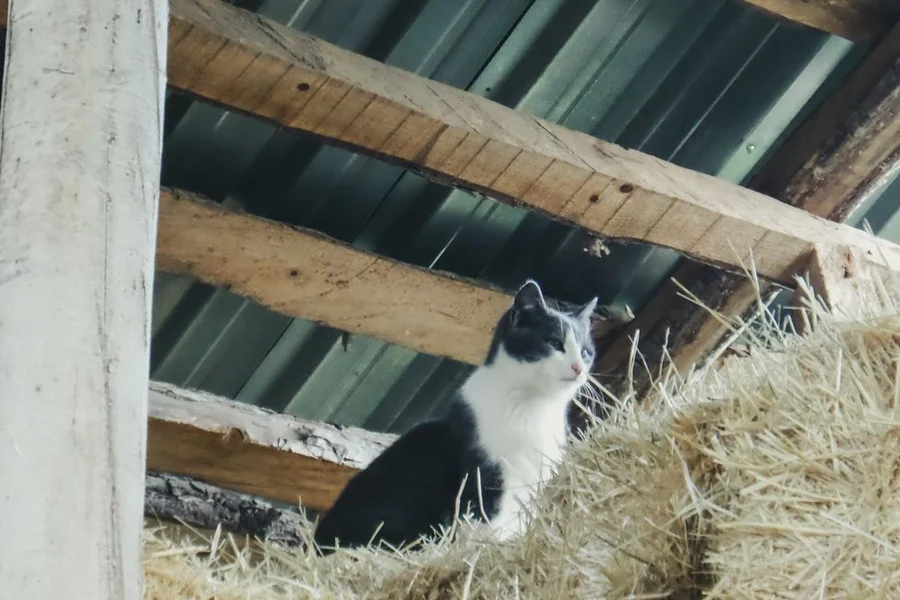
A barn cat dry cat food 32lb bag is a large-format kibble sold mainly through farm and feed stores, built for outdoor working cats that hunt during the day and come back to a bowl at night. The best known version is Barn Cat from Kent Nutrition Group, sold under both the Kent and Blue Seal names. This guide is based on the manufacturer’s published specifications and category standards rather than hands-on testing, so every number below is traced back to a label, a dealer listing, or a published rule.
That matters more than it sounds. Most pages about this bag repeat the marketing line about a “rich, hearty taste” and stop there. The label itself answers better questions: whether the food clears the nutrient minimums it claims, how many cat-days are inside the bag, and what happens to 32 pounds of kibble sitting in a humid barn through August.
What Does the Label on a Barn Cat Dry Cat Food 32lb Bag Say?
Dealer listings for Kent Barn Cat publish a guaranteed analysis of crude protein 30.0% minimum, crude fat 8.5% minimum, crude fiber 4.0% maximum, and moisture 12.0% maximum, with a nutritional adequacy statement saying the food is formulated to meet AAFCO Cat Food Nutrient Profiles for All Life Stages. The protein comes from poultry, pork, and fish sources.
The first five ingredients, in order by weight, are ground corn, poultry by-product meal, soybean meal, corn gluten meal, and pork meat and bone meal. Chicken fat preserved with mixed tocopherols follows, then natural flavor and rice hulls. Taurine appears in the ingredient list, and the preservatives at the end are mixed tocopherols, citric acid, and rosemary extract rather than ethoxyquin or BHA.
One warning before you trust any of those figures, including the ones in this article. Retailer listings for this product do not agree with each other. Several feed stores publish crude fiber at 4.0% maximum while other listings for the same bag show 6.0% maximum, and a few show crude fat at 8.0% instead of 8.5%. Formulas get revised and store databases lag behind. The panel printed on the bag in your hands is the only version that counts, so read it in the aisle before you load it into the truck.
Does the Food Clear the AAFCO Minimums It Claims?
On the two figures a buyer can check, yes, with room on protein and a narrow margin on fat. The AAFCO Cat Food Nutrient Profiles set a minimum of 30.0% crude protein and 9.0% crude fat for growth and reproduction, which is the tier an all life stages claim has to satisfy. Converting the label guarantees to the same basis puts this food above both.
Here is the piece almost every product page gets wrong. A label that reads “30% protein” next to an AAFCO minimum of “30%” looks like a food scraping past the line by nothing. The two numbers are measured differently. The nutrient profiles published by AAFCO state that “the nutrient concentrations are expressed on a dry matter (DM) basis,” meaning water is removed from the calculation first. Guaranteed analysis on a bag is as-fed, water included.
Run the conversion. Moisture is capped at 12.0%, so dry matter is at least 88%:
- Protein: 30.0 ÷ 0.88 = 34.1% on a dry matter basis, against a 30.0% minimum.
- Fat: 8.5 ÷ 0.88 = 9.7% on a dry matter basis, against a 9.0% minimum.
Protein clears by about four points. Fat clears by roughly seven tenths of a point, which is thin. Both are minimums, so the actual batch may run higher, and neither figure is the whole test. AAFCO also requires nutrient concentrations to be corrected downward when a food carries more than 4,000 kcal of metabolizable energy per kilogram of dry matter, and the calorie content of this product is not published in the dealer listings reviewed for this guide. Treat the arithmetic above as a sanity check on two lines of the panel, not as verification of the full profile.
Worth knowing: AAFCO recognizes only two ways to back a “complete and balanced” claim, the nutrient profiles or a feeding trial run under AAFCO protocols. “Formulated to meet” means the first route was used. The recipe was calculated against the table, and no cats were fed the finished food in a controlled trial to confirm it. That is legal, ordinary, and true of a large share of the category, but it is a different standard from a food whose bag says the claim was substantiated by animal feeding tests.
Taurine is the other line to check on the bag. Cats cannot make enough of it themselves, and a shortage damages the heart and the retina. AAFCO sets 0.10% of dry matter as the minimum for extruded dry food, double that for canned. Taurine is in this food’s ingredient list, but the short four-item guaranteed analysis published by dealers does not include a taurine guarantee, so the printed panel is where you confirm the number.
How Long Does a 32 Pound Bag Really Last?
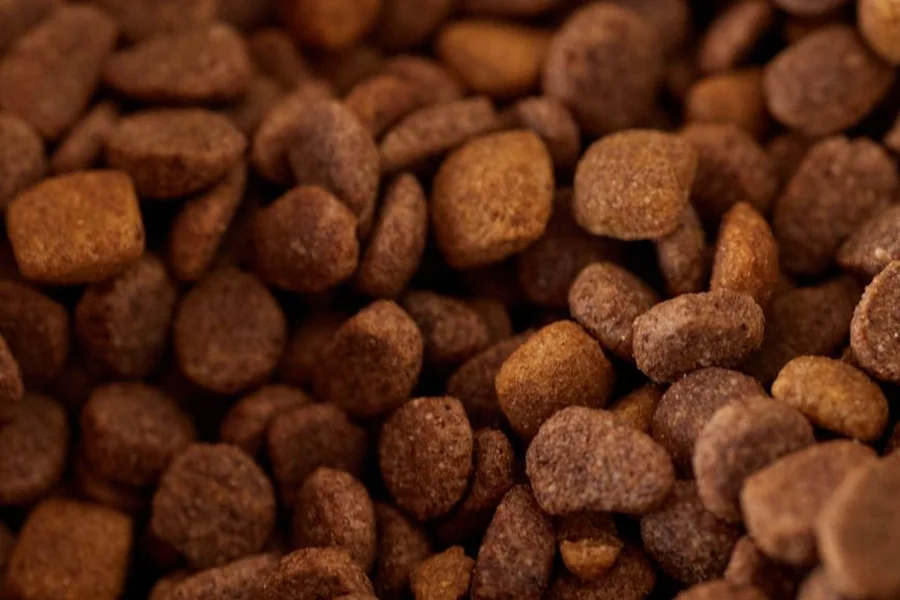
Between 17 and 25 days for a colony of five working adults, and roughly three to four months for a single cat. The math comes straight from the manufacturer’s feeding directions, which note that a standard 8 ounce measuring cup holds about 4 ounces of Barn Cat. A 32 pound bag is 512 ounces, so it holds around 128 cups.
Kent’s published chart gives these daily amounts:
- Kittens, 10 to 40 weeks: 1/2 to 1 cup, rising with age
- Inactive adults, 4.75 to 10 pounds: 1/2 to 1 cup
- Active adults: 1 to 1 1/2 cups
- Pregnant cats: 3/4 to 1 1/2 cups
- Nursing cats: 1 3/4 to 3 1/2 cups
Barn cats are active adults by definition, so 1 to 1 1/2 cups is the relevant row. Five of them eat 5 to 7.5 cups a day, which empties 128 cups in 17 to 25 days. A single indoor-leaning cat at 1 cup a day stretches the same bag past four months, long enough that freshness becomes the limiting factor rather than quantity.
Two adjustments push that number down. A nursing queen alone can take 3 1/2 cups a day, a quarter of a cup shy of what three active adults eat, so one litter changes your reorder schedule. Cold weather does the same across the whole group. Guidance from Alley Cat Allies on outdoor cats in winter is to increase portions, since cats burn energy holding body temperature, and the group recommends a sheltered feeding station to keep food and water out of the weather. Budget for a shorter bag life from roughly November through March.
Also count the mouths you did not plan for. An open bowl in a barn feeds raccoons, opossums, and neighboring cats, and none of that shows up in the feeding chart. If a bag is vanishing two weeks ahead of your estimate, the arithmetic is probably fine and the guest list is the problem.
What the Ingredient List Tells You About This Formula
This is a grain-forward, economy-tier formula, and the ingredient order says so plainly. Ground corn leads, with soybean meal and corn gluten meal in the top four. Poultry by-product meal sits second, and pork meat and bone meal is fifth. Fish meal, the third protein the marketing mentions, appears well down the list after salt and yeast culture.
By-product meal has a worse reputation than it deserves. The official ingredient definition calls it the ground, rendered, clean parts of the carcass of slaughtered poultry, such as necks, feet, undeveloped eggs and intestines, with feathers excluded beyond what unavoidably turns up in good processing. Those organ parts are nutrient-dense and are what a cat eats first from a mouse. What it does not tell you is which species or which parts, batch to batch. Named ingredients like “chicken meal” carry more information; by-product meal carries less at a lower price. That trade is the entire reason this bag costs what it does.
Corn gluten meal is worth naming too, because it is doing real work here. It runs around 60% protein and lifts the crude protein figure on the panel without meat prices. That is legitimate, and it is also why crude protein alone is a weak way to compare cat foods. Cats need specific amino acids, taurine and arginine above all, and a plant protein concentrate contributes to the percentage without contributing the same amino acid profile as muscle and organ tissue. The supplemented taurine in the list exists to close exactly that gap.
The preservative choice is a genuine point in the formula’s favor for barn use. Mixed tocopherols, citric acid, and rosemary extract are the natural options, and chicken fat preserved with tocopherols is what keeps the kibble palatable. Natural preservatives protect fat from going rancid for a shorter window than synthetic ones, which matters when a bag sits open in a shed for a month in summer.
How Should You Store 32 Pounds of Kibble in a Barn?
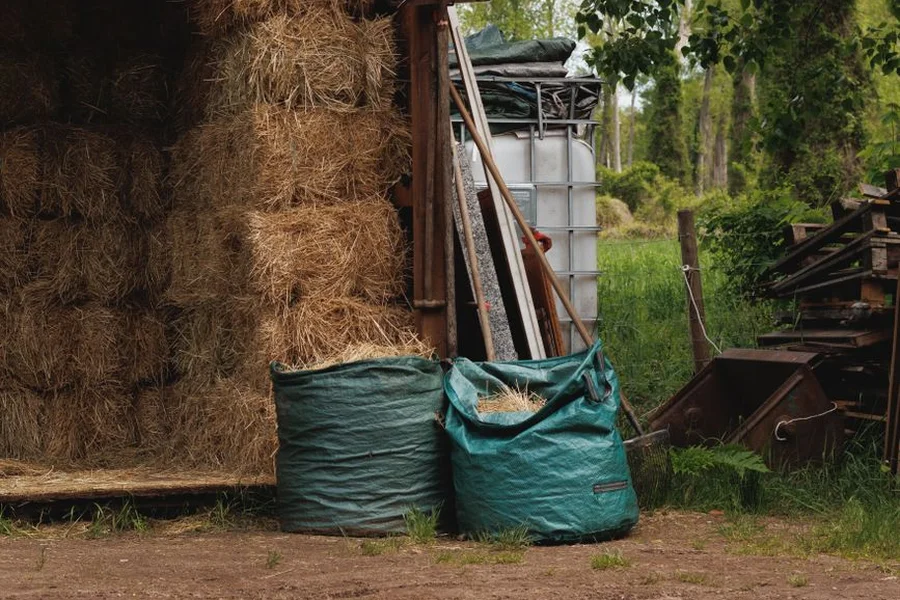
Keep the food below 80°F, leave it in its original bag, and set that bag inside a sealed bin. The FDA’s storage guidance for pet food is specific on the temperature: store dry food “in a cool and dry place” where “the temperature should be less than 80 F,” because excess heat or moisture makes the nutrients break down. A closed barn in July fails that test by a wide margin.
The original-bag rule is the one people skip, and it has a reason behind it that has nothing to do with freshness. Keeping the bag means keeping the UPC code, lot number, product name, manufacturer, and best-by date attached to the food. Lauren Carey, a veterinarian and pet food expert at FDA, is quoted by the agency explaining that when you file a complaint about a pet food, the lot number and best-by date along with the full product name “are important for you to provide.” The agency adds a number that should change how you handle the bag: less than half of the pet food complaints FDA receives include the lot number. The lot number is what lets investigators trace when and where a batch was made.
So do not pour 32 pounds of kibble into a galvanized can and throw the bag away. Drop the whole bag in, or cut the panel off and tape it to the outside of the bin. FDA also advises washing and drying the container between bags to clear out residual fat and crumbs, which is where rancidity starts.
Rodents are the barn-specific problem FDA does not address. A paper feed bag on a concrete floor is a target, and mice chewing in bring droppings and moisture with them. A hard-sided bin with a gasket lid, raised on a pallet, solves both at once. Newly relocated barn cats are also the most likely to bolt or hide during the settling-in weeks, and our notes on calming products that hold up to scrutiny apply there too. Keep water separate and clean, and wash the water bowl daily, since in winter that bowl freezes and gets refilled far more often than it gets scrubbed.
Who Is This Bag Right For?
It suits a working colony of healthy adult cats where cost per pound and availability at a local feed store drive the decision. A 32 pound bag feeding five cats for roughly three weeks, at farm-store pricing, is a different economic proposition from buying five smaller bags of premium kibble, and for a group of hunting cats supplementing their own catch, the formula covers the nutrient profile it claims to cover.
It is a weaker fit in three situations. A cat with a diagnosed urinary, kidney, or weight problem needs a food chosen with a veterinarian, since the magnesium and ash figures that matter for struvite risk are not published in the dealer listings for this product. A household cat that eats nothing but this food, with no hunting and no variety, is leaning entirely on a formula substantiated by calculation rather than by a feeding trial. And a barn with only one or two cats will likely be scooping from a four-month-old bag by the end, past the point where natural preservatives are doing their best work.
If you are weighing this against a named-meat formula, compare on dry matter basis rather than on the front of the bag, and compare the nutritional adequacy statements before you compare the protein numbers. If you are setting up a barn cat station from scratch, our comparison of tofu and clay cat litter covers the other bulk supply you will be buying, and the roundup of eco-friendly pet products worth the money is a useful check on what is marketing and what is measurable.
Frequently Asked Questions
Is Barn Cat food safe for indoor cats?
Yes, since the food carries an all life stages nutritional adequacy claim, which covers indoor adults. The gap is calorie load: an indoor cat burns far less than a hunting cat, and the feeding chart’s inactive adult row of 1/2 to 1 cup a day is the right starting point. Weigh the cat monthly and adjust down if it gains.
Is it true that by-product meal means floor sweepings or roadkill?
No. AAFCO’s ingredient definition for poultry by-product meal covers the ground, rendered, clean parts of the carcass of slaughtered poultry, such as necks, feet, undeveloped eggs and intestines, and excludes feathers except in amounts that occur unavoidably in good processing practices. It legally cannot contain roadkill or floor waste. The honest criticism is vagueness, since the term does not specify which parts or which quality grade you are getting batch to batch.
What is the difference between “formulated to meet” and “animal feeding tests”?
“Formulated to meet” means the recipe was calculated against the AAFCO nutrient table on paper. “Animal feeding tests using AAFCO procedures substantiate” means real cats ate the finished food under a controlled protocol and their health was measured. The second is the stronger claim because it tests whether nutrients survive cooking and are absorbed. Barn Cat uses the first method, like most of the economy category.
How many cups are in a 32 pound bag?
About 128 cups, based on the manufacturer’s note that a standard 8 ounce measuring cup holds roughly 4 ounces of this kibble. Kibble size and density change that figure between brands, so do not carry 128 over to a different food. We worked through the colony math in the section on how long a bag lasts.
Can kittens eat this food?
Yes, because an all life stages claim includes growth. The feeding chart lists kittens from 10 to 40 weeks at 1/2 to 1 cup daily. One caution for barn litters: kittens and nursing mothers have the least room for error in a formula verified by calculation instead of a feeding trial, so a vet check during the growth window is money well spent.
Does dry food alone give barn cats enough water?
No. Dry kibble is capped at 12% moisture, and cats evolved to take most of their water from prey, so a dry-fed cat has to drink noticeably more to stay hydrated. Clean, unfrozen water needs to be available every day, in all weather. Heated bowls, or tall narrow containers placed in the sun, are the usual fixes when temperatures drop below freezing.
Why do different stores list different fiber and fat numbers for the same bag?
Because formulas get revised and retailer product databases are updated slowly and inconsistently. Listings for this product currently show crude fiber at either 4.0% or 6.0% maximum, and crude fat at either 8.0% or 8.5% minimum. The guaranteed analysis printed on the bag you are holding overrides every website, including this one.
Final Thoughts
A barn cat dry cat food 32lb bag is a reasonable buy for what it is: an economy, grain-forward, all life stages formula sized for a working colony and sold where farm supplies are sold. The label clears the two AAFCO minimums a buyer can verify without lab work, at 34.1% protein and 9.7% fat on a dry matter basis, with the fat margin thin enough to be worth a second look at the printed panel.
Buy it for a group of healthy adult cats, store it below 80°F with the original bag intact, and keep the lot number where you can find it. Check the panel on the bag against the figures here before you commit, since as of September 2026 the published listings for this product disagree with one another, and the bag is the only version that was ever true.