
Under Armour Men’s Velociti Pro Storm Jacket: What the Specs Say
The Under Armour men’s Velociti Pro Storm jacket is a fitted running shell built around stretch woven fabric and a water-repellent finish, listed at $100. This guide is based on the manufacturer’s published specifications and category standards rather than hands-on testing, so every figure below traces back to Under Armour’s own product page or to a published standard you can look up yourself.
That framing matters more than usual here, because the two things buyers most want to know about a running shell, whether it keeps rain out and whether drivers can see you in it, are both places where the marketing language and the engineering drift apart.
What Does Under Armour Say About the Velociti Pro Storm Jacket?
Under Armour lists the body as 87% polyester and 13% elastane, with a separate front panel at 91% polyester and 9% elastane. The main body fabric contains at least 80% recycled polyester, excluding trims and embellishments. The fit is described as “Fitted: Streamlined fit that’s not too tight or too loose.”
The published feature list runs as follows:
- Lightweight stretch woven fabric with a ripstop woven front panel
- UA Storm technology, which the brand describes as repelling “water without sacrificing breathability”
- Front and back vents for added breathability
- Bungee adjust on the hood
- Secure zip hand pockets with an internal media pocket
- Elastic cuffs for a tapered fit
- Reflective details for low-light runs
Two things are worth noticing about that list, and both are about what is absent rather than what is present. There is no waterproof rating, no hydrostatic head figure in millimetres, and no mention of taped or sealed seams. There is also no stated garment weight, which is unusual for a running shell and means you cannot compare it on that basis against competitors that do publish one.
Is a Water-Repellent Jacket the Same as a Waterproof One?
No, and this is the single most useful distinction to carry into any running jacket purchase. UA Storm is a durable water repellent finish, which is a coating applied to the outside of the fabric that makes water bead and roll off. A waterproof jacket is something else: a membrane or laminate, usually with a measurable hydrostatic head rating and seams that have been taped so water cannot get through the stitch holes.
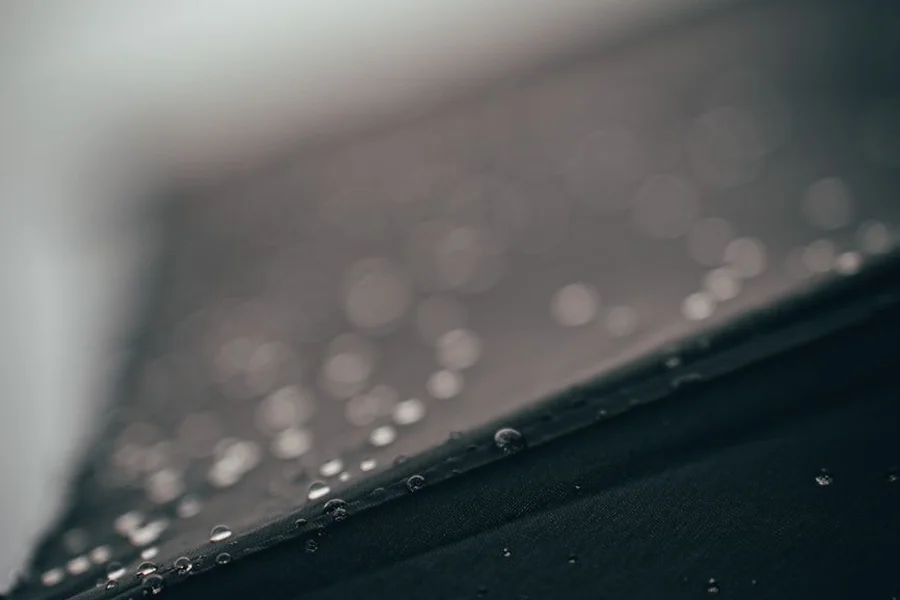
Under Armour’s own wording is precise about this. The phrase used is that the technology “repels water,” not that the jacket is waterproof. Repelling water is exactly what you want for a drizzle, a wet road, or a run that starts dry and turns grey. It is not what you want for forty minutes of steady rain, because a DWR finish saturates. Once the surface wets out, the fabric stops shedding water and starts holding it.
The related point that catches people out is that DWR is a consumable. It wears off through abrasion, washing and body oils, and it needs renewing. Most manufacturers recommend reviving the finish with low heat, a tumble dry or a warm iron with a cloth between, and reapplying a spray-on or wash-in treatment once heat alone stops working. A jacket that seems to have “stopped being waterproof” after two seasons has usually just lost its DWR, which is a maintenance issue rather than a defect.
Do the Reflective Details Meet a Visibility Standard?
Under Armour describes “reflective details for low-light runs” and does not claim certification to any visibility standard. That is not a criticism, because most running apparel does not, but it is worth understanding what the difference means if you run on roads in the dark.
There is a published European standard for exactly this use case. EN 17353:2020, “Protective clothing. Enhanced visibility equipment for medium risk situations”, replaced two older standards, EN 1150 for non-professional visibility clothing and EN 13356 for visibility accessories. Its scope names jogging on roads with lower traffic speeds as a medium-risk situation.
The standard sorts equipment into types:
- Type A covers daylight visibility and requires a minimum area of fluorescent material.
- Type B covers darkness, using retroreflective material, and splits into B1 for free-hanging reflectors, B2 for retroreflective devices on the limbs only, and B3 for retroreflective material on the torso, or torso and limbs.
In North America the comparable framework is ANSI/ISEA 107 for high-visibility safety apparel, and for genuinely high-risk professional use in Europe the relevant standard is EN ISO 20471 rather than EN 17353.
What this means for a runner: a jacket with decorative reflective trim and a jacket certified to EN 17353 Type B3 are not equivalent, even though both can honestly use the word “reflective.” If your route involves unlit roads with traffic, the certification tells you a minimum area of retroreflective material has been measured and placed where it does the most good. A trim detail tells you only that some reflective material exists somewhere on the garment. Neither Under Armour nor most of its competitors claims the former.
What Changed About Water-Repellent Finishes in 2025?
The chemistry behind DWR became a legal question in the United States on 1 January 2025, and anyone buying a water-repellent garment should know it happened.
Durable water repellent finishes have historically relied on per- and polyfluoroalkyl substances, commonly called PFAS. Two states moved against them on the same date. California’s AB 1817 and New York’s S.1322/A.994 both took effect, prohibiting apparel and textile articles with intentionally added PFAS.
The detail worth knowing:
- California sets a threshold of 100 parts per million of total organic fluorine, dropping to 50 ppm in January 2027.
- Manufacturers must give sellers a certificate of compliance.
- Outdoor apparel designed for severe wet conditions is treated separately. In California it must carry a “Made with PFAS chemicals” disclosure label. In New York that category is exempt until January 2028.
Note where the Velociti Pro Storm sits in that scheme. It is a water-repellent running shell rather than severe-wet-conditions outdoor apparel, so the disclosure carve-out is unlikely to apply to it. Under Armour does not publish the chemistry of its DWR on the product page, so we cannot tell you what this specific jacket uses. What we can tell you is the question to ask, and that a garment sold into California in 2026 without a PFAS disclosure label is being sold on the basis that it complies with a 100 ppm limit.
Who Is This Jacket Built For?
The specification points at a particular runner. The fitted cut, the elastane content in both fabrics, the tapered elastic cuffs and the front and back vents all describe a shell meant to move with you at pace and to dump heat while doing it. The internal media pocket and the bungee hood adjustment are commuter and road-running details.
It reads as a poor match for a few situations:
- Sustained heavy rain. Without a membrane, a hydrostatic head rating or taped seams, this is not the category. A hardshell is.
- Layering over bulky insulation. A fitted cut with stretch fabric is designed to sit close. If you want room for a thick mid-layer, the fit description is telling you no.
- Unlit roads at night as your primary use. Reflective trim helps. It is not the same as certified enhanced visibility, and a cheap reflective vest worn over any jacket does more for you than trim built into an expensive one.
At a $100 list price, the honest comparison is against other stretch-woven running shells with DWR finishes rather than against waterproof jackets, which start higher and trade breathability for protection. If you are building a small, hard-working kit rather than a big wardrobe, the same logic that runs through our guide to building a capsule wardrobe applies to running gear: fewer pieces that each do one job properly.
What Should You Check Before Buying?
Five things, and all of them are answerable from the label or the product page rather than from a review.
- Does it claim waterproof, or water-repellent? These are different products at different prices. Look for a hydrostatic head figure and taped seams if you need the former.
- Is a garment weight published? If not, you cannot compare packability against alternatives, and for a running shell that is a real gap.
- Does the reflectivity cite a standard? EN 17353 with a type designation means something measurable. “Reflective details” does not.
- Is there a PFAS disclosure label? Its presence or absence tells you which side of the 2025 state rules the garment is being sold under.
- Does the fit description match your layering plan? “Fitted” is Under Armour’s own word for this jacket and it is doing real work.
If you are new to buying performance clothing and want to practise reading labels on something lower-stakes first, our piece on choosing beginner padel equipment works through the same habit of checking specifications against claims. For the cold-weather side of training, the guide to infrared workout classes covers what the heat does for a session.
Frequently Asked Questions
Is the Under Armour Velociti Pro Storm jacket waterproof?
No. Under Armour describes UA Storm as technology that repels water, which is a durable water repellent finish rather than a waterproof membrane. The product page lists no hydrostatic head rating and no taped seams. It is built for drizzle, spray and wet roads, not for sustained heavy rain.
What is the Velociti Pro Storm jacket made of?
The body is 87% polyester and 13% elastane, and the front panel is 91% polyester and 9% elastane. Under Armour states the main body fabric contains at least 80% recycled polyester, excluding trims and embellishments. The construction is a lightweight stretch woven fabric with a ripstop woven front panel.
Is it true that a jacket stops being water-repellent permanently?
No, and this is the most common misconception about DWR finishes. The coating wears down through washing, abrasion and body oils, but it can usually be revived with low heat from a tumble dryer or a warm iron used with a cloth. When heat alone no longer works, a spray-on or wash-in reproofing treatment restores it. A jacket that has “stopped working” after a couple of seasons has normally just lost its finish.
What is the difference between reflective details and certified high-visibility clothing?
Certification measures things. EN 17353:2020 sets minimum areas and placements for retroreflective material and sorts garments into types, with B3 covering retroreflective material on the torso or torso and limbs. “Reflective details” is a description with no measurement behind it. Under Armour does not claim certification for this jacket, which is normal for running apparel but worth knowing if you run on unlit roads.
Does this jacket contain PFAS?
Under Armour does not publish the chemistry of its DWR finish on the product page, so we cannot say. What we can say is that California and New York both banned intentionally added PFAS in apparel from 1 January 2025, with California setting a 100 ppm total organic fluorine limit that falls to 50 ppm in 2027. Garments sold as severe-wet-conditions outdoor apparel in California must carry a “Made with PFAS chemicals” label, so the presence or absence of that label on any jacket is informative.
How much does the Under Armour Velociti Pro Storm jacket cost?
Under Armour’s listed price is $100, with the site showing a sale price of $94.97 at the time of writing. Prices move and retailers discount independently, so treat this as a reference point rather than a current quote.
Is a fitted running jacket a problem if I layer underneath?
It can be. Under Armour classifies the fit as “Fitted: Streamlined fit that’s not too tight or too loose,” which is designed to sit close to the body with a base layer, not over a thick mid-layer. If your cold-weather plan involves substantial insulation underneath, size up or look at a jacket with a relaxed cut instead.
Final Thoughts
The Under Armour men’s Velociti Pro Storm jacket is a stretch-woven running shell with a water-repellent finish, vents front and back, and reflective trim, listed at $100. Read on its own specifications it is a clear proposition: a close-fitting shell for moving fast in changeable weather.
The errors to avoid are both errors of expectation rather than of product. Do not buy it expecting waterproof performance, because Under Armour does not claim it and the specification does not support it. Do not rely on its reflective trim as road safety equipment, because it is not certified to a visibility standard and a $15 reflective vest outperforms it on that one job. Check the product page yourself before ordering, since specifications and prices change and the page is the only version that counts.