
How to Cuff Jeans With Boots: A Simple Women’s Guide
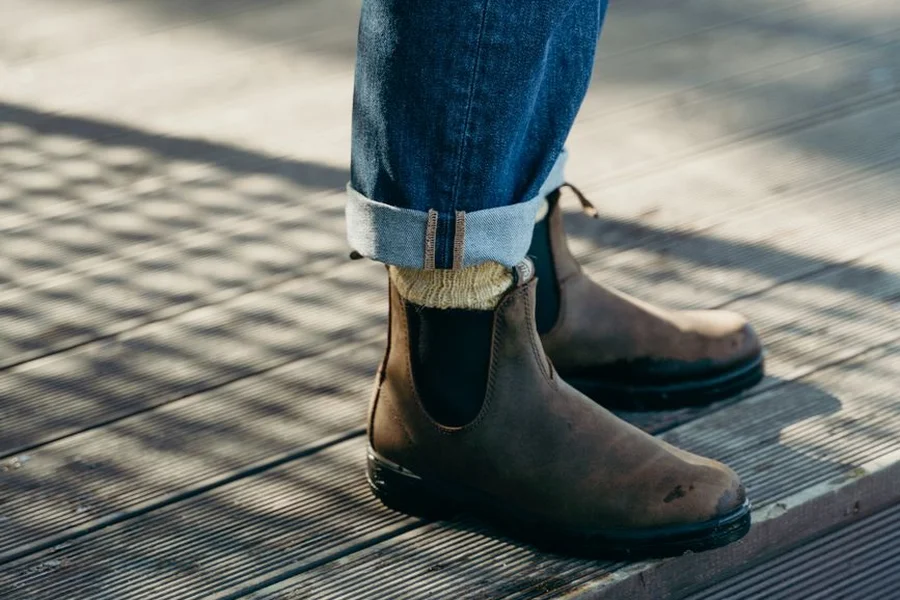
Most guides on how to cuff jeans with boots for women skip the one thing that decides whether it works: where the cuff lands relative to the top of the boot. Get that relationship right and almost any cuff looks deliberate. Get it wrong and even a perfect fold looks like your jeans are too short.
Below you will find the four cuffs worth knowing and exactly how to fold each, how boot height changes which one you pick, why stretch denim refuses to hold a cuff, and the fixes for the problems people hit most.
Where Should the Cuff Land?
Either just above the boot shaft or deliberately clear of it, with nothing awkward in between. That single decision matters more than which fold you choose.
There are two approaches that work and one that does not:
- Meeting the boot. The cuff finishes at or a fraction above the top of the boot, so denim and leather read as one continuous line. This is the safest option and suits ankle boots best.
- A deliberate gap. The cuff sits an inch or two above the boot, showing a clear band of ankle or sock. This works when the gap is obviously intentional, usually with a chunkier boot.
- The accidental gap. Half an inch of bare ankle between cuff and boot, which reads as jeans that shrank. This is the one to avoid.
From what we’ve seen, most cuffing that looks wrong is this third case. The fix is rarely a different fold. It is either one more roll to close the gap or one less roll to open it properly.
How to Cuff Jeans With Boots: The Four Folds
Four folds cover almost every combination of jean and boot. Each suits a different leg shape, and the instructions matter because the difference between a crisp cuff and a sloppy one is usually fold width.
The single roll
Fold the hem up once, about one to two inches, and press it flat. It is the most understated option and works on straight-leg jeans with ankle boots. Keep it narrow; a wide single roll starts to look like a turn-up on trousers.
The double roll
Fold once at about an inch and a half, then fold that band up again at the same width so the raw hem is hidden inside. The result is a neater, more finished cuff that holds better than a single roll. This is the most reliable general-purpose cuff.
The pinroll
This is the fold that fixes wide or straight jeans over ankle boots. Pinch the excess fabric at the inside seam of the hem and fold it flat against your leg, so the hem narrows. Holding that pinch, fold the hem up about an inch, then fold again. The taper stops wide denim from flaring out and swallowing the top of the boot.
The wide cuff
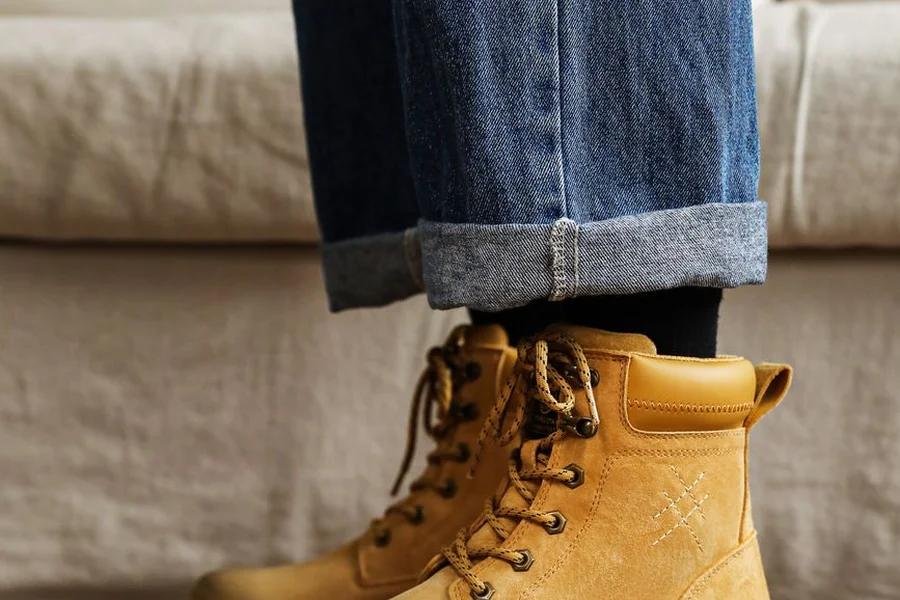
A single wide fold of three inches or more, showing a lot of the reverse side. Best on rigid denim with a clean finished edge, and with a chunky lace-up or work boot. It makes a statement and only works when the jeans are stiff enough to hold the shape.
The myth worth clearing up: cuffing is often described as a way to shorten jeans that are too long, which leads people to roll up six inches of extra length. A cuff is a styling finish, not a hemming method. More than about three inches of fold creates a bulky ring at the ankle that no fold style can hide. If you are rolling that much, the jeans need hemming.
Which Cuff Goes With Which Boot?
When working out how to cuff jeans with boots, match the cuff to the boot’s height and bulk. Tall or chunky boots take more denim; sleek low boots take less.
- Sleek ankle boots. Single roll or pinroll, finishing right at the top of the shaft. Keep the cuff narrow so it does not overwhelm a slim boot.
- Chunky lace-up or combat boots. Double roll or wide cuff, often with a deliberate gap. The heavier boot balances a heavier cuff.
- Chelsea boots. A double roll sitting just above the elastic panel. Covering the elastic looks untidy; clearing it looks finished.
- Mid-calf boots. Usually no cuff at all. Tuck slim jeans into the boot, or wear wide jeans over it. A cuff above a mid-calf boot cuts the leg in an unflattering place.
- Knee-high boots. Skip the cuff and tuck skinny jeans in. There is nothing for a cuff to meet.
One thing most guides miss is that the boot’s colour changes how much the cuff matters. A dark boot with dark denim blends, so the cuff line barely registers. A tan or light boot with dark denim creates a sharp contrast line exactly where the cuff ends, so placement has to be precise.
Why Won’t My Cuff Stay Up?
Almost always because the denim contains stretch fibre. Stretch denim is engineered to recover its shape, which is exactly what you do not want in a fold.
Rigid 100 percent cotton denim creases and holds a fold, which is why cuffing grew out of workwear built from heavy, unforgiving cotton. Britannica’s history of jeans traces how that heavy cotton became everyday wear. Add elastane or spandex, even two percent, and the fabric springs back, so the cuff creeps down as you walk.
Fibre content is printed on the care label, and the Federal Trade Commission’s textile labeling guidance covers what manufacturers must disclose. Check it before you blame your folding technique.
A common mistake worth avoiding: fighting stretch denim with ever-wider cuffs. We have seen people build a four-inch roll on stretchy skinny jeans because a narrow one kept falling, which produces a thick ring that still slides down. For stretch jeans, use a narrow double roll and press it firmly with an iron first, or choose a pinroll, which holds better because the taper grips the leg.
After looking at how different jeans behave, we prefer rigid or low-stretch denim for anyone who cuffs regularly. It holds a fold all day, the cuffs look sharper, and it is the fabric the style was originally built around. Keep stretch jeans for days you want them straight and uncuffed.
Styling the Rest of the Outfit
A cuff draws attention to the ankle, so everything near it counts. Three quick rules keep the look clean.
Socks should either match the boot or be a deliberate visible choice. With a deliberate gap, a plain sock in the boot’s colour or a considered contrast works; a mismatched athletic sock does not. Keep the top half simple so the eye travels down to the cuff and boot rather than competing with a busy top.
Colour follows the same logic as anywhere else. Olive, cream and tan all pair naturally with denim and brown boots, as our guide to what colors go with olive green clothing explains, and a white shirt keeps the whole look light, covered in how to style a white button down shirt casually. For building a small wardrobe where one pair of well-chosen jeans does most of the work, see our sustainable capsule wardrobe ideas.
Frequently Asked Questions
Should you cuff jeans with ankle boots?
Yes, and ankle boots are the boot the style suits best. Aim for the cuff to finish at or just above the top of the shaft so denim and boot read as one line. A pinroll works especially well if the jeans are wide or straight.
How many times should you roll jeans?
Once or twice for most styles. A single roll of one to two inches is understated, and a double roll at about an inch and a half is the neatest general option. More than about three inches of total fold creates bulk and usually means the jeans need hemming instead.
What is a pinroll?
A pinroll tapers the hem before folding. You pinch the excess fabric at the inside seam, fold it flat against the leg, then roll the hem up once or twice while holding the pinch. It narrows wide jeans so they sit neatly over ankle boots instead of flaring.
Why do my cuffs keep falling down?
Usually because the jeans contain elastane or spandex, which makes the fabric spring back to its original shape. Check the care label for fibre content. Use a narrow double roll pressed with an iron, or a pinroll, since both hold better on stretch denim.
Can you cuff skinny jeans with boots?
Yes, with a narrow single or double roll that finishes at the boot shaft. Skinny jeans are often stretchy, so keep the cuff small and press it. With knee-high or mid-calf boots, tucking skinny jeans in usually looks cleaner than cuffing.
Should there be a gap between cuff and boot?
Either no gap or a clearly deliberate one of an inch or two. A small half-inch gap of bare ankle is the one to avoid, because it reads as jeans that are too short rather than a choice. Adjust with one more or one fewer roll.
Do Chelsea boots look good with cuffed jeans?
Yes, with a double roll that sits just above the elastic side panel. Covering the elastic tends to look untidy, while clearing it gives a sharp, finished line. Slim or straight jeans suit Chelsea boots best.
How to Cuff Jeans With Boots: Getting It Right
How to cuff jeans with boots comes down to placement first and fold second. Decide whether the cuff meets the boot or clears it deliberately, pick a fold that suits the leg shape, and check the label, because stretch denim will not hold what rigid cotton does.
Put on your usual boots, try a double roll and a pinroll in front of a mirror, and look only at where each one lands against the boot. The one with no awkward gap is your answer.