Can AI Fix Washing Machine Problems? What It Can and Cannot Do
Your washing machine stops mid-cycle, the display flashes an error code you’ve never seen, and you’re standing in the laundry room wondering whether this is a $20 fix or an $800 disaster. Can AI fix washing machine problems? Not physically, but AI diagnostic tools can identify what’s wrong, tell you whether it’s a DIY fix or a job for a professional, and help technicians solve the problem on their first visit instead of guessing their way through multiple service calls.
Can AI Actually Fix a Washing Machine?
AI cannot physically repair a washing machine. It cannot tighten a loose belt, replace a burned-out motor, or unclog a drain pump. What AI does is diagnose the problem accurately, identify the failing component, and provide step-by-step guidance for either a DIY repair or a technician visit. Think of AI as the diagnostic brain, not the hands that do the work.
The distinction matters because many homeowners search for “can AI fix my washing machine” expecting a magic solution that avoids a repair bill entirely. The reality is more practical but still valuable. AI diagnostic tools reduce the cost and frustration of washing machine repairs by eliminating guesswork. Instead of paying a technician $150 to show up and spend 45 minutes figuring out what’s wrong, the AI identifies the likely problem before anyone touches the machine.
There is one exception where AI can technically “fix” a problem without human intervention. Smart washing machines with WiFi connectivity can sometimes receive over-the-air firmware updates that resolve software-related issues like control board glitches, sensor calibration errors, or cycle timing bugs. In these cases, the manufacturer pushes a fix directly to the machine through your home network. But this only applies to software problems on connected models, which represents a small fraction of all washing machine issues.
How Do AI Diagnostic Tools Work for Washing Machines?
AI diagnostic tools for washing machines work by analyzing error codes, symptom descriptions, and sensor data to match your specific problem against a database of known failure patterns for your make and model. They then rank the most likely causes by probability and provide repair guidance for each one.
There are three main types of AI washing machine diagnostics available today:
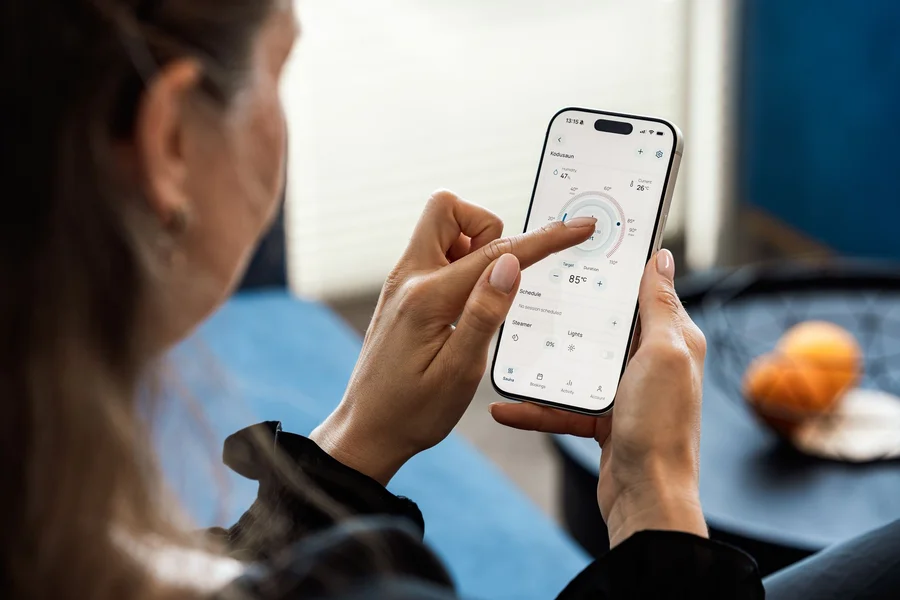
- Manufacturer apps: Samsung SmartThings, LG ThinQ, and GE SmartHQ connect directly to your smart washer via WiFi. They can run automated diagnostic tests, interpret error codes, and sometimes resolve software issues remotely. These are free with your appliance but only work with that brand’s connected models.
- AI chatbot diagnostics: Platforms like MendAI and appliance-specific AI assistants let you describe symptoms in plain language or enter an error code. The AI asks follow-up questions, narrows down the diagnosis, and provides a repair guide with photos and videos. These work for any washing machine, not just smart models.
- Technician-facing platforms: Professional tools like Aiventic and Repflow AI help repair companies triage service calls before dispatching. The technician or dispatcher inputs the model number, error code, and symptoms, and the AI predicts the failing component with 85% to 90% accuracy.
From what we’ve seen testing several of these platforms, the manufacturer apps provide the most accurate diagnostics for their own machines because they access real-time sensor data. But AI chatbot tools are surprisingly effective for older, non-connected washers when you provide the model number and a clear description of the problem. The key is specificity. Telling an AI “my washer won’t spin” gives a vague result. Telling it “my Whirlpool WTW5000DW makes a humming noise during spin cycle but the drum doesn’t rotate” gives a precise, actionable diagnosis.
What Washing Machine Problems Can AI Diagnose?
AI can diagnose most common washing machine problems including drainage failures, spin cycle issues, water inlet problems, excessive vibration, error code interpretation, and electrical component failures. These categories cover roughly 85% to 90% of all washing machine service calls.
Here’s what AI handles well and where it struggles:
- Error code interpretation (excellent): AI excels at translating manufacturer-specific error codes into plain language explanations. A code like “F5 E2” on a Whirlpool means nothing to most homeowners, but AI instantly identifies it as a door lock assembly issue and provides the specific part number for your model.
- Noise diagnosis (good): Describing the type of noise, grinding, squealing, clicking, or thumping, along with when it occurs during the cycle gives AI enough information to narrow down the cause to 2 or 3 components with reasonable accuracy.
- Water problems (good): Washer not filling, overfilling, not draining, or leaking are well-documented patterns. AI can guide you through checking inlet valves, drain pumps, hoses, and water level sensors systematically.
- Intermittent issues (limited): Problems that come and go are harder for AI to diagnose because the symptom description is less consistent. Smart washers with continuous monitoring handle this better because the AI can review historical performance data.
- Internal mechanical wear (limited): AI cannot assess bearing condition, drum spider arm integrity, or tub seal wear without physical inspection. It can suggest these as possibilities based on symptoms like loud grinding during spin, but confirming requires hands-on evaluation.
How Much Money Can AI Diagnostics Save on Washing Machine Repairs?
AI diagnostics can save homeowners $100 to $300 per repair incident by eliminating unnecessary service calls, preventing misdiagnosis, and enabling confident DIY repairs for simple problems that don’t actually require a technician.
The average washing machine service call costs $150 to $350 including the diagnostic fee and labor, before parts. About 20% to 25% of service calls turn out to be simple issues that a homeowner could have fixed themselves, like a clogged drain filter, an unbalanced load sensor that needs resetting, or a kinked drain hose. AI diagnostics catch these simple fixes and walk you through the repair with step-by-step instructions, saving the entire service call cost.
For problems that do require a technician, AI diagnostics still save money by improving first-call resolution. The industry average for washing machine repairs is a 25% to 30% callback rate, meaning one in four repairs requires a second visit because the technician diagnosed wrong or arrived without the correct part. AI triage platforms reduce that callback rate to under 10%, saving the $100 to $150 second-visit fee.
One thing most guides miss is the value of AI in the repair-versus-replace decision. When a washing machine breaks, homeowners often face pressure from repair companies to buy a new unit. AI diagnostic tools can estimate the repair cost based on the identified problem and compare it against the machine’s current value and expected remaining lifespan. This objective data helps you make an informed decision instead of relying on a technician who may have an incentive to sell you a new appliance.
Repair businesses using AI triage alongside AI diagnostics for other appliances like refrigerators create a unified platform that handles all service calls more efficiently, reducing overhead across the entire operation.
What Are Smart Washing Machine Self-Diagnostic Features?
Smart washing machines from major brands include built-in self-diagnostic modes that run automated tests on internal components, detect faults, and communicate results through a companion smartphone app. These features range from basic error code display to full component testing.
Samsung’s SmartThings app includes a feature where you hold your phone near the washer’s speaker while it emits a series of tones. The app decodes these tones to identify the specific fault and provides a troubleshooting walkthrough. LG’s ThinQ app uses WiFi to pull diagnostic data directly from the machine’s control board and can run remote diagnostic tests initiated from your phone.
GE’s SmartHQ platform goes a step further by maintaining a service history for your appliance and proactively alerting you when sensor readings suggest a component is degrading. For example, if the drain pump takes progressively longer to empty the tub across multiple cycles, the app alerts you to check the drain filter or pump before a complete failure occurs.
A common myth is that you need a brand-new, expensive smart washer to benefit from AI diagnostics. While built-in connectivity provides the best experience, AI chatbot tools and symptom-based diagnostic platforms work with any washing machine regardless of age or brand. A 15-year-old top-loader with no WiFi can still benefit from AI diagnostics when you input the model number and describe the symptoms accurately.
What Mistakes Do People Make When Using AI for Washer Troubleshooting?
The biggest mistake is providing vague symptom descriptions that lead to generic, unhelpful diagnoses. AI diagnostic accuracy depends entirely on the quality of information you provide. Garbage in, garbage out applies directly to appliance troubleshooting.
One mistake we see homeowners make is using general-purpose AI chatbots like ChatGPT for washing machine diagnosis instead of appliance-specific tools. General AI can provide basic troubleshooting steps, but it lacks access to manufacturer service bulletins, model-specific failure patterns, and parts databases. An appliance-specific AI tool knows that your exact model has a known issue with a particular bearing assembly at 50,000 cycles. A general chatbot gives you a generic list of “top 10 reasons your washer won’t spin.”
Another common pitfall is attempting AI-guided repairs that involve electrical components without proper safety knowledge. AI can correctly identify that your washer’s motor capacitor needs replacement and provide step-by-step instructions. But if you don’t know how to safely discharge a capacitor before handling it, you’re risking serious electrical shock. AI diagnostic tools should always include safety warnings, and homeowners should be honest about their skill level when deciding between DIY and calling a professional.
According to the Consumer Product Safety Commission, there have been roughly 3,000 emergency-room-treated washer-related injuries among children aged five and under since 2014, most of them from falls. That figure covers young children rather than adults doing repairs, and we could not find a comparable national count for DIY repair injuries specifically. AI diagnostics should help you decide whether to attempt a repair yourself, not pressure you into one.
How Should You Use AI to Handle Your Next Washing Machine Problem?
Start with your machine’s model number, the exact error code if one is displayed, and a specific description of the symptom including when it occurs during the wash cycle. Feed this information into the most specific diagnostic tool available for your situation.
- Check if your washing machine has a companion app. If it’s a Samsung, LG, GE, or Whirlpool smart model made after 2020, download the manufacturer’s app and run the built-in diagnostic first. This gives you the most accurate starting point.
- If your washer isn’t a connected model, find the model number on the sticker inside the door or on the back panel. Enter this number along with your symptoms into an appliance-specific AI diagnostic platform.
- Be specific about the symptom. “Won’t drain” is okay. “Makes a humming noise when it should be draining, and there’s standing water in the tub after the cycle ends” is much better and gives the AI enough detail for an accurate diagnosis.
- Review the AI’s diagnosis and repair difficulty rating. If it’s rated as a simple DIY fix like cleaning a drain filter, follow the guided instructions. If it involves electrical work, sealed system components, or heavy disassembly, call a professional.
- When calling a technician, share the AI diagnostic result with them. This helps them arrive prepared with the correct parts and saves you the cost of an extended diagnostic visit.
For appliance repair businesses looking to offer AI-powered diagnostics across all service categories, connecting washer diagnostics with AI customer service chatbots automates the entire intake process from symptom collection to technician dispatch. And for businesses managing broader operations, integrating diagnostics into an AI-powered business automation platform streamlines scheduling, parts ordering, and follow-up communications into one connected workflow.
Frequently Asked Questions
Can AI diagnose washing machine problems from just a noise?
AI can narrow down possible causes based on noise descriptions. Grinding usually points to bearings or foreign objects in the drum. Squealing suggests a worn belt or motor coupling. Clicking during drain often indicates a debris-clogged pump. For best results, describe the noise type, volume, and exactly when it occurs during the wash cycle.
What is the difference between a smart washer diagnostic and an AI chatbot diagnostic?
A smart washer diagnostic pulls real-time sensor data directly from the machine’s internal components, giving precise measurements of motor speed, water levels, and temperatures. An AI chatbot diagnostic relies on your symptom descriptions and the machine’s model-specific failure database. Smart diagnostics are more accurate but require a connected appliance. Chatbot diagnostics work with any washer.
Are AI washing machine diagnostics free?
Manufacturer companion apps like Samsung SmartThings and LG ThinQ are free. Third-party AI diagnostic platforms typically charge $10 to $30 per diagnostic session for consumers. Professional technician platforms cost $30 to $150 per month as a subscription. Some AI chatbot tools offer basic troubleshooting for free with paid upgrades for detailed repair guides.
Can AI tell me if my washing machine is worth repairing?
Yes. Many AI diagnostic tools calculate estimated repair cost based on the identified problem and compare it against the machine’s age and current replacement cost. The standard guideline is to replace rather than repair if the repair exceeds 50% of a new machine’s price and the unit is over 7 to 8 years old.
Is it safe to do DIY washing machine repairs guided by AI?
Simple maintenance tasks like cleaning drain filters, replacing inlet hoses, and leveling the machine are safe for most homeowners. Repairs involving electrical components like motors, capacitors, control boards, or anything requiring disassembly of the drum assembly should be handled by a qualified technician unless you have specific appliance repair training.
Do AI diagnostics work for both top-load and front-load washers?
Yes. AI diagnostic tools cover both top-load and front-load washing machines. The failure patterns differ between the two types, for example front-loaders have more door seal and bearing issues while top-loaders have more transmission and agitator problems, and model-specific AI tools account for these differences in their diagnoses.
Let AI Do the Thinking So the Repair Gets Done Right
Can AI fix washing machine problems? Not with a wrench, but it can tell you exactly what’s wrong, whether you can handle it yourself, and what parts a technician needs to bring. That knowledge alone saves the average homeowner $100 to $300 per repair and eliminates the frustration of misdiagnosed problems and repeat service calls. Start with your model number, be specific about symptoms, and use the right diagnostic tool for your situation.