How AI CCTV Reduces False Alarms: The Real Numbers
Understanding how AI CCTV reduces false alarms starts with a number that surprises most people: according to the U.S. Department of Justice, between 94 and 98 percent of burglar alarm calls to police are false. AI cameras attack that number by answering a question older motion sensors never could, which is not whether something moved but what moved.
Below you will find the scale of the false alarm problem, the specific detection change that fixes most of it, what AI still gets wrong, and why some cities will no longer send an officer without video proof.
This article was reviewed and updated in September 2026 to add Seattle’s verified response policy, which took effect on 1 October 2024 and is the clearest current example of a large city acting on this.
How Big Is the False Alarm Problem?
Large enough that false burglar alarms are the highest-volume call type for many U.S. police agencies. The most authoritative accounting comes from the Department of Justice rather than the security industry.
The DOJ Office of Community Oriented Policing Services published False Burglar Alarms, 2nd Edition, written by Rana Sampson, in August 2011. Its findings are blunt. Between 94 and 98 percent of alarm calls are false, and higher in some jurisdictions. Each false alarm consumes roughly 20 minutes of police time, usually for two officers. Nationwide, false alarms account for somewhere between 10 and 25 percent of all calls to police. The guide also cites 36 million alarm activations in the United States in 2002 at an estimated annual cost of $1.8 billion.
Two honest caveats. That headline cost figure rests on 2002 data in a guide published in 2011, so treat it as an order of magnitude rather than a current number. The percentage findings, however, have been remarkably stable across studies and jurisdictions since.
The causes matter more than the totals. The same guide notes a U.K. study by Gill and Hemming that attributed roughly 50 percent of alarm activations to user error, with the alarm industry likewise pointing to user error as the largest single source. That is worth holding onto, because a camera that classifies objects perfectly does nothing about someone entering the wrong keypad code.
How Does AI CCTV Reduce False Alarms at the Detection Stage?
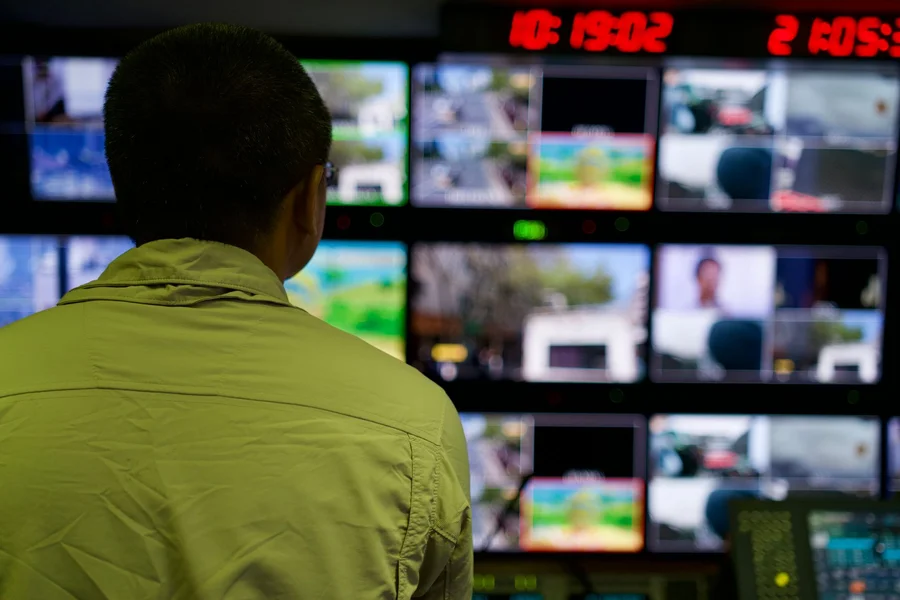
AI CCTV reduces false alarms by replacing “did pixels change” with “is that a person.” Older motion detection triggers on any sufficient change in the frame, which is why headlights, rain, shadows, spiders on the lens, and a neighbor’s cat all set it off.
The technique doing the work is object classification, a computer vision method where the model is trained on many labeled examples until it can sort what it sees into categories. A modern system distinguishes person, vehicle, and animal, and can be told to alert on the first two and ignore the third. Layered on top, zone and rule logic lets you specify that a person in the driveway matters at 2am and does not matter at 2pm, or that a person crossing a boundary line matters while one walking past on the pavement does not.
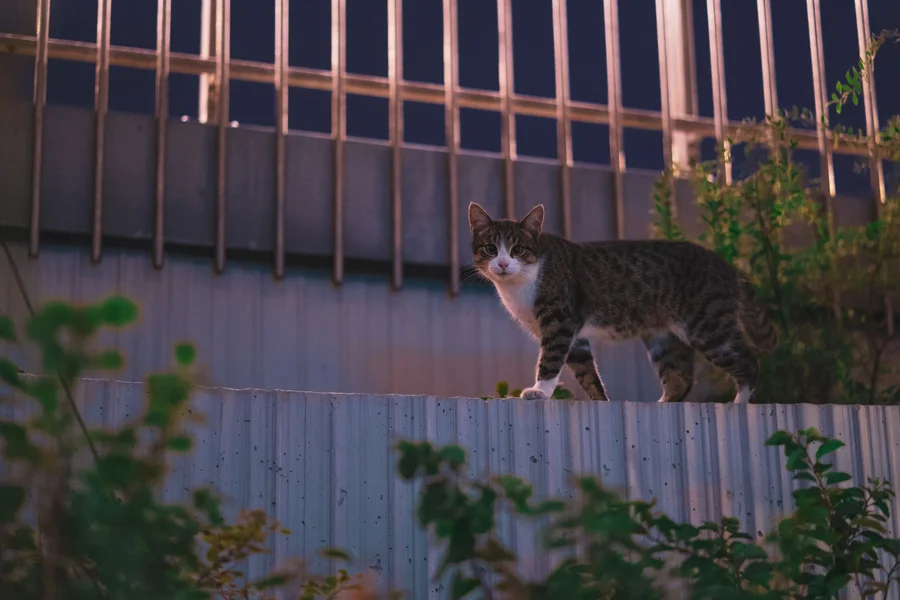
From what we’ve seen, the animal filter alone removes the largest share of residential nuisance alerts, particularly for anyone with a cat flap or a garden that foxes use as a route. The vehicle filter does the equivalent job for properties on a road, where passing headlights at night used to generate an alert every few minutes.
The myth worth clearing up: AI detection does not stop your alarm being false, it stops your alarm being sent. Those are different things, and the distinction matters for anyone facing a municipal false alarm ordinance. If a camera classifies correctly and suppresses the alert, no dispatch occurs and no fine follows. If your alarm panel is triggered by a family member with the wrong code, no amount of camera intelligence prevents that signal going out.
Why Are Some Cities Refusing to Respond Without Video?
Because at a 94 to 98 percent false rate, unverified alarms are a poor use of patrol time. A number of jurisdictions have adopted what the industry calls verified response, requiring audio, video, or eyewitness confirmation that a crime is in progress before an officer is dispatched.
The clearest current example is Seattle, which moved to verified response on 1 October 2024. The Seattle Police Department’s own alarm page states the rule plainly: officers respond to burglar alarm activations that have audio, video, panic alarms or eyewitness evidence of someone illegally entering a property, and SPD “does not respond to calls from alarm companies based on sensor or motion activations alone as those have proven over time not to be reliable evidence of criminal activity.”
That sentence is worth reading twice. It is not a security vendor arguing for an upsell. It is a major metropolitan police department putting in writing that a motion sensor firing tells them nothing useful about whether a crime is happening.
SPD keeps one important exception. Robbery, panic and duress alarms still get a response, because those are deliberately triggered by a person rather than by a sensor detecting movement. The department draws the line between passive detection and a human being pressing a button, and that distinction is the whole logic of verified response.
The money side is arranged in a way most homeowners do not expect. Seattle bills the alarm company, not the subscriber, because under its municipal code the city’s relationship is with the licensed alarm company. Companies then pass the charge along. The published fee schedule is $115 for a false burglar alarm, $230 for a false panic, duress or robbery alarm, $30 if the dispatch is cancelled after officers are sent but before they arrive, and nothing at all if it is cancelled before dispatch. That last line is the incentive that makes verification worth doing: catching it early costs nobody anything.
Seattle is not alone, and it is not the first. Las Vegas has run verified response since 1991, and Salt Lake City has been cited alongside it in Justice Department material as having among the strongest approaches. Several cities have gone the other way, with Dallas, San Jose and Madison among those that adopted and later rescinded it after pushback from residents and businesses. Only a small share of the roughly 18,000 US public safety agencies use verified response at all; most instead follow a model ordinance that keeps police responding while charging escalating fines to repeat offenders. Policies differ substantially and change, so the only reliable answer for your address is your own police department’s current alarm ordinance.
One thing most guides miss is that this reframes what AI CCTV is for. Marketing presents it as convenience, meaning fewer annoying phone notifications. In a verified response jurisdiction it is closer to a precondition for getting help at all, because a camera clip is the verification the dispatcher needs. The same DOJ analysis is summarized in the ASU Center for Problem-Oriented Policing edition of the guide and catalogued by the Office of Justice Programs.
Where Does AI CCTV Still Get It Wrong?
At night, in weather, at distance, and with anything it was not trained to recognize. The failures are predictable enough to design around.
Low light is the most common failure. Infrared night vision produces a flat monochrome image with far less detail for the model to work with, and classification accuracy drops accordingly. Heavy rain and snow create moving objects across the whole frame. Distance is a simple pixel problem: a person eighty metres from a camera occupies too few pixels to classify reliably, so the system either misses them or falls back to generic motion.
The same balance between sensitivity and nuisance shows up in other household sensing systems, as our explainer on smart leak detection AI describes.
Then there is the opposite error, which gets far less attention than nuisance alerts. A system tuned aggressively to suppress false positives will eventually suppress a real one. A common mistake worth avoiding: pushing sensitivity down until your phone goes quiet, then assuming quiet means secure. We have seen people disable animal detection, narrow zones to a strip of driveway, and raise confidence thresholds until the system essentially stopped reporting. That is not a reduction in false alarms, it is a reduction in alarms. Tune until nuisance alerts are manageable, then stop.
After looking at how these systems get configured, we prefer setting up two tiers rather than one: a quiet log of everything the camera classified, plus push notifications for a narrow set of genuinely urgent conditions. Reviewing that log weekly tells you what the system is filtering, which is the only way to know whether your thresholds are sensible or merely silent.
How Do You Make AI CCTV Reduce False Alarms in Practice?
Fix the physical placement first. Most persistent false alerts come from a camera pointed at something that moves, not from a model that is failing.
- Aim away from roads, trees, and reflective surfaces. A camera framing a busy pavement will fight you no matter how good its classifier is.
- Draw zones rather than covering the full frame. Restrict detection to the ground people would genuinely cross to reach a door.
- Turn on person and vehicle filtering, and keep animal alerts off. This single change removes the bulk of residential nuisance alerts.
- Set different rules by time of day. A person on the driveway at 3am warrants a different response than one at midday.
- Check your local alarm ordinance. Find out whether your area operates verified response and what a false dispatch costs you.
- Review the event log weekly for the first month. You are checking what was filtered out, rather than only what came through.
In practice, this looks like an hour of setup and a noticeable drop by the second week. Anyone building out a broader system should see our smart home automation budget setup guide for how cameras fit alongside other devices, and our renter-friendly smart lock installation guide for entry points, since door hardware and cameras solve different halves of the same problem.
Identifying who is on camera is a separate step with separate risks, covered in facial recognition for home security. The same accuracy questions apply to the data rights involved.
Frequently Asked Questions
Will police still come if my alarm goes off in a verified response city?
For a burglar alarm triggered only by a motion sensor or door contact, generally no. Seattle, for example, requires audio, video, an eyewitness, or a panic alarm before dispatching. Robbery, panic and duress alarms are treated differently and still get a response, because a person deliberately triggered them rather than a sensor.
Who pays the false alarm fine?
In Seattle the city bills the alarm company, not you, because the municipal code makes the company the licensed party. The company then usually passes the fee to the subscriber. The published schedule runs $115 for a false burglar alarm and $230 for a false panic or duress alarm, dropping to $30 if the call is cancelled after dispatch but before arrival, and nothing if cancelled before dispatch.
What percentage of burglar alarms are false?
Between 94 and 98 percent, according to the U.S. Department of Justice guide on false burglar alarms, with higher rates in some jurisdictions. False alarms make up somewhere between 10 and 25 percent of all calls to police nationwide, and are the highest-volume call type for many agencies.
Does AI CCTV stop me getting fined for false alarms?
Only for camera-triggered events it correctly filters out. If the camera suppresses an alert, no dispatch happens and no fine follows. It does nothing about false alarms caused by keypad errors or door sensors, and user error is cited as the largest single cause of alarm activations.
What is the difference between motion detection and AI detection?
Motion detection triggers on any significant pixel change, which includes rain, shadows, headlights, and animals. AI detection classifies what caused the change and can alert only on people or vehicles. The first asks whether something moved; the second asks what it was.
Can AI cameras tell the difference between a person and an animal?
Yes, and this is the feature that removes the most nuisance alerts for homeowners. Accuracy drops in low light, heavy rain, and at distance, where there is less visual information to work with. Expect good daytime performance and more mistakes on infrared night footage.
Will police respond faster to a verified alarm?
Generally yes, and in some jurisdictions verification is required before any dispatch at all. Policies vary widely by city and change over time, so check your local police department’s alarm ordinance rather than assuming.
Does AI detection work in the dark?
It works, less well. Infrared night vision produces monochrome images with less detail, which reduces classification accuracy. Adding modest lighting to the area a camera covers often improves detection more than upgrading the camera does.
Can turning down sensitivity cause me to miss a real intruder?
Yes, and this is the risk people walk into while chasing a quiet phone. Suppressing enough to eliminate every nuisance alert will eventually suppress a genuine one. Tune until alerts are manageable, then review your event log to confirm what is being filtered.
Making AI CCTV Reduce False Alarms in Your Own Setup
How AI CCTV reduces false alarms comes down to one change: classifying what triggered the camera instead of merely detecting that something did. Against a false alarm rate the DOJ puts at 94 to 98 percent, that is a meaningful improvement, and in verified response areas it is increasingly the difference between an officer being sent and not.
Look up your city’s alarm ordinance this week and find out whether it operates verified response and what a false dispatch costs. Then spend an hour on camera aiming and zones, which will do more for your alert volume than any hardware upgrade.