
What to Wear to a Casual Job Interview: Female Guide
Deciding what to wear to a casual job interview female candidates face a specific trap: “casual” in a job posting almost never means casual in the way you dress on a Saturday. It means one notch below the company’s normal office wear, and one notch above what you would wear to meet a friend.
Below you will find outfit formulas that work across most casual workplaces, how to read a company’s actual dress culture before you arrive, what to avoid, and the legal protections that mean you never have to change your religious dress or natural hair to look “professional.”
What Does “Casual” Mean for an Interview?
It means smart casual, and the safest reading is to dress slightly above what you would wear if you already worked there. An interview is still an evaluation, and turning up markedly more relaxed than the person interviewing you creates a gap you then have to talk your way out of.
Three useful tiers to keep straight:
- Business professional: matched suit, formal shoes. Rarely required for a casual interview.
- Business casual: tailored trousers or a knee-length skirt, blouse or fine knit, blazer optional, closed shoes. This is the sweet spot for most “casual” interviews.
- Smart casual: dark jeans without distressing, a structured top, clean minimal shoes, a jacket or cardigan. Right for startups, creative studios, cafés and retail.
From what we’ve seen, the mistake is rarely being too formal. A blazer that turns out to be unnecessary reads as someone who took the meeting seriously. Arriving in a hoodie when everyone else is in knitwear reads as someone who did not check.
What to Wear to a Casual Job Interview: Outfit Formulas
Deciding what to wear to a casual job interview gets easier with a formula. Build from a tailored piece, a clean base, and shoes you can walk in. These combinations cover the overwhelming majority of casual interview settings.
The reliable default
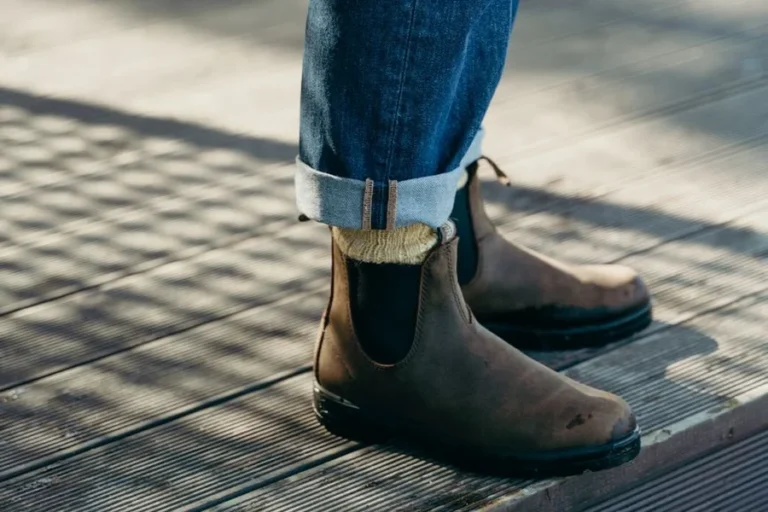
Tailored trousers in navy, black, grey or camel, a plain blouse or fine-knit top, and loafers or clean ankle boots. Add a blazer if the company leans corporate. This works almost everywhere and photographs well on video calls.
For a startup or creative studio
Dark indigo jeans with no rips, a well-cut knit or silk-feel shirt tucked loosely, white leather trainers or flat boots, and an unstructured jacket. The shape comes from fit rather than formality.
For retail, hospitality or customer-facing roles
A simple midi dress or trousers with a plain top, plus closed comfortable shoes, since you may be shown the floor. Choose something you could genuinely stand in for an hour.
For a video interview
Solid mid-tone colors read best on camera, and busy patterns and pure white can distort. Dress the bottom half properly anyway, because standing up on camera happens more often than people expect.
If you own almost nothing suitable
One pair of dark tailored trousers and one neutral blazer will carry you through years of interviews. Our guide to sustainable capsule wardrobe ideas covers building that base without buying a whole new wardrobe.
How Do You Find Out the Actual Dress Culture?
Look before you guess, because “casual” written by a recruiter and “casual” practised in the office are often different. Twenty minutes of checking beats an hour of second-guessing.
- Check the company’s own photos. Team pages, Instagram and recent LinkedIn posts show what people genuinely wear.
- Look at the interviewer’s profile photo. It is a reasonable signal of the norm at their level.
- Ask the recruiter directly. “Is there a dress code I should know about?” is a normal question and nobody thinks less of you for it.
- Match the industry, not the job title. A finance operations role and a design role at the same salary dress very differently.
- Dress one notch above what you observe. This is the single most reliable rule in this article.
One thing most guides miss is that a casual dress code often signals a workplace that pays attention to fit and detail rather than formality. Plain clothes that fit properly outperform expensive clothes that do not, and a well-tailored $40 pair of trousers will read better than a poorly fitting designer one.
What Should You Avoid?
Anything that will distract you during the interview, and anything that needs adjusting. Comfort is a performance issue rather than a style preference.
A common mistake worth avoiding: wearing something brand new and untested. We have seen people spend an interview managing a waistband that rides up, shoes that pinch, or a neckline that needs constant correcting, and the attention that goes into that is attention not going into their answers. Wear the outfit for an hour at home first, sit down in it, and walk in the shoes.
If you want ideas that lean less corporate, our piece on anti-fluency aesthetic outfit ideas covers understated styling that still reads as considered.
Beyond that, keep it short. Skip strong fragrance, since some offices have scent policies and some interviewers have sensitivities. Avoid anything sheer or very short that you would feel self-conscious in. Leave visible logos and slogans out of it. And check the whole outfit in daylight, because black and navy separates that look coordinated indoors sometimes clearly do not outside.

What You Never Have to Change
Your religious dress and your natural hair. This is the part of the question that most interview style guides skip entirely, and it is worth knowing your position rather than quietly adapting.
Under Title VII, employers must make exceptions to dress and grooming policies as a religious accommodation unless doing so would cause undue hardship. The U.S. Equal Employment Opportunity Commission is explicit that commercial image is not a sufficient reason: its guidance states that “an employer’s reliance on the broad rubric of ‘image’ or marketing strategy to deny a requested religious accommodation may amount to relying on customer preference in violation of Title VII.” The full document on religious garb and grooming in the workplace covers hijabs, head coverings, and grooming practices in detail.
The hiring stage is covered specifically, and one detail surprises people. The EEOC guidance makes clear that an applicant does not have to formally request an accommodation during the interview for protection to apply. An employer who assumes an accommodation would be needed and declines to hire on that basis has a Title VII problem regardless of whether you raised it. The EEOC’s overview of workplace religious accommodation sets out the wider framework.
Hair is treated similarly. The EEOC has taken the position that Title VII prohibits employer policies that bar Black employees from wearing natural hairstyles, and many states have enacted CROWN Act protections covering hair texture and protective styles such as locs, braids and twists. You do not need to straighten or cover your hair to look interview-appropriate.
After looking at how this plays out, we prefer treating dress-code questions as information rather than instruction. If a workplace makes clear that your religious dress or natural hair is a problem for them, they have told you something genuinely useful about working there.
Most of these outfits are built from pieces you already own. The white button down walkthrough covers the single most useful one, and quiet luxury without the price tag explains why plain, well-fitted clothes read as expensive in a room.
Frequently Asked Questions
Can I wear jeans to a casual job interview?
Often yes, if they are dark, well-fitting and free of rips, and if the workplace is genuinely casual such as a startup, studio, café or shop. Pair them with a structured top and clean shoes. For anything office-based or client-facing, tailored trousers are the safer choice.
Should I still wear a blazer if the dress code is casual?
Bringing one is rarely wrong, since you can carry it and decide when you arrive. A blazer adds shape without formality and reads as preparation. If everyone in the office is in t-shirts, an unstructured jacket or cardigan achieves the same effect more quietly.
What colors are best for a casual interview?
Navy, black, grey, camel and white work as a base because they coordinate easily and do not compete for attention. Mid-tone solids photograph best on video calls, where busy patterns and pure white can distort on camera.
Do I have to remove my hijab or religious head covering for an interview?
No. Title VII requires employers to accommodate religious dress unless it causes undue hardship, and EEOC guidance states that concerns about company image or customer preference do not meet that bar. You also do not need to formally request an accommodation at the interview for the protection to apply.
Can an employer reject me because of my natural hairstyle?
The EEOC has taken the position that Title VII prohibits policies barring Black employees from wearing natural hairstyles, and many states have CROWN Act laws protecting hair texture and protective styles. If you believe you were rejected on this basis, consult an employment attorney about your specific situation.
What should I wear to a casual interview on video?
Solid mid-tone colors, a structured top half, and good lighting matter more than the specific garment. Dress the lower half properly regardless, since standing up mid-call is common. Test your framing on camera before the call so you know what is visible.
Is it worse to be overdressed or underdressed?
Underdressed, in nearly every case. Being slightly more formal than the room reads as taking the opportunity seriously and is easy to soften by removing a jacket. Being noticeably more casual is harder to recover from and cannot be fixed once you are there.
Putting Together What to Wear to a Casual Job Interview
What to wear to a casual job interview female candidates can settle with one principle: dress one notch above the office norm, in clothes that fit and that you have already worn for an hour. Good tailoring beats formality, comfort beats novelty, and the outfit’s job is to stop being noticed once you sit down.
Check the company’s photos this week, pick your outfit two days ahead, and wear it around the house once. Then spend the time you would have spent worrying about clothes on your answers instead, and on the follow-up, which our guide to politely following up on an email with no response covers.
This article is general information, not legal advice. Employment discrimination laws vary by state, so consult a qualified employment attorney about your specific situation.