
How to Style a White Button Down Shirt Casually
Learning how to style a white button down shirt casually is mostly a matter of undoing its formality on purpose. The shirt arrives wanting to look like office wear. Everything below is about the small decisions, where it tucks, how the sleeves sit, what the fabric does, that move it somewhere more relaxed.
Below you will find the three tucks worth knowing and how to make them hold, the fit details that decide whether a shirt reads sharp or borrowed, why fabric matters more than cut, and how to stop the collar and underarms yellowing.
Why Does a White Shirt Read as Formal?
Because of three things you can change: a fully buttoned placket, a flat neat tuck, and sleeves pulled to the wrist. Undo any two and the shirt relaxes immediately.
The quickest adjustments, in rough order of effect:
- Unbutton the top one or two. One button reads relaxed, two reads deliberately casual on most shirts.
- Push or roll the sleeves. A forearm-length sleeve is the single strongest casual signal a shirt can send.
- Break the tuck. A partial tuck reads casual precisely because it looks unplanned, even though it is not.
- Change the shoe. The same shirt and jeans read completely differently with loafers versus white trainers.
From what we’ve seen, people over-adjust the shirt and under-adjust everything else. If an outfit still feels stiff, the shoes and the bag are usually doing more of that work than the shirt is.
How to Style a White Button Down Shirt Casually: The Three Tucks
The tuck does more than any other single decision, and each of the three sends a different signal. What separates a good tuck from a fussy one is whether it holds without you touching it.
The French tuck
Tuck only the front centre section, roughly the width of your waistband buckle area, and leave the sides and back loose. It defines the waist while keeping the shirt relaxed. To make it hold, tuck a slightly deeper fold than looks right, then pull down gently from the hem on either side so the fabric blouses over the waistband rather than sitting flat.
The half tuck
Tuck one side only, usually the side away from your dominant hand so you stop fiddling with it. This works best with a shirt long enough that the untucked half still covers your hip. On a short shirt it reads accidental rather than casual.
The full tuck, softened
Tuck the whole shirt, then pull about an inch of fabric back out evenly around the waistband so it is not pulled tight. A full tuck with slack reads intentional; a full tuck pulled flat reads like a uniform. This is the version that works with wide-leg trousers.
The myth worth clearing up: a French tuck is often described as universally flattering, which sets people up to blame their body when it does not sit right. It is a length-and-fabric problem. A stiff poplin shirt cut straight at the hem resists blousing and will keep pulling out, and a cropped shirt has nothing to tuck. Curved-hem shirts in softer cotton hold every one of these tucks better.
Which Fit Details Really Matter?
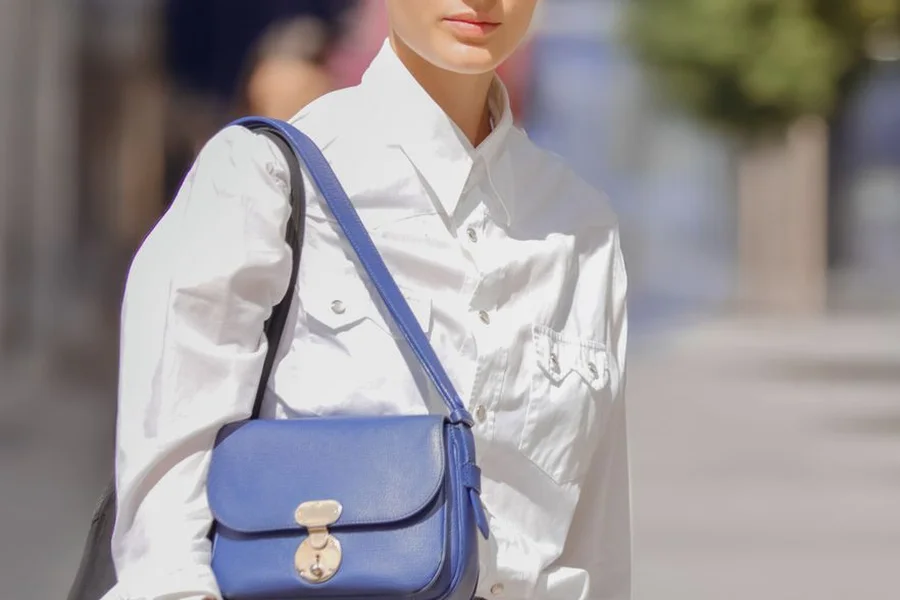
Shoulder seams, sleeve length, and the placket. Get those three right and an inexpensive shirt looks considered; get them wrong and an expensive one looks borrowed.
- Shoulder seam. It should sit at the outer edge of your shoulder bone. This is the one thing a tailor cannot easily fix, so it decides whether a shirt is worth buying.
- Sleeve length. Unrolled, the cuff should end where your wrist meets your hand. Too long is fine if you plan to roll them; too short is not fixable.
- Placket gaping. If the buttons pull open across the bust, the shirt is too small there regardless of how the rest fits. Size up and accept a looser waist, since a looser waist is what every tuck above is designed to use.
- Body width. You want enough room to blouse the fabric over a waistband. A shirt fitted close to the body cannot do a French tuck at all.
- Hem shape. A curved hem tucks and half-tucks well. A straight hem is designed to be worn out and mostly should be.
One thing most guides miss is the gaping placket problem, which gets treated as a styling issue when it is a sizing one. The common fixes, a discreet stitch or fashion tape, are patching over a shirt that is too tight across the chest. Buying the size that closes cleanly and letting the waist float gives you a better shirt and every tuck option.
Does the Fabric Change What Works?
More than the cut does. Three fabrics account for most white shirts and they behave completely differently, so check the label before you judge the shirt.
- Poplin is smooth, crisp and lightweight. It looks sharpest, wrinkles visibly, and resists blousing, so it suits a full tuck and struggles with a French tuck.
- Oxford cloth is heavier with a slight basketweave texture. It is the most naturally casual of the three, softens with washing, and holds a partial tuck well.
- Linen and linen blends drape softly and wrinkle immediately, which is the point. Best worn open over a top or loosely half-tucked, and least suited to anything neat.
Fibre content is on the care label by law. The Federal Trade Commission’s guidance on textile labeling requirements covers what manufacturers must disclose, which is why that small tag is the fastest way to predict how a shirt will behave before you try it on.
After looking at how these wear over time, we prefer oxford cloth for a shirt that will be worn casually most of the time. It is the most forgiving of the three, hides creasing far better than poplin, and improves rather than degrades with washing, which matters for a garment you will wash often.
How Do You Keep a White Shirt White?
By treating collar and underarm marks as two different problems, because they are. Getting this wrong is how a good shirt becomes a decorating rag within a year.
Collar marks are body oils, sebum and hair product oxidizing on the fabric. Underarm yellowing is a different chemistry: aluminium salts from antiperspirant bind with proteins in sweat and with the fabric, producing a compound that is not water soluble and yellows as it oxidizes.
A common mistake worth avoiding: reaching for chlorine bleach on underarm yellowing. Chlorine reacts with the protein and aluminium already in the fabric and can deepen the stain rather than lifting it, while weakening the fibres at the same time. This is the opposite of what people expect from bleach, and it is why a shirt often looks worse after the wash meant to save it. The Spruce’s guide to removing yellow underarm stains covers the alternatives in detail.
What works better is unglamorous. Use an enzyme detergent as your default, since protease enzymes break down the protein half of the problem. Treat marks before they set rather than after. Let antiperspirant dry fully before dressing. And wash white shirts separately from colours, because grey dinginess is usually dye transfer rather than dirt.
Building Outfits Around It
Knowing how to style a white button down shirt casually is easiest with a few set combinations. Three cover most occasions, and each uses a different tuck.
Jeans and trainers. Straight or wide-leg mid-blue denim, French tuck, clean white leather trainers, sleeves rolled to just below the elbow. The most reliable casual outfit in this article.
Over a dress or slip skirt. Wear the shirt fully open as a layer, sleeves pushed up, with flat sandals or boots. This uses the shirt as a jacket and needs no tuck at all.
With tailored trousers, dressed down. Wide-leg trousers, softened full tuck, loafers, top two buttons open. Reads polished without reading corporate, which is the balance most people are after. Our guide to quiet luxury fashion trends covers the same restraint applied more broadly.
If you are building a wardrobe from a small base, a white shirt is one of the highest-return pieces you can own, which our sustainable capsule wardrobe ideas and wardrobe transformation on $200 in 30 days both cover.
A white button down does double duty, which is why it shows up again in what to wear to a casual job interview. Paired with denim, the jean cuffing guide handles the hem so the whole outfit sits right.
Frequently Asked Questions
How do I stop a French tuck coming untucked?
Tuck a deeper fold than looks right, then pull down gently from the hem on both sides so the fabric blouses over the waistband. If it still pulls out, the shirt is likely too short, too fitted, or too stiff. Curved-hem shirts in softer cotton hold far better than straight-hem poplin.
Should I size up in a white button down?
Size to your shoulders and chest, not your waist. Shoulder seams should sit at the edge of your shoulder bone, and the placket should close without pulling. A slightly loose waist is an advantage, since every casual tuck relies on having fabric to work with.
What is the difference between poplin and oxford?
Poplin is smooth, crisp and lightweight, so it looks sharper and wrinkles more visibly. Oxford is heavier with a subtle basketweave texture, reads more casual, hides creases better and softens with washing. For casual wear most of the time, oxford is the easier choice.
Can I wear a white button down without tucking it at all?
Yes, especially in oxford or linen, and particularly with a straight hem, which is designed to be worn out. Roll the sleeves and leave the top buttons open so it does not read as an untucked work shirt, and keep the hem length above mid-hip so it does not swamp the outfit.
Why does bleach make my underarm stains worse?
Because chlorine reacts with the protein from sweat and the aluminium from antiperspirant that are already bound into the fabric, which can deepen the yellow rather than lift it and weaken the fibres. Use an enzyme detergent and treat marks before they set instead.
How many white shirts do I really need?
One well-fitting shirt in oxford cloth covers most casual use. A second in poplin is worth adding only if you regularly need a sharper look. Fit matters far more than quantity, and a single shirt that fits your shoulders beats three that do not.
Do I need to iron it every time?
Not for casual wear, and over-pressing works against you. A softly creased oxford reads relaxed, which is the goal here. Hang the shirt straight from the wash and smooth the collar and placket by hand, since those two areas are what people notice.
How to Style a White Button Down Shirt Casually: The Short Version
How to style a white button down shirt casually comes down to fabric, fit and the tuck, in that order. Choose oxford over poplin if it will mostly be worn relaxed, size to your shoulders rather than your waist, and pick a tuck the shirt is physically able to hold.
Take the shirt you already own, check where the shoulder seam sits and what the care label says, and try all three tucks in front of a mirror. Ten minutes tells you which ones that specific shirt can do, and which ones it never will.