
Smart Parking AI Technology Explained: How It Finds You a Spot Faster
You’ve driven past the same block three times looking for parking while your meeting starts in eight minutes. Studies estimate that drivers in busy cities spend an average of 17 minutes per trip searching for parking, and that cruising generates up to 30% of downtown traffic congestion. Smart parking AI technology uses cameras, sensors, and machine learning to track which spots are open in real time and guide you directly to one, cutting that search time to under 2 minutes in many cases.
What Is Smart Parking AI Technology?
Smart parking AI technology is a system that combines physical hardware like cameras and sensors with artificial intelligence software to detect, track, and communicate parking space availability in real time. Instead of drivers guessing where open spots might be, the system tells them exactly where to go.
The basic concept is straightforward: something detects whether a parking space is occupied or empty, software processes that data, and an app or digital sign tells drivers where to find available spots. What makes modern systems “smart” is the AI layer that goes beyond simple detection. The software learns traffic patterns, predicts when spots will open based on historical data, and can even adjust parking rates dynamically based on demand.
According to a 2025 market analysis by Precedence Research, the global smart parking market is projected to reach $11.6 billion by 2030, growing at a compound annual growth rate of over 18%. This growth is driven by increasing urbanization, rising vehicle ownership, and city governments looking for ways to reduce traffic congestion without building more roads.
How Does Smart Parking AI Detect Open Spaces?
Smart parking AI detects open spaces using three main technologies: in-ground sensors, overhead cameras with computer vision, or a combination of both. Each approach has different strengths depending on the parking environment.
In-ground sensors are small devices buried beneath the pavement surface in each parking space. They use magnetometer technology to detect the magnetic disturbance caused by a vehicle parked above them. When a car parks on the sensor, it registers as occupied. When the car leaves, the sensor updates to available. These sensors are highly accurate, typically above 98%, but they require individual installation in every single space, which gets expensive in large lots.
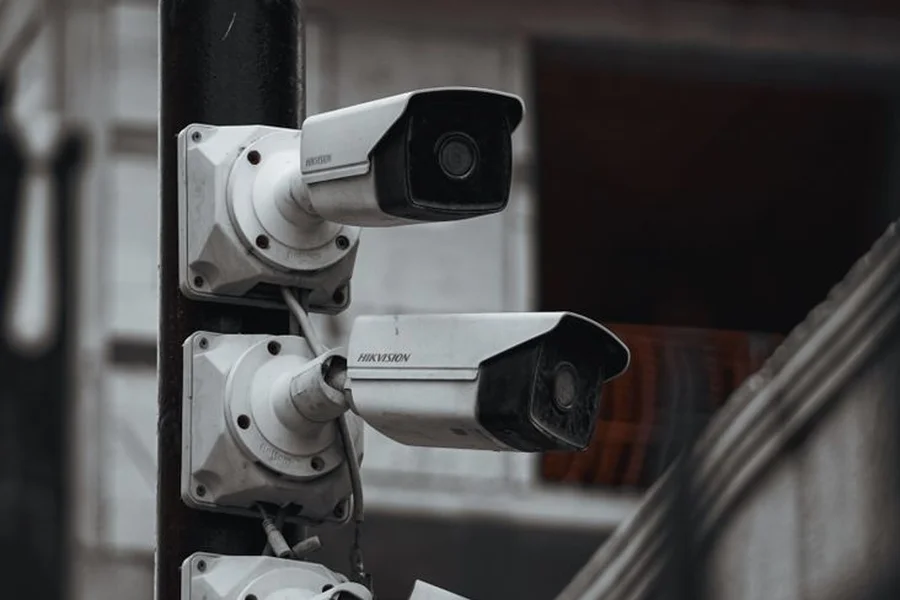
Camera-based systems take a different approach. A single AI-powered camera mounted on a light pole or building can monitor 20 to 50 parking spaces simultaneously. The computer vision software, often using models like YOLOv8, identifies vehicles and empty spaces in real time from the video feed. This “one-to-many” approach costs significantly less per space than individual sensors, which is why cities and parking operators have been shifting toward camera-based systems since 2024.
From what we’ve seen in deployed smart parking installations, camera systems work best in surface lots and structured garages where sightlines are clear. In-ground sensors remain the better choice for on-street parallel parking where poles, trees, and passing traffic make camera angles unreliable. Many operators use a hybrid approach with cameras covering open areas and sensors handling tricky street-level spots.
How Does the AI Layer Make Parking Smarter Than Simple Detection?
The AI layer transforms raw occupancy data into predictive intelligence by analyzing historical patterns, real-time traffic flow, and event schedules to forecast parking demand and optimize space utilization. Simple detection tells you what’s open right now. AI tells you what will be open in 10 minutes and guides you to the best option.
Here’s what the AI does beyond basic “occupied or empty” status:
- Demand prediction: The system learns that the lot near the downtown office district fills up by 8:45 AM on weekdays but has openings after 1 PM. It shares this pattern with drivers through the app so they can time their arrival or choose an alternative lot.
- Dynamic pricing: During high-demand periods, parking rates increase to encourage turnover. During off-peak hours, rates drop to attract more drivers. Cities like San Francisco have used dynamic parking pricing since 2011, and AI makes those adjustments faster and more granular.
- Route optimization: When you request parking near a specific address, the AI doesn’t just show the closest open spot. It factors in current traffic conditions, walking distance to your destination, and the probability that the spot will still be open when you arrive.
- Violation detection: AI cameras can identify vehicles parked overtime, in restricted zones, or without valid permits, and automatically alert enforcement officers or issue digital citations.
One thing most guides miss is the compounding value of data over time. A smart parking system that has been operating for 12 months has enough historical data to predict occupancy patterns with 85% to 92% accuracy. After 24 months, that accuracy improves further because the system has captured seasonal variations, holiday patterns, and the impact of local events. The longer the system runs, the smarter it gets.
What Does Smart Parking Look Like from the Driver’s Perspective?
From the driver’s perspective, smart parking works through a mobile app that shows available spots on a map, provides turn-by-turn navigation to the selected space, and handles payment automatically when you arrive and leave.
The typical experience works like this: you open the parking app while heading toward your destination. The map shows color-coded availability for nearby lots and street spaces, green for available, yellow for filling up, red for full. You select a spot or let the app recommend the best option based on price, distance, and availability. The app navigates you directly to the space. When you park, the system detects your arrival through either your phone’s GPS, the in-ground sensor, or the camera and starts your parking session. When you leave, the session ends and payment processes automatically through the app.
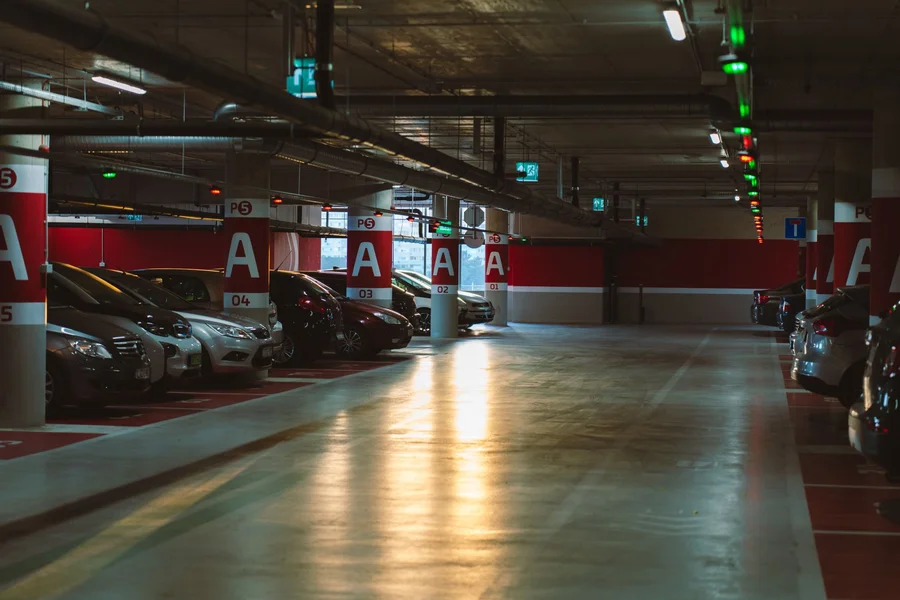
For parking garages, the experience is even more seamless. License plate recognition cameras at the entrance identify your vehicle and open the gate without a ticket. Digital signs inside the garage show available spaces per floor and per aisle. LED indicator lights above each space glow green for open and red for taken. When you exit, the camera reads your plate again and charges your linked payment method. No ticket, no cash, no fumbling with payment machines.
We’ve noticed that the biggest driver satisfaction gains come from the parking search time reduction. A 2024 INRIX traffic study found that drivers in cities with deployed smart parking systems reduced their average parking search time from 17 minutes to under 4 minutes. That’s 13 minutes saved per trip, which adds up to over 50 hours per year for daily commuters.

How Does Smart Parking AI Benefit Cities and Parking Operators?
Cities benefit from reduced traffic congestion and lower vehicle emissions, while parking operators benefit from higher revenue per space and lower labor costs. The financial and environmental returns are measurable within the first year of deployment.
For cities, the biggest win is traffic reduction. The average driver searching for parking generates 0.5 to 1.0 miles of unnecessary driving per trip. Multiply that across thousands of vehicles daily and the traffic impact is substantial. According to a 2024 report by the International Transport Forum, smart parking systems in pilot cities reduced parking-related traffic by 25% to 40% within the first 18 months of deployment. That reduction translates directly to lower carbon emissions, less road wear, and fewer accidents in congested downtown areas.
For parking operators, smart systems increase revenue in three ways. First, dynamic pricing captures more revenue during peak demand periods. Second, reduced search time means faster turnover, so each space serves more vehicles per day. Third, automated enforcement catches violations that manual patrols miss, recovering revenue from expired meters and unauthorized parking.
A common myth is that smart parking technology is only feasible for large cities with big budgets. In reality, camera-based AI systems have dropped the per-space deployment cost dramatically. A mid-sized city can instrument a 500-space lot for $25,000 to $50,000 using camera systems, compared to $150,000 or more using individual in-ground sensors. The camera approach makes smart parking accessible to cities and operators that would never have considered it at sensor-per-space pricing.
What Are the Privacy Concerns with Smart Parking AI?
The primary privacy concerns involve license plate tracking, vehicle movement data, and the potential for surveillance overreach. Responsible smart parking deployments address these concerns through data minimization, anonymization, and clear retention policies.
License plate recognition systems capture plate numbers at entry and exit points. If that data is stored indefinitely and linked to other databases, it creates a detailed record of where a person’s vehicle has been and when. Privacy advocates have raised legitimate concerns about this data being shared with law enforcement, sold to data brokers, or accessed through security breaches.
The best smart parking platforms address privacy through several technical approaches. Edge computing processes video data on the camera itself and transmits only occupancy status, meaning no video footage is sent to or stored in the cloud. License plate data used for payment is encrypted and purged after the parking session ends. Vehicle tracking data is anonymized before being used for aggregate traffic analysis, so the system knows that 847 vehicles used the lot on Tuesday but cannot identify which specific vehicles were there.
According to a Electronic Frontier Foundation analysis of parking surveillance technology, the key question for any deployment is data retention. Systems that delete identifiable data within 24 to 48 hours of a parking session pose minimal privacy risk. Systems that retain license plate logs for months or years without a specific legal requirement create unnecessary surveillance exposure. If your city is implementing smart parking, asking about the data retention policy is the single most important privacy question.
What Does the Future of Smart Parking AI Look Like?
Smart parking AI is evolving toward fully autonomous parking where vehicles park themselves, integration with electric vehicle charging infrastructure, and connection to broader smart city transportation networks that manage traffic flow, public transit, and parking as one unified system.
Autonomous valet parking is already in limited deployment. Several automakers and parking technology companies have demonstrated systems where a driver exits at the garage entrance and the vehicle navigates to an open space and parks itself using onboard sensors and V2I communication with the parking infrastructure. These systems use tighter space configurations because doors don’t need to open, increasing garage capacity by 20% to 40% with the same physical footprint.
EV charging integration is another major development. Smart parking systems are beginning to coordinate with charging stations so that EV drivers are guided to spaces with available chargers. The AI manages charger rotation, alerting drivers when their vehicle is fully charged so they can move to a non-charging space and free the charger for the next EV. For drivers already monitoring their EV battery health with AI diagnostics, connecting charging data to parking systems creates a seamless experience where the car charges optimally during every parking session.
After reviewing several next-generation smart parking deployments, we’ve found that the systems connecting parking data to city traffic management platforms deliver the most value. When the parking AI tells the traffic management system that a specific garage is nearly full, traffic lights can adjust to redirect vehicles toward garages with availability. This connection between parking intelligence and traffic flow is where AI vision systems and smart infrastructure start working together as a unified network. For businesses looking to connect their parking operations to broader AI-powered automation workflows, modern platforms offer APIs that integrate parking data with property management, tenant services, and facility operations.
Frequently Asked Questions
How much does a smart parking system cost to install?
Camera-based AI systems cost $50 to $100 per space for surface lots, making a 500-space lot $25,000 to $50,000. In-ground sensor systems cost $200 to $400 per space. Monthly software licensing typically adds $2 to $5 per space. Most operators see full return on investment within 12 to 18 months through increased revenue and reduced labor costs.
What is the difference between smart parking and a regular parking meter?
A regular parking meter tracks time and collects payment for a single space. Smart parking is a connected system that detects real-time occupancy across an entire area, guides drivers to open spots through an app, processes payments automatically, and uses AI to optimize pricing and predict demand patterns.
Do smart parking apps work in all cities?
Smart parking apps only work where the supporting sensor or camera infrastructure has been installed. Coverage varies widely by city. Major metropolitan areas typically have partial coverage in downtown cores and popular destinations, while suburban areas rarely have smart parking infrastructure yet.
Is it true that smart parking AI systems track my location?
The parking app uses your phone’s GPS to show nearby available spaces and provide navigation. Well-designed systems only access location data while the app is actively in use and do not store historical location data. Camera-based systems track vehicle presence at specific spaces but do not follow vehicles between locations.
Can smart parking AI work in snow or heavy rain?
In-ground sensors work reliably in all weather conditions because they detect magnetic fields rather than visual images. Camera systems can lose accuracy in heavy snow, fog, or driving rain. The best camera platforms use infrared and thermal imaging to maintain detection accuracy in poor visibility conditions, though performance still drops in extreme weather.
How does dynamic parking pricing work with smart parking AI?
The AI monitors real-time occupancy and adjusts prices based on demand. When a lot is 90% full, prices increase by a preset amount to discourage additional vehicles and encourage faster turnover. When occupancy drops below 50%, prices decrease to attract more drivers. The goal is maintaining 85% to 90% occupancy, which maximizes revenue while ensuring drivers can always find a spot.
Find Your Spot Without the Stress
Smart parking AI technology replaces the frustrating loop of circling blocks and cruising parking lots with direct guidance to open spaces. Whether you’re a driver tired of wasting 17 minutes every trip or a parking operator looking to boost revenue and reduce overhead, AI-powered systems deliver measurable results from day one. The technology keeps improving as it collects more data, meaning the system that helps you find a spot today will be even faster and more accurate next year.