How Do AI Car Washes Adjust to Vehicle Size? Smart Sensors and Tunnel Tech Explained
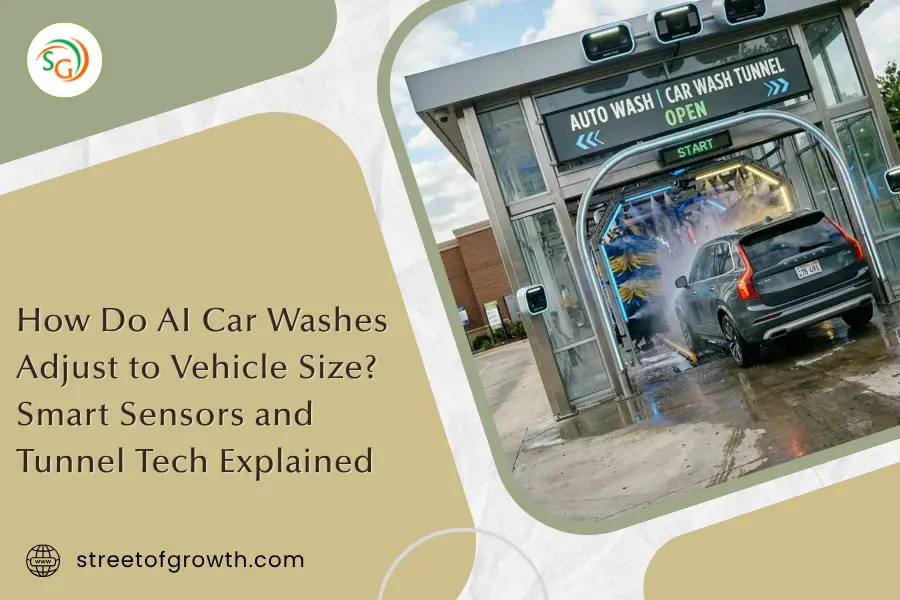
AI car washes adjust to vehicle size by using ultrasonic sensors, optical light curtains, and AI-powered cameras to scan each vehicle as it enters the tunnel. The system measures height, width, and length in real time, then sends that data to a controller that adjusts brushes, water jets, soap dispensers, and dryers to match the exact shape and dimensions of your car.
Whether you drive a compact sedan, a midsize SUV, or a full-size pickup truck, the car wash reads your vehicle and changes its settings on the spot. No two washes are the same. Every car gets a custom treatment based on its own profile.
But how does all of this work? And what kind of sensors and AI technology make it possible? Let us break it down piece by piece.
What Is an AI Car Wash and How Is It Different From a Regular Car Wash?
An AI car wash is a tunnel-based wash system that uses artificial intelligence, sensors, and computer vision to scan vehicles and adjust its equipment in real time. Unlike a regular car wash that runs the same cycle for every car, an AI car wash reads the size, shape, and sometimes even the make and model of each vehicle before the wash begins.
In a regular tunnel wash, the brushes, nozzles, and dryers stay at the same height and angle for every car. That means a small Honda Civic gets the same wash setup as a large Chevrolet Suburban. The result? Taller vehicles may get missed at the top. Smaller cars may get hit with too much pressure. And accessories like roof racks may cause jams or damage.
An AI-powered car wash solves all of these problems. It treats every vehicle as a unique job. The controller, usually a Programmable Logic Controller (PLC) connected to AI software, receives live sensor data and makes adjustments in milliseconds. This leads to a safer, more thorough, and less wasteful wash for every single vehicle.
What Types of Sensors Do AI Car Washes Use to Detect Vehicle Size?
AI car washes use three main types of sensors to detect vehicle size: ultrasonic sensors, optical light curtains, and AI-powered cameras. Each sensor type plays a different role, and most modern tunnel systems use all three together for the most accurate reading.
How Do Ultrasonic Sensors Work in a Car Wash?
Ultrasonic sensors send out high-frequency sound waves that bounce off the surface of your car and return to the sensor. The system measures how long it takes for the sound to come back, and uses that to calculate the distance between the sensor and your vehicle’s surface.
This tells the car wash exactly how tall, how wide, and how long your vehicle is. Ultrasonic sensors are popular in car wash environments because they work reliably even when there is water spray, steam, or soap mist in the air. Companies like MaxBotix, a leading ultrasonic sensor manufacturer, are well-known suppliers of these sensors for car wash environments.
What Are Optical Light Curtains and How Do They Scan a Car?
Optical light curtains create a grid of invisible infrared beams at the entrance of the wash tunnel. As your car passes through, it blocks some of these beams. The pattern of blocked beams creates a silhouette, like a shadow outline, of your vehicle.
This silhouette tells the system whether you are driving a low sports car, a tall minivan, or a wide pickup truck. Light curtains are fast and precise, making them a strong fit for high-volume tunnel washes where cars enter one after another. Sensor Partners is one of the companies that specializes in this type of detection for the car wash industry.
How Do AI Cameras Identify a Vehicle’s Make and Model?
AI cameras go a step beyond basic size detection. They use computer vision and machine learning to analyze a live image of your car as it enters the tunnel. The software compares what it sees against a database of known vehicle profiles.
This means the system can recognize that your vehicle is, for example, a 2024 Toyota RAV4 with a roof rack. With that information, it can do more than just adjust for height. It can adjust around the roof rack, skip certain areas to prevent damage, and apply the right amount of pressure to each section of the body.
These cameras are housed in waterproof, fog-resistant enclosures made to withstand the harsh, wet conditions inside a tunnel car wash. Brands like Coram AI have developed camera systems specifically for this purpose.
What Role Do Induction Loops Play at the Entrance?
Induction loops are metal-detecting coils buried in the ground at the tunnel entrance. When your car drives over them, they sense the metal in the vehicle and signal the system to begin the scanning process.
Induction loops do not measure size, but they play an important timing role. They tell the controller exactly when a car has arrived so it can trigger the sensors and start the wash cycle at the right moment.
How Does the AI Controller Adjust the Car Wash Equipment?
Once the sensors scan your vehicle, the AI controller receives all that data and makes real-time adjustments to every piece of wash equipment. This happens in less than a second, before the first brush or nozzle touches your car.
How Do Brushes and Wash Arms Adjust to Different Car Heights?
The top brush rises or lowers based on the height of the vehicle. For a compact car like a Honda Fit, the brush drops closer to the roof. For a tall SUV like a Ford Expedition, it lifts up. The side brushes also move inward or outward depending on the width of the car.
This is critical for wash quality and safety. Brushes that press too hard against the body can leave marks. Brushes that are too far away miss spots. The AI finds the right position for each section of each vehicle.
How Do Water Jets and Nozzles Change Based on Vehicle Shape?
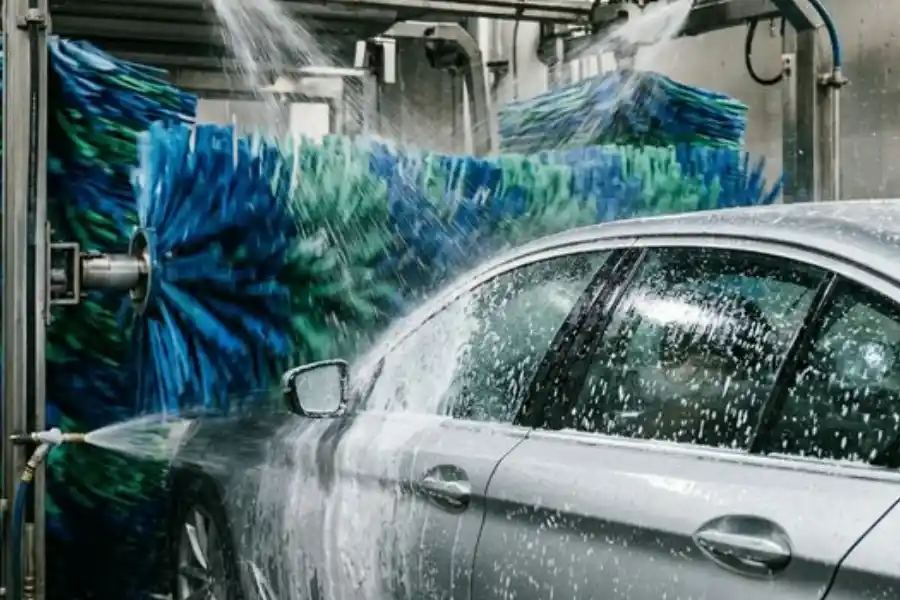
Water jet nozzles rotate and tilt to follow the contour of each vehicle. For a low coupe, the top nozzles angle downward. For a lifted truck, they tilt upward. Side nozzles adjust their distance based on width.
The AI also controls how much water and soap is used per vehicle. A compact car with a small surface area gets less water and detergent than a large truck. This precision reduces water waste and soap usage, which benefits both the car wash operator and the environment.
Does the Conveyor Speed Change for Longer Vehicles?
Yes. The conveyor belt or track that carries your vehicle through the tunnel adjusts its speed based on vehicle length. A longer vehicle like a crew cab truck or a full-size SUV gets a slower pass through each wash station. This gives every section of the body enough time under the brushes, nozzles, and rinse arches.
A shorter vehicle moves through at a slightly faster pace, which keeps the tunnel running at high volume without sacrificing wash quality.
How Do Air Dryers Follow the Shape of the Roof?
At the end of the tunnel, high-powered blowers push water off your vehicle. The AI adjusts the height and angle of these blowers in real time to follow the roofline of your specific vehicle.
A flat sedan roof gets the blowers positioned low and steady. A curved minivan roof sees the blowers rise and tilt as they track the changing contour. This means fewer water spots and more complete drying for every vehicle type.
Can AI Car Washes Detect Roof Racks, Bike Mounts, and Other Accessories?
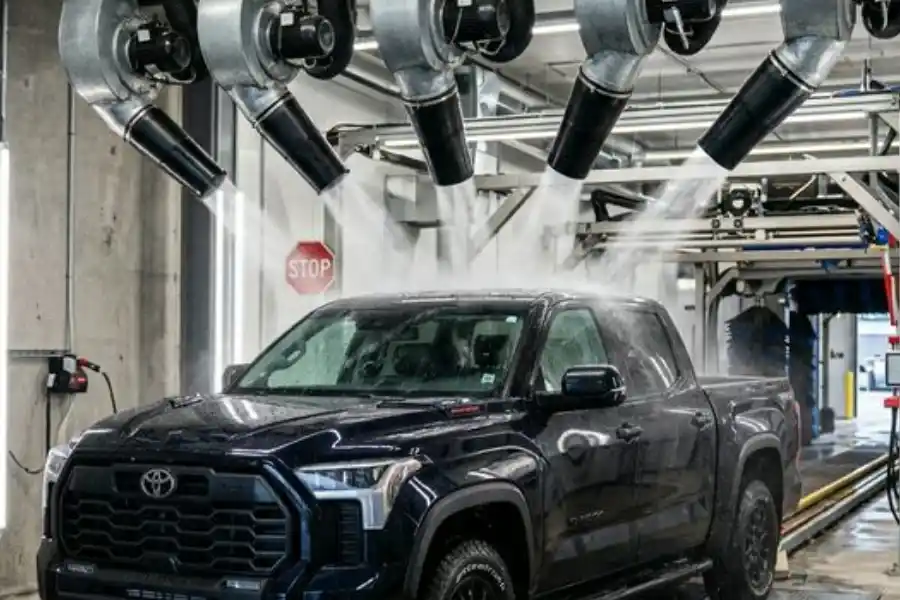
Yes. One of the biggest improvements in AI car wash technology is the ability to detect vehicle accessories before the wash begins. AI cameras powered by computer vision can identify items mounted on or attached to your vehicle, including:
- Roof racks and cargo carriers
- Bike mounts and kayak holders
- Oversized side mirrors or towing mirrors
- Aftermarket spoilers or body kits
- Truck bed toolboxes and tonneau covers
- Antennas, flags, and decorative accessories
When the system spots one of these items, it enters what operators call a “defensive mode.” The brushes may rise higher, the spray arms may widen, or the system may skip that section entirely to prevent contact.
In some cases, the system sends an alert to the operator, who can stop the conveyor and remove the item safely. Companies like Plate Recognizer have built AI systems that specialize in this kind of accessory and hazard detection for car wash tunnels.
Does AI Prevent Scratches and Paint Damage During the Wash?
AI has significantly reduced the risk of scratches and paint damage in tunnel car washes. Here is how the system protects your vehicle:
- Pre-wash scanning creates a full profile of your car before anything touches it, so the brushes stay at a safe distance from every surface
- Pressure control adjusts on its own, using lighter contact on delicate areas and stronger pressure where grease and road film build up
- Accessory detection catches items like roof racks or antennas that could snag or collide with equipment
- Before-and-after documentation uses high-resolution cameras to photograph your vehicle at the entrance and exit, creating a visual record that protects both the customer and the car wash operator
No system can guarantee zero risk. But compared to older, fixed-cycle car washes, AI-powered systems are far more careful with how they handle each vehicle. Based on feedback from operators in the car wash industry, damage claims have dropped significantly at facilities using AI-based tunnel systems.
How Much Water Do AI Car Washes Save Compared to Traditional Systems?
AI car washes save a meaningful amount of water because they measure how much each vehicle needs instead of using the same amount for every car. A compact hatchback does not need as much water, soap, or wax as a full-size truck, and the AI knows that.
Industry reports from car wash operators have shown that AI-controlled systems can reduce water usage by up to 20% per wash. They also cut down on chemical waste and lower electricity use by running motors at the exact speed needed, rather than full power at all times.
For the car wash owner, this means lower operating costs each month. For the community, it means less water pulled from local supplies and fewer chemicals going down the drain. Organizations like the EPA’s WaterSense program have long encouraged commercial businesses to adopt water-saving technology like this.
What Is Predictive Maintenance and How Does AI Use It in Car Washes?
Predictive maintenance is when AI monitors equipment health in real time and flags problems before they cause a breakdown. Instead of waiting for a motor to fail or a brush to stop spinning, the system spots trouble early and gives the operator time to fix it.
Here is how it works in a car wash tunnel:
- Sensors track vibration, temperature, and usage cycles on every motor, pump, and blower
- If a motor starts vibrating more than its normal range, the AI flags it as a potential issue
- If a sensor response time slows down, the system warns the operator to inspect it
- If a brush wears down unevenly, the system recommends replacement before it causes poor wash quality
This approach reduces downtime, avoids costly emergency repairs, and keeps the wash running at full speed during peak hours. Trade groups such as the International Carwash Association have highlighted predictive maintenance as one of the top trends reshaping the car wash industry.
What Happens Step by Step When Your Car Enters an AI Car Wash?
Here is the full process from the moment you pull in to the moment you drive out clean:
- Your car rolls over the induction loop. The ground sensor detects your vehicle and activates the scanning system.
- Sensors measure your vehicle. Ultrasonic sensors record height, width, and length. AI cameras identify your car’s type, and in many cases, its make, model, and any accessories. Optical light curtains capture the body silhouette.
- The controller builds a digital profile. In under one second, the AI creates a complete map of your vehicle and sends instructions to every piece of equipment in the tunnel.
- The wash starts. Brushes, nozzles, and soap applicators adjust in real time as your car moves through the tunnel. Each wash station reads the profile and adapts to your vehicle on the spot.
- You exit clean and dry. Air blowers follow the contour of your roof and sides. Your car comes out looking spotless, with no human help needed at any point in the process.
The whole visit takes about three to five minutes. But behind the scenes, the AI is making hundreds of micro-adjustments that you never see or feel.
How Are AI Car Washes Different From Older Tunnel Washes?
The differences between older tunnel washes and modern AI tunnel washes are significant:
- Older tunnel washes use the same brush height, water pressure, and drying setup for every vehicle. There is no scanning, no size detection, and no way to adjust for accessories or unusual shapes.
- AI tunnel washes scan every vehicle before the wash begins. They create a unique profile for each car and adjust brushes, nozzles, conveyor speed, and dryers in real time. They detect accessories, prevent damage, predict equipment failures, and reduce water and chemical waste.
Think of it this way. An older car wash is like a one-size-fits-all shirt. It kind of works, but it never fits perfectly. An AI car wash is like a custom-tailored suit. It fits your vehicle exactly, every single time.
Is It Worth Upgrading to an AI Car Wash System?
For car wash owners, the upfront cost of upgrading to an AI tunnel system is higher than keeping older equipment. But the return is fast and noticeable. Here is what operators commonly report:
- Fewer breakdowns and lower repair bills from predictive maintenance
- Water and chemical savings of up to 20%
- Higher customer satisfaction and more repeat visits
- Faster vehicle throughput, meaning more cars washed per hour
- Fewer damage claims thanks to pre-wash scanning and documentation
For customers, the price difference is usually small, about one to two dollars more per wash. But the quality, safety, and precision of the wash are noticeably better, especially for larger vehicles, lifted trucks, or cars with accessories.
What Does the Future of AI Car Wash Technology Look Like?
AI car wash technology is still growing, and several new features are already in development or early rollout:
- Personalized wash memory tied to your license plate. The system will remember your preferences and apply them every time you visit.
- Dirt level scanning that reads how dirty your car is and adjusts the wash intensity to match.
- Electric vehicle (EV) wash modes designed to handle the unique body shapes of EVs and protect sensitive areas like charging ports.
- Voice-controlled kiosks where you tell the system what kind of wash you want, hands-free.
- Fully unmanned operations where the entire facility runs with no on-site staff, managed remotely through a cloud dashboard.
As artificial intelligence and sensor technology continue to improve, car washes will get smarter, faster, and more gentle with every vehicle they handle.
Once a tunnel can measure a car, spotting marks on it is the next step, which damage detection for detailing covers. The same sensing logic parks cars in smart parking technology.
Frequently Asked Questions
Do all car washes use AI right now?
No. Many car washes still run on older, fixed-cycle systems. But the shift toward AI is happening fast, especially among large chains, franchise operators, and newly built tunnel washes. As sensor prices drop and AI software becomes more accessible, smaller operators are starting to upgrade too.
Is an AI car wash safer for my car than a regular one?
In most cases, yes. AI car washes scan your vehicle before any equipment makes contact. They adjust brush pressure, avoid accessories, and create visual documentation of your car’s condition before and after the wash. This makes them less likely to cause scratches, dents, or other damage.
Can AI car washes handle lifted trucks, oversized SUVs, or vehicles with roof racks?
Most modern AI tunnel washes can handle vehicles up to a specific height and width limit, which varies by facility. The system detects the dimensions on its own and adjusts. If a vehicle is too tall or wide for safe passage, the system will alert the operator or block entry to prevent damage.
How does an AI car wash know the difference between a sedan, an SUV, and a truck?
AI cameras use computer vision to compare the image of your vehicle against a database of known vehicle profiles. The system looks at height, width, length, body shape, and other visual features. In many cases, it can identify the specific make and model, not just the general category.
Does an AI car wash cost more than a traditional car wash?
The difference is usually about one to two dollars per wash. Many customers find the results are worth the small price bump, especially for larger vehicles, cars with accessories, or people who want a gentler, more precise wash.
How much water does an AI car wash save?
AI car washes have been reported to save up to 20% on water usage per wash compared to traditional fixed-cycle systems. They also use less soap and fewer chemicals, since the AI calculates the exact amount needed for each vehicle.
What happens if a sensor stops working during a wash?
AI car wash systems have safety protocols that kick in when a sensor fails or sends unexpected data. The system switches to a safe default mode with conservative settings that prevent any risk of contact or damage. At the same time, it sends an alert to the operator so the issue can be fixed before the next vehicle enters.
The Bottom Line
AI car washes represent a major step forward in how vehicles are cleaned. By combining ultrasonic sensors, optical light curtains, AI-powered cameras, and smart controllers, these systems give every vehicle a custom wash that matches its exact size and shape.
For car owners, that means a cleaner car, less risk of damage, and a faster experience. For operators, it means lower costs, happier customers, and fewer equipment problems. And for the environment, it means less water and chemical waste with every single wash.
The next time you pull into a tunnel car wash, pay attention to what is happening around you. Those brushes rising, nozzles tilting, and dryers shifting are all being controlled by AI that scanned your car in under a second and set everything up just for you.
Your car gets a wash that fits. Every time. That is what AI makes possible.