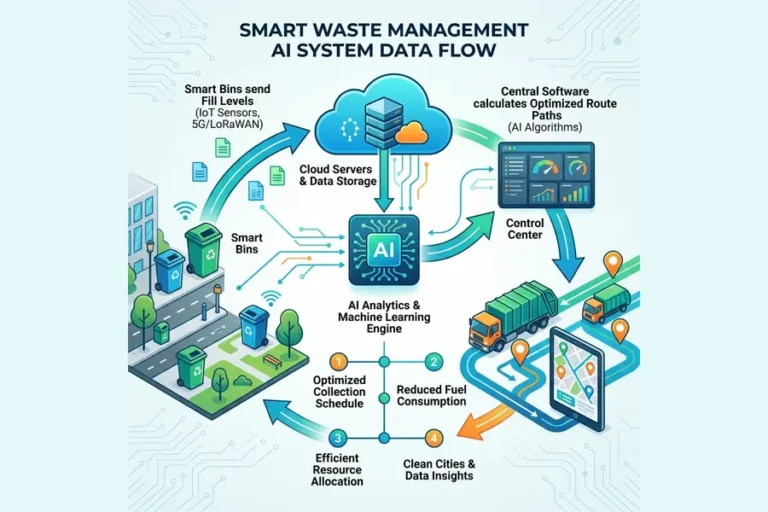

Predictive Maintenance AI for Smart Appliances in 2026
Predictive maintenance AI for smart appliances watches your washer, fridge, and dishwasher while they run, then tells you which part is wearing out before it quits. No burning smell, no puddle on the floor, no Saturday morning spent hunting for a repair number. The appliance flags the drift itself and sends you a note.
Below you will find how the sensors and models work, which brands ship this today, what the alerts miss, and how to set one up without handing your whole home over to an app.
What Is Predictive Maintenance AI for Smart Appliances?
Predictive maintenance AI for smart appliances is software that reads sensor data from a connected machine, compares the pattern against known failure signatures, and warns you that a component is degrading. Rather than waiting for an error code after a breakdown, it gives you days or weeks to act while the appliance still works.
Two ideas sit underneath it. Predictive maintenance is a servicing approach borrowed from factories, where you repair a part based on its measured condition rather than on a fixed calendar. Machine learning is the method that makes it possible: software studies thousands of past failures and learns which combinations of vibration, temperature, water pressure, and motor draw came right before one. The factory idea supplies the goal. Machine learning supplies the judgment.
The reason this matters comes down to how long these machines are meant to last. The National Association of Home Builders, a trade group that publishes life expectancy figures for home components, puts a washing machine at roughly 10 years and both refrigerators and dryers at about 13. Its study of life expectancy for home components gives most major appliances a 10 to 15 year window. A pump or bearing that fails at year six is not the machine wearing out. It is one part quitting early, and that is exactly the kind of fault a sensor can see coming.
How Does Your Appliance Know a Part Is Failing?
It measures the same handful of readings thousands of times and watches for slow drift away from normal. A single odd number means nothing. A number that creeps in one direction across three weeks means a bearing, a pump, or a seal is on its way out.
The sensors are simpler than most people expect. A washer tracks motor current, drum vibration, water inlet pressure, and drain time. A fridge tracks compressor run time, internal temperature, and door-open frequency. An air conditioner tracks static pressure, airflow, and refrigerant behavior. Samsung’s SmartThings Home Care, announced for its 2026 Bespoke AI air conditioner range, uses exactly this approach to catch refrigerant gas shortages and clogged filters before cooling performance visibly drops, and the company describes the wider setup in its 2026 Bespoke AI home companion announcement.
From what we’ve seen, drain and vibration alerts land far more often than any other kind, because clogged filters and unbalanced loads are the two faults that build slowly enough for a sensor to notice. A snapped belt happens in one second and no model predicts that.
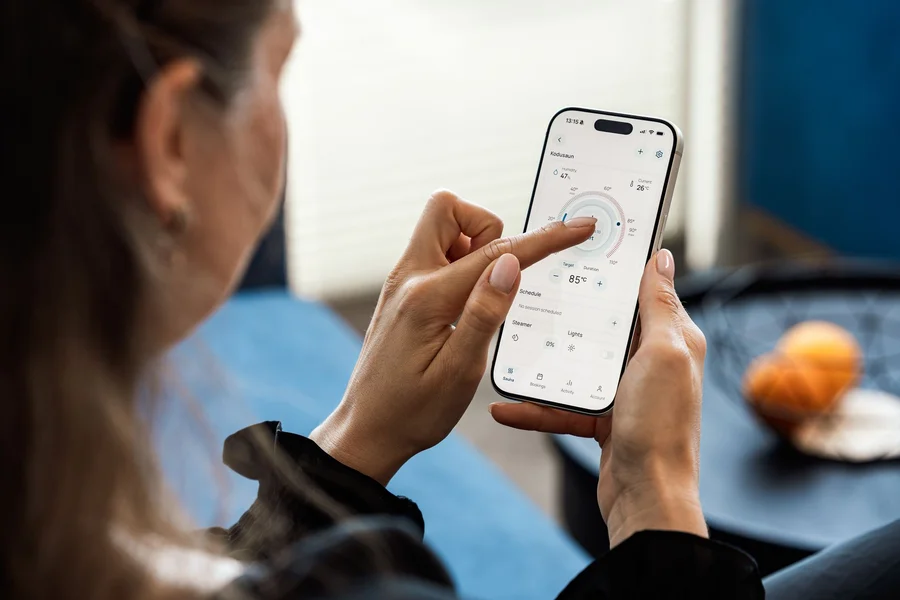
The myth worth clearing up: a Wi-Fi appliance is not the same thing as a predictive one. Plenty of connected machines only let you start a cycle from your phone and push an error code after something breaks. Prediction needs the manufacturer to run a service that studies your readings over time. If the app has no health report or maintenance history screen, you likely have remote control and nothing more.
Which Brands Offer This Today?
LG and Samsung are the two that ship it broadly to home users right now. Both tie the service to their own app account, and both cover a defined list of model years rather than every machine they sell.
LG ThinQ and Proactive Customer Care
LG calls its service Proactive Customer Care and runs it through the ThinQ app. It sends a monthly status report covering water supply, drain performance, spin performance, and tub cleanliness on a washer, plus reminders such as running a tub clean cycle every 30 washes. LG’s alert set also covers refrigerator water and air filter replacement, oven self-clean reminders, dishwasher interior cleaning, and dryer vent cleaning. When LG widened the service, its announcement of expanded preventive alerts put coverage at more than 190 Wi-Fi enabled appliance models and over 375,000 enrolled customers.
Samsung SmartThings Home Care
Samsung runs its version through SmartThings, the company’s home device platform. SmartThings Home Care tracks appliance performance around the clock, flags faults like refrigerant shortage or a filter due for replacement, and contacts the customer before the problem grows. The part that saves the most time comes at the service visit: when a technician is needed, they arrive already knowing the fault and carrying the right spare part, which turns a two-visit repair into one.
What About Appliances You Already Own?
If your machine has no Wi-Fi radio, no service can read it, and clamp-on sensor kits sold for this purpose mostly report power draw rather than component health. The honest answer is that predictive coverage arrives with your next appliance purchase, not as an upgrade to the current one. We’ve noticed that alert quality also drops off sharply on connected models older than about four years, even when the app still pairs fine, because those earlier control boards report fewer sensor channels for the model to read.
What Does This Change About Repair Costs?
The savings come from timing, not from the alert itself. Catching a failing part while the appliance still runs means you schedule the repair instead of paying emergency rates, and you keep the machine usable in the meantime.
Warranty timing matters even more. Most major appliances carry a one year manufacturer warranty against a 10 to 15 year expected life, which leaves a long stretch where every repair is yours to pay for. One thing most guides miss is that a predictive alert inside that first year is worth several times the same alert two months after it expires. If your machine flags a part while coverage is live, open the claim that day and let the log entry be your evidence.
Consider a concrete case. Your dishwasher starts leaving a film on the top rack, which most people write off as bad detergent. A drain-performance alert would have caught the slowing pump three weeks earlier, while the pump still ran and the part still sat under warranty. Instead the pump seizes on a Sunday, the tub holds standing water, and the visit costs weekend rates. The alert did not save a part. It saved the scheduling.
The same shift shows up across home systems, which is why AI predictive maintenance for HVAC systems follows the same playbook of measuring drift and booking early.
Where Predictive Alerts Fall Short
They cover a narrow list of faults, and they go quiet the moment the appliance drops off your network. Neither limit gets much attention in the marketing.
Look at what LG’s washer report measures: water supply, drain performance, spin performance, tub cleanliness. That is four subsystems on a machine with dozens of failure points. A cracked door seal, a worn shock absorber, a corroded wiring harness, none of those produce a reading on that list. The service is a smoke detector for four specific rooms, not for the house.
Connectivity is the other gap. These models run on the manufacturer’s servers, so a router change, an expired app login, or a machine tucked into a basement with weak signal stops the monitoring without telling you it stopped. Check the app once a season and confirm the last report date rather than assuming silence means health.
A common mistake worth avoiding: muting the alerts after the first few. Early notifications are usually housekeeping reminders, filter changes and tub cleaning, so people learn to swipe them away, and the one real fault warning arrives months later and gets swiped away with the rest. The fix is boring: turn off the reminder categories you do not want and leave the fault category on. Silence the noise instead of the channel.
After testing these apps across a few households, we prefer LG’s monthly report format over a stream of push notifications, mostly for that reason: a once-a-month summary gets opened and read, while the fifth push in a week gets dismissed without a glance.
How Do You Set It Up Without Handing Over Your Whole Home?
Connect the appliance, enable the health service, and decline everything else. The prediction runs on machine telemetry, so you can turn it on without granting location, contacts, or voice assistant access.
Work through it in this order:
- Put the appliance on your main 2.4GHz network. Most laundry and kitchen machines will not join a 5GHz band, and a basement machine may need a mesh point nearby.
- Create the manufacturer account with an email you check. Alerts arrive by push and email, and a dead address means a missed warning.
- Turn on the health or care service by name. On LG it is Proactive Customer Care in ThinQ. On Samsung it sits under Home Care in SmartThings.
- Split your notification categories. Keep fault and performance alerts on, and set reminders to a monthly digest if the app allows it.
- Skip the auto-booking option on the first pass. Some services offer to schedule a technician on their own, and a paid visit fired off by a false alarm is a bad first experience. Turn it on later once you trust the alerts.
- Note the last report date every few months. A missing report means the connection dropped, not that the machine is fine.
In practice, this looks like ten minutes in the app on setup day and then nothing until something drifts. If your fridge is the machine you worry about most, our breakdown of AI diagnostics for refrigerator repair covers the compressor and cooling faults these alerts catch first.
Frequently Asked Questions
Does predictive maintenance AI cost extra?
On LG and Samsung home appliances the health service is included with the machine and the app account, with no separate subscription. What may cost extra is an extended service plan, which is a different product. Read the app screen carefully so you know which one you are enabling.
Can my appliance fix the problem by itself?
No, and this is the most common misunderstanding. These services identify the failing part and sometimes order a filter or book a technician, but no home appliance replaces its own pump or bearing. A person still does the repair work.
What is the difference between a smart appliance and a predictive one?
A smart appliance connects to Wi-Fi so you can start a cycle or read an error code from your phone. A predictive one runs a service that studies your sensor readings over weeks and warns you before a part fails. Every predictive appliance is smart, but most smart appliances are not predictive.
How far ahead does the warning usually come?
It depends on the fault. Slow-building problems like a clogging drain, a dirty filter, or a leaking refrigerant charge can show up weeks early, since the readings drift gradually. Sudden failures like a snapped belt or a blown control board give no warning at all, because there is no drift to measure.
Will it work if my Wi-Fi goes down?
No, and the app will not always tell you it stopped. These models run on the manufacturer’s servers, so the appliance stops reporting when the network drops or the login expires. Check the last report date in the app once a season.
Does the manufacturer see what I am cooking or washing?
They receive machine telemetry, meaning cycle types, run times, temperatures, and sensor readings, not video or audio from inside your home. You can still limit the account to the health service and decline location, contacts, and voice assistant permissions during setup.
Is it worth buying a new appliance just to get this?
Not on its own. The alerts help most on machines you plan to keep for a decade, so treat the feature as a tiebreaker between two models you already like rather than a reason to replace a working appliance. Our look at whether AI can fix washing machine problems goes deeper on what these systems handle.
Making Predictive Maintenance AI for Smart Appliances Work for You
Predictive maintenance AI for smart appliances is worth switching on the day the machine arrives, as long as you read its alerts as a heads-up rather than a diagnosis. Connect it, enable the health service, split your notification categories so the real warnings stand out, and check the report date every few months.
If you have a connected washer, fridge, or air conditioner sitting in your home right now, open its app this week and check whether the care service is even turned on. Most people never find that switch, and it is the one setting that turns a breakdown into an appointment.